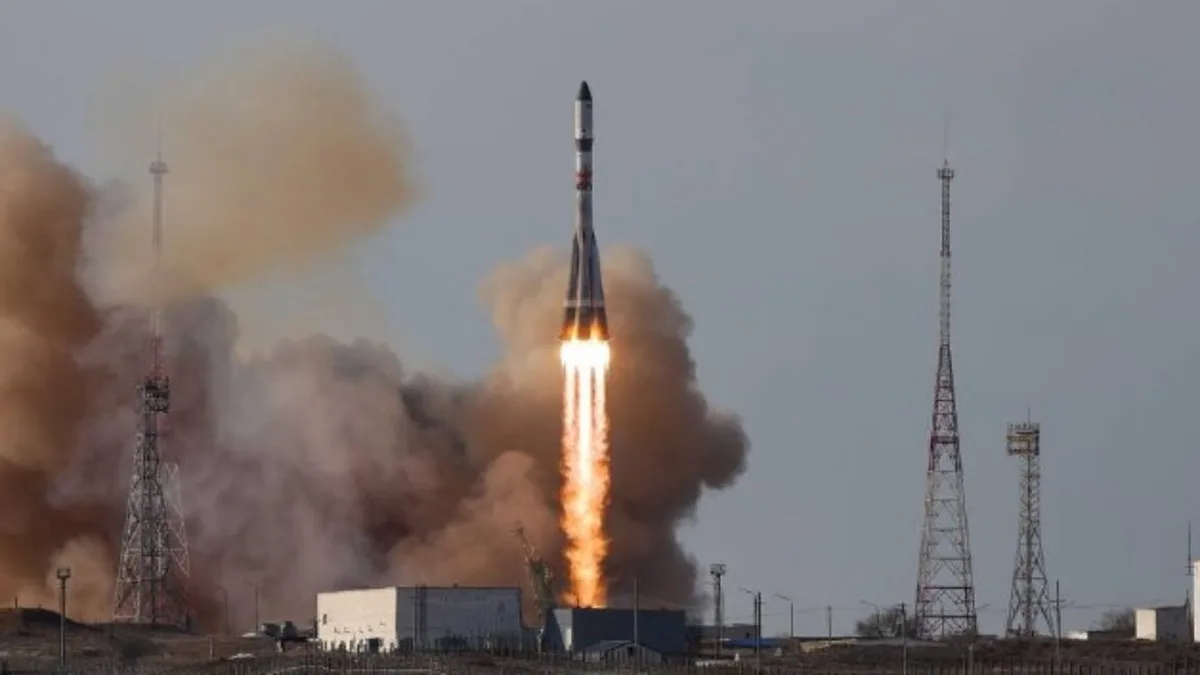
A long-range strike on the Progress Rocket Space Center in Samara, Russia, represents a shift in the operational reach of Ukrainian military capabilities. The Progress Rocket Space Center is a critical manufacturing hub for the Russian state space corporation, Roscosmos, responsible for producing the Soyuz-2 and Soyuz-5 launch vehicles, as well as essential military satellite hardware.
According to official statements from Ukrainian leadership, the facility was targeted using Flamingo ground-launched cruise missiles. Located approximately 900 kilometers from the Ukrainian border, this strike demonstrates an ability to bypass traditional air defense perimeters to hit deep-interior industrial assets. This event marks a significant escalation in the conflict's technological and industrial attrition phases.
The Progress Rocket Space Center, often referred to as the Samara Space Center, is one of Russia’s most vital aerospace industrial facilities. It serves as the primary production site for the Soyuz-2 rocket, which remains the workhorse of the Russian space program, handling both civilian and classified military payloads. The facility's role in the Russian defense-industrial complex is multifaceted, encompassing design, manufacturing, and systems integration for aerospace hardware.
By targeting a facility that produces both launch vehicles and military-grade electronics, the strike potentially disrupts the supply chain for Russian satellite reconnaissance and orbital communication capabilities. Analysts note that while the immediate damage to production capacity is being assessed, the psychological and logistical impact of such a long-range strike forces Russian command to reconsider the security of deep-interior manufacturing hubs that were previously considered beyond the reach of conventional tactical weaponry (Source: Institute for the Study of War).
Flamingo cruise missiles are a class of long-range, precision-guided munitions capable of navigating complex terrain to strike high-value targets. Their successful use in the Samara region indicates that the Ukrainian military has successfully integrated long-range guidance systems with mobile ground-launch platforms, allowing for strikes well beyond the 500-kilometer range typically associated with short-range tactical ballistic systems.
These missiles utilize advanced terrain-following radar and GPS-independent navigation, which makes them difficult for standard S-400 or S-300 air defense systems to intercept once they are in flight. The ability to strike targets 900 kilometers away with precision means that critical Russian logistics, fuel depots, and manufacturing centers are no longer geographically insulated from the conflict. This necessitates a massive redistribution of Russian air defense assets, pulling them away from the front lines to protect vulnerable interior industrial zones.
Keep exploring
More from GroundworkThe Russian aerospace industry relies heavily on a centralized manufacturing model, which makes the Progress Center a single point of failure for specific rocket components. A disruption in the assembly lines for the Soyuz-5—the successor to the current generation of Russian rockets—could delay Russia's transition to newer heavy-lift vehicles. Furthermore, the loss of specialized electronics production capacity creates a bottleneck that cannot be easily offloaded to smaller regional factories.
Data from aerospace monitors suggests that Russia’s launch cadence is already under pressure due to international sanctions and limited access to high-end semiconductors. A kinetic strike on the primary production site exacerbates these existing procurement challenges. If production lines for military satellites are compromised, the Russian Ministry of Defense may face a degradation in their orbital intelligence, surveillance, and reconnaissance (ISR) capabilities, which are essential for coordinating long-range strikes against Ukrainian infrastructure.
This strike forces a change in the cost-benefit calculus for the Russian Ministry of Defense. When high-value industrial targets are vulnerable, the state must choose between sacrificing production output or depleting its limited stock of interceptor missiles to create an 'iron dome' around industrial centers. For Ukraine, the strike serves as a tangible demonstration of 'asymmetric deterrence,' where industrial output is countered by precision-guided disruption.
To manage these risks, the Russian government must now invest in hardening facilities, moving sensitive production underground, or decentralizing operations—all of which are expensive, time-consuming, and prone to error. For decision-makers and observers, this strike signals that the 'rear area' in this conflict has effectively vanished. Any facility contributing to the Russian war effort, regardless of its distance from the front, is now subject to the same operational tempo as a frontline command post.
If you are monitoring the trajectory of the conflict, focus on three specific indicators of industrial impact:
- Launch frequency: Track the number of Russian orbital launches over the next six months. A decline in frequency indicates significant supply chain disruption at the Samara facility.
- Air defense deployment: Observe if Russian S-400 systems are relocated from frontline positions to protect industrial cities in the interior.
- Procurement reports: Monitor public statements from Roscosmos regarding production delays. These reports are often the first sign of underlying structural damage to manufacturing capacity.