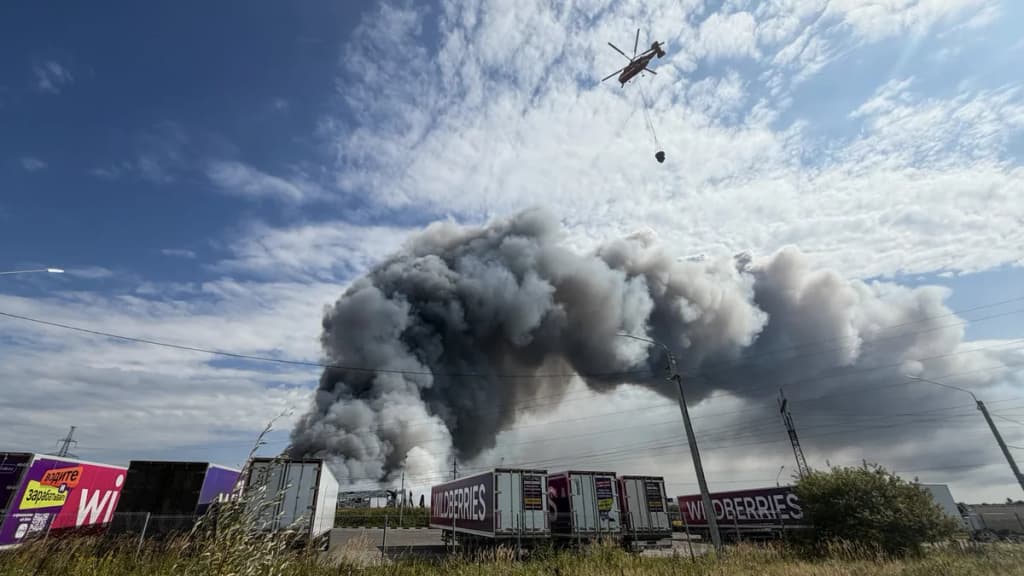
A strategic shift in the ongoing conflict between Ukraine and Russia has emerged, characterized by targeted strikes against critical economic infrastructure rather than solely front-line military positions. This evolution involves Ukraine systematically disabling logistics hubs—most notably the e-commerce giant Wildberries—while Russia continues to target Ukrainian port facilities along the Danube River to disrupt international trade routes. At Groundwork, our analysis indicates that both nations are moving toward a war of attrition focused on domestic economic destabilization.
Logistics hubs, such as the Wildberries distribution centers near Moscow, serve as critical nodes in the Russian domestic supply chain. By disabling these facilities, Ukraine aims to increase the cost of goods, disrupt consumer stability, and strain the Russian state's ability to maintain a functioning wartime economy. According to reports from the Ukrainian Security and Cooperation Center, the Wildberries marketplace alone accounts for approximately 3% of Russia’s gross domestic product (GDP). When such a significant portion of the retail sector is disrupted, the downstream effects include logistical bottlenecks, increased inflationary pressure on consumer goods, and a potential reduction in tax revenue available to the state.
Historically, military doctrine prioritizes the destruction of command-and-control centers and munitions depots. However, the current conflict demonstrates a clear pivot toward 'economic-critical infrastructure.' By targeting seven of the ten largest Wildberries logistics hubs, Ukraine is effectively attempting to decouple the Russian consumer experience from the state’s war-preparedness efforts. This strategy is designed to make the economic cost of the conflict visible to the domestic population, forcing the Russian government to allocate resources toward domestic logistics security rather than front-line operations.
Russia’s retaliatory strikes on the Izmail port district in the Odesa region represent an attempt to choke Ukraine’s remaining trade arteries. The Danube River ports have become vital gateways for Ukrainian grain and other exports since the disruption of traditional Black Sea routes. Damage to civilian vessels and port terminals, such as the Togo-flagged vessel recently struck in Izmail, creates a 'risk premium' for shipping companies. When insurance providers and shipping lines perceive a high risk of kinetic damage, shipping costs rise, and vessel availability decreases, directly impacting global commodity prices.
Keep exploring
More from GroundworkFollowing the restrictions on Black Sea access, the Danube ports have seen a significant increase in throughput. At Groundwork, our research into commodity shipping trends shows that even minor disruptions in these ports have disproportionate effects on global food security. The Izmail district serves as a key transit point for exports reaching European markets through the Romanian border. By targeting these terminals, Russia is not only attempting to damage Ukrainian military cargo, as claimed by the Russian Defense Ministry, but is also systematically degrading Ukraine’s capacity to generate foreign currency through export trade.
This cycle of infrastructure-focused attacks suggests that neither party is currently prioritizing traditional de-escalation. Instead, the conflict has entered a phase where domestic economic resilience is the primary metric of success. For Russia, the challenge is maintaining a semblance of 'normal' commercial activity while managing the fallout of large-scale aerial attacks. For Ukraine, the challenge is sustaining these strikes without depleting its limited supply of long-range drones and precision munitions.
While the Russian economy has shown resilience against initial sanctions, the cumulative effect of infrastructure strikes is harder to quantify in the short term. The destruction of logistics warehouses forces a pivot to more expensive, less efficient distribution methods. Data from market observers suggest that as these hubs remain disabled, the 'last-mile' delivery capacity within major Russian urban centers will degrade, leading to potential supply shortages. This creates a feedback loop: the government must choose between funding military production or subsidizing the restoration of essential retail infrastructure.
If you are monitoring these events for financial or logistical planning, focus on three key indicators: the frequency of port-related strikes, changes in maritime insurance rates for the Black Sea and Danube regions, and the reports regarding the operational capacity of major domestic Russian retailers. These metrics provide a more accurate picture of the conflict's economic trajectory than daily battlefield maps.
- Monitor trade volume: Track monthly export data from Danube ports to identify early signs of systemic disruption.
- Observe commodity futures: Watch for volatility in grain and energy futures as a proxy for market sentiment regarding regional trade safety.
- Analyze corporate disclosures: For businesses with exposure to Russian markets, monitor updates from major retailers regarding supply chain integrity and facility status.