Advanced driver-assistance systems (ADAS) are technologies that use cameras, sensors, and mapping data to control a vehicle's steering, braking, and acceleration. While Tesla's Full Self-Driving (FSD) (Supervised) and Rivian's Autonomy+ offer varying degrees of automation, neither constitutes a fully autonomous vehicle. Both systems remain classified as SAE Level 2 automation, requiring the driver to remain attentive and prepared to intervene at all times.
At Groundwork, our analysis shows that the primary distinction between these platforms lies in their operational design domains and safety philosophies. Tesla prioritizes a 'point-to-point' capability that attempts to navigate complex urban and highway environments, whereas Rivian currently focuses on refined highway performance with more restrictive safety guardrails. According to industry safety metrics, while both systems reduce the cognitive load of highway driving, the risk of 'automation bias'—where drivers become over-reliant on the system—remains a significant factor in real-world performance.
Tesla FSD (Supervised) is an advanced driver-assistance suite designed to perform autonomous maneuvers in both highway and city environments. The system uses a camera-only vision approach, processed by Tesla’s proprietary neural networks, to identify road signs, traffic lights, and obstacles. The 'Supervised' designation is critical: it indicates that the system requires constant human oversight. Data from the Insurance Institute for Highway Safety (IIHS) suggests that while vision-based systems have improved significantly, they still struggle with edge-case scenarios like emergency vehicles or stationary objects in low-light conditions.
To use FSD effectively, you must understand its limitations. It is not a robotaxi. It is a convenience feature that requires you to keep your hands on the wheel or your eyes on the road, depending on the specific software version. When evaluating Tesla, consider the following:
- Point-to-point navigation: The system calculates a route and navigates through turns, roundabouts, and traffic lights.
- Neural network reliance: The system learns from a massive fleet of vehicles, meaning updates can lead to rapid, iterative improvements.
- Human intervention necessity: You must be prepared to take control immediately if the system misinterprets an object or road condition.
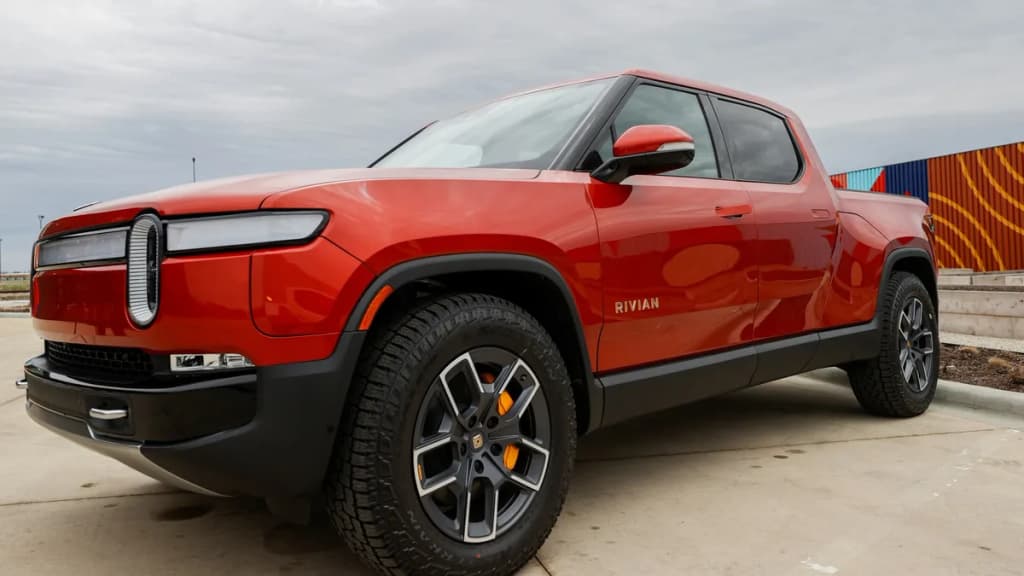
Rivian’s Autonomy+ is an ADAS platform that currently emphasizes highway-centric operation with a focus on driver safety and comfort. Unlike Tesla’s aggressive pursuit of city-street navigation, Rivian has opted for a more measured rollout. Their architecture prioritizes high-confidence zones, primarily limited-access highways, where the environment is more predictable. This approach aligns with the company’s stated goal of layering advanced AI capabilities onto a robust, sensor-heavy safety foundation.
Keep exploring
More from GroundworkOur research suggests that Rivian has successfully surpassed many legacy competitors, such as GM’s Super Cruise, in terms of steering smoothness and lane-centering accuracy. If your driving profile consists primarily of highway commuting, Rivian’s system provides a highly stable, predictable experience that is specifically tuned to reduce fatigue without attempting to navigate complex urban intersections prematurely.
The divergence between Tesla and Rivian represents two distinct engineering schools of thought. Tesla’s methodology is 'data-first' and broad, pushing software updates to a massive fleet to gather real-world edge cases. This creates a faster feedback loop but introduces higher variability in performance between updates. Rivian’s philosophy is 'safety-first,' incorporating more conservative guardrails that prevent the system from engaging in environments where the software’s confidence score is low.
According to the National Highway Traffic Safety Administration (NHTSA), ADAS systems are most effective when the driver understands the system's 'operational design domain.' You should evaluate these systems based on:
- Sensor redundancy: Rivian integrates a multi-modal sensor suite, whereas Tesla relies on a vision-only architecture.
- Engagement triggers: Tesla allows for more frequent engagement in complex traffic, while Rivian restricts its 'hands-free' mode to pre-mapped highway sections.
- Software update cadence: Tesla updates its FSD logic frequently, while Rivian utilizes a more rigorous validation process before pushing features to the wider user base.
Choosing between these platforms depends on how you use your vehicle daily. If you value a system that is constantly evolving and capable of navigating diverse environments, Tesla’s ecosystem is currently more mature in its point-to-point capabilities. If you prioritize a system that provides a consistent, high-confidence experience on long highway stretches with additional safety redundancies, Rivian’s Autonomy+ is a strong contender.
Before relying on any ADAS, conduct your own assessment based on these three criteria:
- Define your primary driving environment: Are you a highway commuter or a city driver?
- Assess your risk tolerance: Are you comfortable with a system that is in a constant state of 'beta' testing, or do you prefer a more conservative, validated software release?
- Test the ergonomics: Visit a dealership or test drive to see how the system handles lane changes and braking in your specific local environment.
Ultimately, both companies are working toward a future of higher automation, but the road there is paved with different engineering trade-offs. At Groundwork, we emphasize that neither system relieves you of the legal and moral responsibility of being the primary pilot of your vehicle. Always remain engaged, keep your eyes on the road, and assume the system will require your intervention at the most unexpected moment.