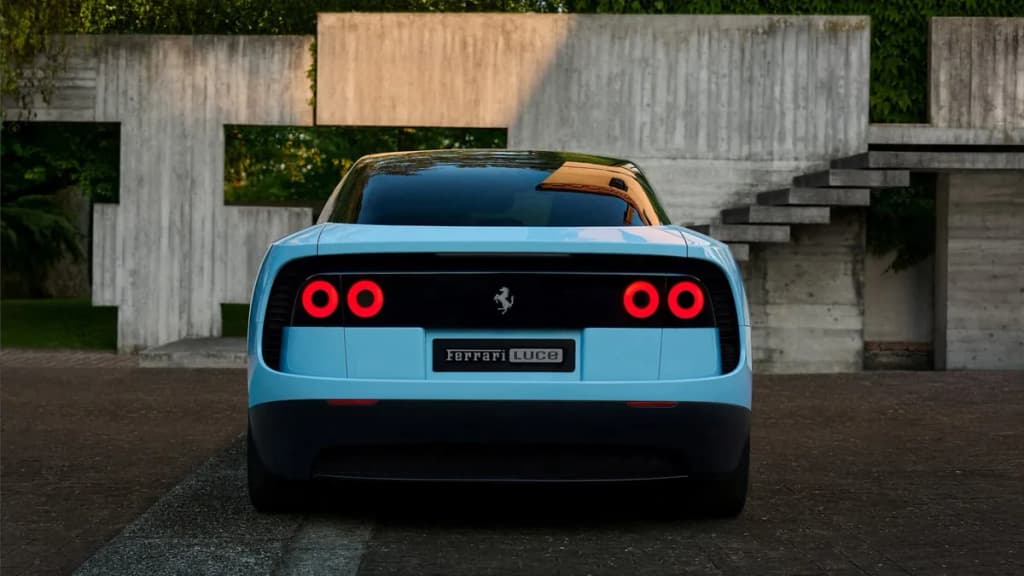
A bespoke Ferrari Luce, the manufacturer’s first fully electric vehicle (EV), recently sold at auction for $40 million, establishing a record for a new production vehicle. While this sale price is anomalous, it highlights the distinct divergence between standard market sentiment for electric luxury sports cars and the high-end collector’s market for exclusive, limited-edition assets.
At Groundwork, our analysis shows that the $40 million price tag is not a valuation of the vehicle’s utility or its powertrain technology, but rather a reflection of scarcity-driven asset appreciation. Investors must distinguish between the functional retail value of a new luxury EV and the speculative premium attached to a 'chassis number one' collector’s item.
The $40 million sale price of the Ferrari Luce is primarily driven by its status as a historical artifact rather than its performance as an electric vehicle. In the luxury automotive market, the first production chassis of a new model line holds significant 'provenance value.' When an iconic brand like Ferrari enters a new technological era, the inaugural unit becomes a tangible piece of corporate history, which frequently commands prices exponentially higher than the manufacturer’s suggested retail price (MSRP).
According to data from Sotheby’s, the auction of this specific unit—customized through Ferrari’s 'Tailor Made' program—was marketed as an 'unrepeatable opportunity.' For high-net-worth collectors, the value proposition is anchored in asset scarcity. Because the Luce represents a fundamental shift in Ferrari’s engineering strategy, the first unit is perceived as a hedge against future market volatility in the EV space, regardless of the broader public reception to the model.
The public and market reaction to the standard-production Ferrari Luce, which carries an MSRP of approximately 550,000 euros ($640,000), has been notably polarized. Following its unveiling in May 2026, Ferrari’s stock experienced downward pressure as analysts voiced concerns over 'design hate' and a potential mismatch between the brand’s traditional internal-combustion identity and the realities of the EV market.
At Groundwork, our research framework identifies this phenomenon as 'brand-equity friction.' When legacy luxury manufacturers pivot to electrification, they face two distinct risks: the loss of traditionalist brand loyalty and the competitive pressure of entering a saturated technology-forward EV market. While competitors like Porsche and Lamborghini have signaled caution or retracted EV production timelines due to weakening consumer demand, Ferrari has maintained its trajectory. The company’s ability to beat second-quarter earnings expectations suggests that, despite the polarizing nature of the Luce, demand for personalization within the 'Tailor Made' program remains a robust revenue driver.
Keep exploring
More from GroundworkIt is critical for potential buyers and investors to separate the utility of the Luce as an automobile from its status as a financial asset. The standard model is a $640,000 luxury vehicle subject to the typical depreciation curves associated with high-performance electric cars, which often suffer from rapid technological obsolescence compared to their mechanical predecessors.
In contrast, the $40 million auction unit is categorized as a philanthropic 'charity sale' asset. A significant portion of such high-value auctions is often driven by tax incentives, charitable intent, and the prestige of the buyer. Applying the valuation of a charity-auctioned, one-of-one vehicle to the broader market for the standard production Luce would be a fundamental error in financial modeling. When evaluating the investment potential of a luxury vehicle, Groundwork suggests focusing on production numbers, limited-edition exclusivity, and historical brand significance rather than outlier auction results.
For the average investor, luxury vehicles are rarely efficient portfolio assets. They are characterized by high maintenance costs, insurance premiums, and storage requirements, all of which erode the 'net' return on investment. While the Ferrari brand has historically demonstrated strong residual value, the transition to EV technology introduces new variables, such as battery degradation and software support lifecycles, which were not factors in the valuation of vintage Ferraris.
If you are considering a luxury vehicle as an investment, adhere to these decision criteria:
- Verify the 'Tailor Made' or limited-series status: Standard production models rarely appreciate at the same rate as bespoke, limited-run chassis.
- Account for the 'technological cliff': Research the projected lifecycle of the EV powertrain to determine if the vehicle will remain relevant or become obsolete within 5-10 years.
- Analyze the brand’s broader health: Ferrari’s recent 12% share price growth and raised guidance indicate strong institutional support, which is a leading indicator for long-term brand equity.
- Separate sentiment from data: Do not allow the 'buzz' of a high-profile auction to influence your assessment of the vehicle's functional market value.
Ultimately, the $40 million Luce sale is an outlier, not a benchmark. The vehicle serves as a reminder that in the world of ultra-luxury, the 'first of its kind' will always hold a premium, even if the underlying technology is met with market skepticism.