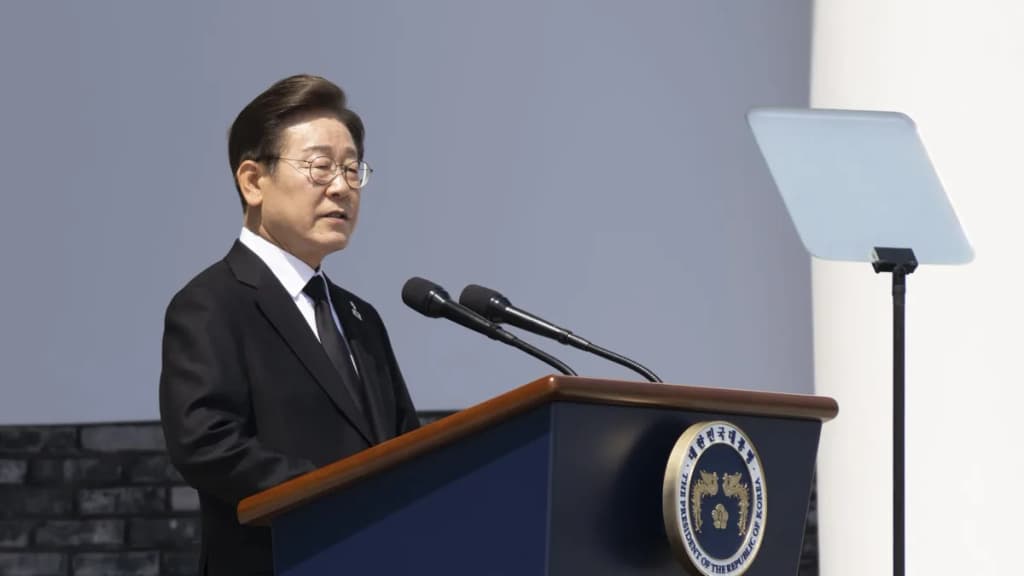
A national security strategy is the framework a country uses to protect its sovereignty, economic interests, and population from internal and external threats. For South Korea, this involves navigating a complex security architecture defined by its alliance with the United States, the ongoing threat from North Korea, and shifting regional power dynamics. Recent policy shifts regarding joint military exercises demonstrate how political decisions can directly alter the risk profile for a nation.
At Groundwork, our analysis shows that when military deterrence strategies are adjusted, the resulting 'security gap' must be addressed through domestic preparedness, diplomatic agility, and increased indigenous defense capabilities. The current regional environment requires a sober assessment of how institutional alliances function when foreign policy priorities diverge between partners.
The U.S.-South Korea alliance is a mutual defense pact established in 1953, centered on the presence of approximately 28,500 U.S. troops stationed in the region to deter North Korean aggression. While this alliance has provided the bedrock for regional stability for seven decades, recent rhetoric from U.S. leadership indicates a transition toward a more transactional model. When a primary security guarantor reduces its military footprint or modifies the scope of joint defensive exercises, the host nation faces a strategic necessity to recalibrate its own defense posture.
According to recent reports, U.S. leadership has ordered a substantial reduction in joint military drills, citing a desire to avoid signaling hostility to North Korea. This shift complicates the traditional 'defensive' narrative of exercises like Ulchi Freedom Shield, which are designed to maintain operational readiness among 18,000 South Korean personnel and their American counterparts. When the frequency or intensity of these exercises decreases, the primary risk is a potential degradation in combined operational synergy, which historically serves as the most effective deterrent against regional provocations.
Military exercises are large-scale, simulated combat operations designed to test communication, command structures, and rapid deployment capabilities. These drills are not merely training sessions; they are public demonstrations of military capacity intended to communicate a credible threat of retaliation to adversaries. By practicing complex maneuvers, allied forces ensure that in the event of an actual conflict, their response is reflexive and coordinated rather than disjointed.
Keep exploring
More from GroundworkAt Groundwork, our research into military deterrence theory indicates that the efficacy of a deterrent is entirely dependent on the adversary's perception of its credibility. If North Korea perceives that the alliance between the U.S. and South Korea is fraying—whether through reduced drills or public policy disputes—the threshold for provocation decreases. Pyongyang’s foreign ministry has historically characterized these joint drills as 'rehearsals for invasion.' Consequently, when these drills are curtailed, it can be interpreted by adversarial actors as a weakening of the alliance's resolve, potentially emboldening further testing of ballistic missiles or conventional border skirmishes.
A 'worst-case scenario' in the context of the Korean Peninsula involves a rapid escalation from a localized border incident to a full-scale regional conflict involving conventional or non-conventional weapons. South Korean leadership has explicitly signaled that the country must prepare for such outcomes, emphasizing that while peace remains the ultimate priority, it cannot be sustained through passivity. This preparation involves hardening critical infrastructure, diversifying diplomatic partnerships, and enhancing the domestic defense industrial base.
Data from the Stockholm International Peace Research Institute (SIPRI) consistently ranks South Korea among the world’s top defense spenders, a reflection of the reality that the nation cannot rely solely on external security guarantees. As geopolitical unpredictability rises, the 'worst-case' planning necessitates:
- Strengthening indigenous missile defense systems, such as the Korea Air and Missile Defense (KAMD) program.
- Deepening intelligence-sharing agreements with regional partners beyond the U.S., such as Japan and Australia, to create a more resilient security net.
- Expanding domestic manufacturing of high-tech military hardware to reduce dependency on foreign supply chains during a potential crisis.
Security policy is rarely decoupled from economic leverage. Recent instances of U.S. leadership demanding South Korean assistance in broader, unrelated global conflicts—such as operational support in Iran—illustrate how security alliances are increasingly being treated as quid-pro-quo arrangements. When a global superpower links its regional military presence to the host country's participation in distant conflicts, it creates significant political friction.
For South Korea, this presents a challenging dilemma: balancing the imperative to maintain the U.S. military presence with the need to protect its own economic interests and regional stability. Engaging in secondary conflicts can alienate other trade partners and divert critical defense resources away from the primary mission of peninsula security. Groundwork’s analysis of historical geopolitical shifts suggests that nations which successfully navigate these pressures are those that maintain a 'strategic autonomy'—the ability to act in their own national interest while remaining a reliable, yet independent, alliance member. Relying on a single external partner for national security is a high-risk strategy in an era of volatile international relations.