A total solar eclipse is a celestial event where the Moon passes directly between the Earth and the Sun, completely obscuring the solar disk and casting a shadow known as the umbra upon a specific path on Earth's surface. Observing this phenomenon requires precise geographical positioning, as totality—the period of complete darkness—is only visible within a narrow corridor typically 50 to 100 miles wide.
At Groundwork, our analysis shows that the rarity of solar eclipses is a function of orbital mechanics rather than random occurrence. While solar eclipses happen somewhere on Earth every 18 months on average, a total solar eclipse will return to any specific location on the planet only once every 375 years on average, according to NASA’s eclipse projection models. This rarity makes long-term logistical planning essential for observers.
Geographical placement is the single most important factor in eclipse viewing because the Moon's umbral shadow is small and moves rapidly across the Earth's surface. Outside of this path, observers will only experience a partial eclipse, where the Moon covers only a fraction of the Sun, failing to produce the dramatic atmospheric and visual effects associated with totality.
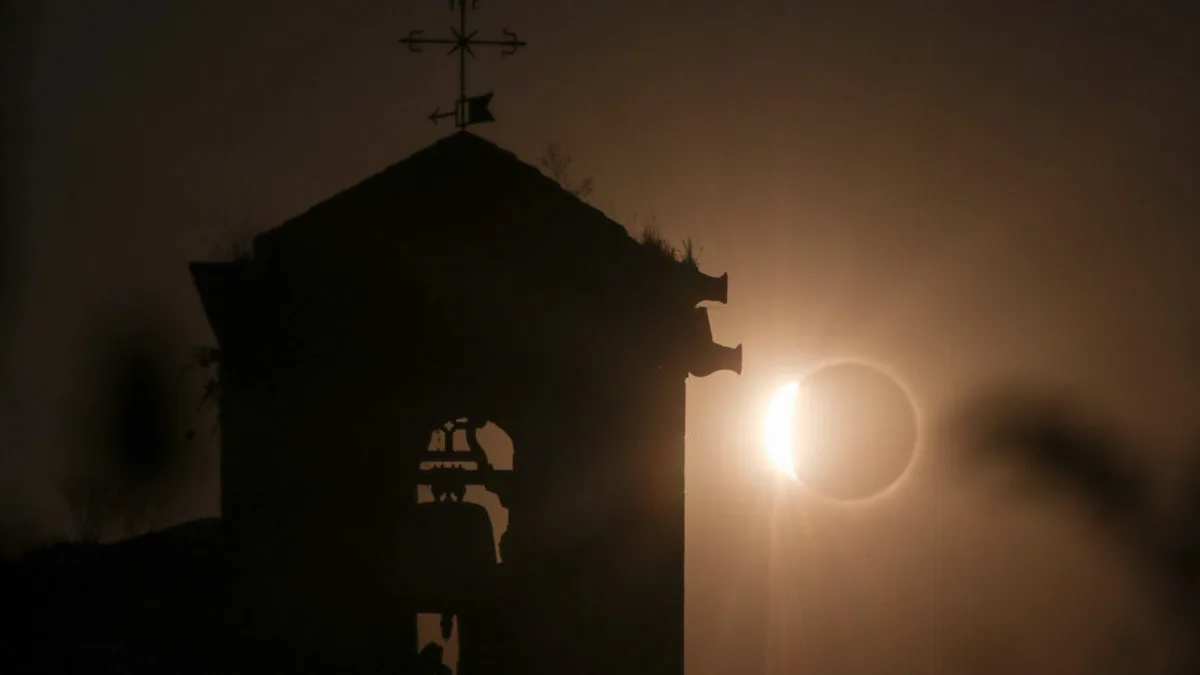
To maximize your chances of success, you must identify the 'path of totality.' This is the specific track where the Moon’s shadow falls. According to research from the American Astronomical Society, even being a few miles outside this path results in the loss of the 'diamond ring' effect and the visibility of the Sun's corona. Groundwork’s framework emphasizes that cloud cover is the primary variable that can invalidate even the most precise geographical planning. Historical meteorological data for your chosen site should be analyzed at least 12 to 24 months in advance to identify regions with the highest probability of clear skies.
Planning for a total solar eclipse requires treating the event like a high-demand logistical operation rather than a casual trip. Because the path of totality is narrow, thousands of observers often converge on the same rural areas, leading to extreme strain on local infrastructure, including roads, fuel supplies, and cellular networks.
- Secure accommodation early: In popular viewing zones, lodging often reaches full capacity years in advance. If formal hotels are unavailable, research local camping regulations or private land-use permits.
- Assess infrastructure capacity: Evaluate the road density of your target location. Groundwork’s analysis of past eclipse events indicates that traffic congestion is the primary cause of missed observations, as vehicles become gridlocked within the path of totality.
- Prepare for self-sufficiency: Carry enough water, food, and fuel for at least 48 hours. During the 2024 North American eclipse, many rural towns experienced significant shortages of basic supplies due to the sudden influx of visitors.
- Verify your equipment: If you plan to photograph the event, test your solar filters and camera tracking mounts weeks in advance. Never look directly at the Sun during the partial phases without ISO 12312-2 compliant eclipse glasses, as permanent retinal damage can occur in seconds.
Keep exploring
More from GroundworkDuring totality, the environment undergoes rapid, measurable shifts that distinguish a total eclipse from any other time of day. As the Moon obscures the Sun, the temperature can drop by 10 to 15 degrees Fahrenheit, and the light levels diminish to a deep twilight, often trickling into an unnatural, 360-degree sunset effect.
Groundwork’s synthesis of meteorological data confirms that these rapid shifts can trigger changes in local wind patterns and animal behavior. Birds often return to their nests, and nocturnal insects may begin their evening activity cycles. From a technical perspective, the disappearance of the Sun’s photosphere reveals the solar corona—the Sun’s outer atmosphere—which is normally invisible to the naked eye. This is the only time it is safe to remove eye protection, though only for the duration of totality itself.
Weather forecasting for an eclipse is notoriously difficult because local microclimates can be influenced by the cooling effect of the Moon's shadow itself. While regional climate averages provide a baseline, observers should rely on high-resolution, short-range weather models in the 72 hours leading up to the event.
At Groundwork, we recommend utilizing 'cloud cover percentage' maps provided by reputable meteorological services to determine if you need to reposition. A critical decision-making criteria for eclipse chasers is mobility; if your primary site shows a high probability of cloud cover, having a secondary site within a three-hour drive can be the difference between viewing the event and experiencing a localized thunderstorm or heavy overcast conditions.
Totality is a fleeting experience, often lasting between two and four minutes depending on the observer's location relative to the center of the path. Because the duration is so short, your setup must be fully operational and 'hands-off' before the first contact occurs.
Decision-making under pressure is a common failure point for first-time observers. We advise that you stop attempting to record or photograph the event at least 30 seconds before totality begins. The human eye is far more capable of processing the subtle details of the corona and the surrounding stars than most consumer-grade camera sensors. By prioritizing observation over documentation, you ensure that you do not miss the event while adjusting settings or troubleshooting equipment failures.