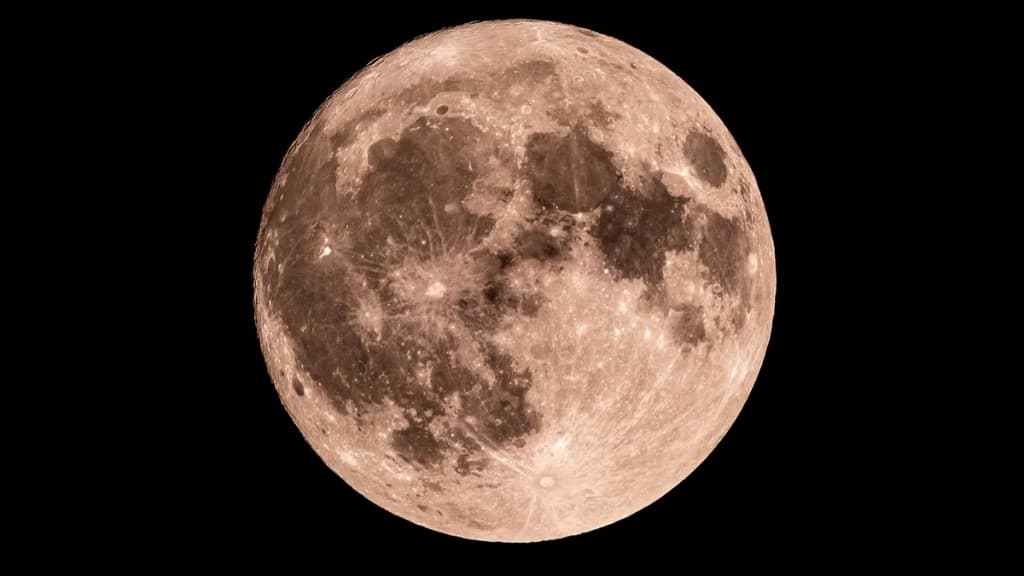
A moon phase is the specific portion of the Moon’s sunlit side that is visible from Earth at any given time. These phases occur because the Moon orbits our planet while being illuminated by the Sun, causing the angle of light we see to shift over a roughly 29.5-day period, known as the synodic month.
According to NASA data, the Moon does not produce its own light; it merely reflects the solar radiation it receives. As the Moon travels through its orbit, the geometric relationship between the Sun, Earth, and the Moon changes. At Groundwork, our analysis shows that understanding these positions allows observers to predict not only the visual appearance of the lunar surface but also the timing of high and low tides, which are physically influenced by the Moon's gravitational pull.
The lunar cycle is divided into eight phases based on the percentage of illumination and whether the light is growing (waxing) or shrinking (waning). Each phase represents a specific point in the Moon's 29.5-day orbit around Earth, transitioning from complete darkness to full illumination and back again.
- New Moon: The Moon is positioned directly between the Earth and the Sun. The side facing us is in shadow, making the Moon invisible to the naked eye.
- Waxing Crescent: A thin sliver of light appears on the right side of the lunar disk in the Northern Hemisphere. This indicates the Moon is beginning its journey toward full illumination.
- First Quarter: The Moon has completed one-quarter of its orbit. We see exactly half of the Moon's face illuminated on the right side.
- Waxing Gibbous: More than half of the Moon is lit, but it is not yet fully illuminated. The light continues to grow as the Moon approaches the Full Moon stage.
- Full Moon: The Earth is positioned between the Sun and the Moon, allowing the entire face of the Moon to be illuminated by the Sun.
- Waning Gibbous: After the Full Moon, the light begins to decrease. More than half of the Moon remains visible, but the shadow starts to encroach from the right side.
- Third Quarter (Last Quarter): The Moon is three-quarters through its cycle. The left half of the Moon is illuminated, appearing as a mirror image of the First Quarter.
- Waning Crescent: Only a thin sliver of light remains on the left side, signaling the final stage before the cycle resets to a New Moon.
The changing shape of the Moon is an optical result of the Moon’s orbital position relative to the Earth and the Sun. While the Moon is always half-illuminated by the Sun, our perspective from Earth changes as the Moon completes its orbit, according to the National Oceanic and Atmospheric Administration (NOAA).
Keep exploring
More from GroundworkWhen the Moon is between the Earth and the Sun, the illuminated side is facing away from us. As it moves along its orbital path, we begin to see the edge of the lit side, which appears as a crescent. By the time the Moon has moved to the opposite side of the Earth from the Sun, we see the full, illuminated face. This cycle is remarkably consistent, allowing astronomers to calculate the phase of the Moon for any given date with near-perfect accuracy.
While the naked eye can discern the major phases and large lunar maria—the dark plains formed by ancient volcanic eruptions—using optical aids significantly enhances the experience. Groundwork’s research into amateur astronomy suggests that even low-power binoculars can reveal structural details that are otherwise invisible.
For instance, during a Waxing Crescent phase, the terminator line—the border between light and shadow—is the best place to observe craters. Because the Sun is hitting the surface at a low angle, the shadows inside craters like Endymion are elongated, providing high contrast and depth. When observing the Moon, consider these steps:
- Identify the phase: Use a lunar calendar to determine if the Moon is waxing or waning, as this dictates which side of the Moon will show the best crater detail.
- Select your equipment: 10x50 binoculars are sufficient for viewing lunar maria and major craters, while a telescope with a focal length of at least 800mm provides enough magnification to see mountain ranges.
- Choose the timing: Observing during a crescent or quarter phase often yields better detail than a Full Moon, as the direct, overhead sunlight during a Full Moon washes out the shadows that define crater rims and valleys.
Beyond visual appearance, the Moon's phase is a primary driver of tidal patterns on Earth. The gravitational interaction between the Earth and the Moon causes the oceans to bulge, creating high and low tides.
Research from the U.S. Geological Survey indicates that during Full Moon and New Moon phases, the Sun, Earth, and Moon align, causing the gravitational forces to combine. This results in "spring tides," where the difference between high and low tide is at its greatest. Conversely, during the First and Third Quarter phases, the Sun and Moon are at right angles to each other, resulting in "neap tides," where the tidal range is more moderate. Understanding these cycles is critical for maritime navigation, coastal management, and certain agricultural practices that rely on water table fluctuations.