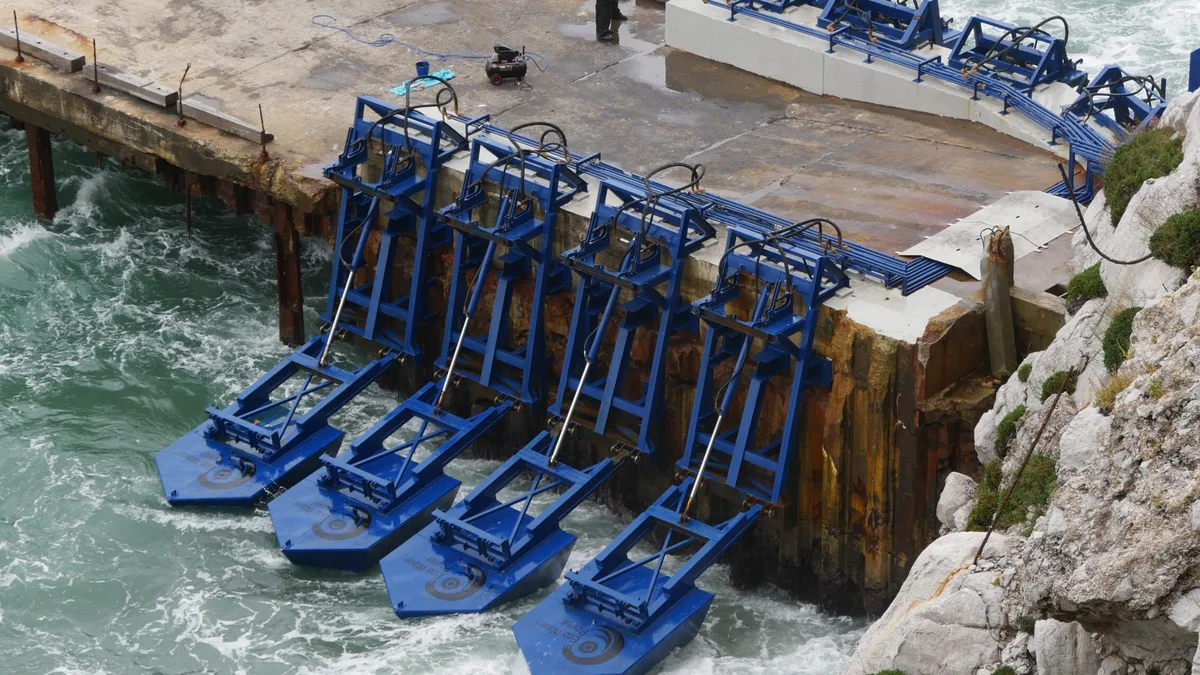
Wave energy is a form of renewable power generation that captures the kinetic energy of ocean surface waves and converts it into electricity. Projects like Eco Wave Power’s 1 MW installation in Porto, Portugal, serve as critical case studies for the intersection of emerging marine technology and the physical durability of existing coastal infrastructure. At Groundwork, our analysis shows that the primary bottleneck for marine energy deployment is not just the energy conversion technology itself, but the structural integrity of the breakwaters and seawalls required to house these systems.
Storm events cause significant project delays because marine energy installations often rely on the structural stability of existing port infrastructure, such as breakwaters, which can be catastrophically damaged by high-energy wave action. When a breakwater sustains structural damage, the utility or port authority must prioritize base-level safety and coastal protection over the deployment of energy equipment. This creates a dependency where the energy project’s timeline is tethered to the civil engineering maintenance schedules of the port authority.
In the case of the Barra do Douro project in Portugal, the necessity for rehabilitation works highlights a fundamental challenge in the renewable energy sector: the lack of control over the 'host' infrastructure. When companies like Eco Wave Power rely on third-party public assets, their regulatory and installation deadlines are vulnerable to climate-driven events that necessitate infrastructure repair. According to the Intergovernmental Panel on Climate Change (IPCC), coastal regions are facing increased risks from extreme weather, which effectively raises the insurance and maintenance threshold for any project tethered to the shoreline.
Project timelines in the marine energy sector are rarely fixed, as they must account for the dual requirements of environmental permitting and the physical readiness of the site. A common pitfall for developers is the 'grid-connection deadline,' a regulatory requirement that forces projects to be operational by a specific date to qualify for subsidies or feed-in tariffs. When physical infrastructure is damaged, developers must negotiate formal extensions with authorities to avoid losing their grid-connection status.
At Groundwork, our research into renewable project lifecycles indicates that successful deployment requires a three-pronged approach to risk management:
- Infrastructure audit: Assess the historical storm frequency and structural integrity of the host site before finalizing legal agreements.
- Regulatory flexibility: Include 'force majeure' or 'infrastructure dependency' clauses in power purchase agreements (PPAs) that automatically trigger timeline extensions if host infrastructure is compromised.
- Local stakeholder alignment: Establish direct communication channels with port authorities (such as APDL in the Porto example) to ensure that energy deployment is integrated into the site’s long-term maintenance master plan rather than treated as an external add-on.
Keep exploring
More from GroundworkMoving from pilot-scale (sub-100 kW) to megawatt-scale (1 MW+) deployment introduces exponential complexity in mechanical engineering and site logistics. Pilot projects often operate in controlled environments or sheltered harbors. Megawatt-scale projects, by contrast, must face the full force of the ocean, which subjects steel works, hydraulic systems, and electrical components to significantly higher levels of stress.
Empirical data suggests that the transition to utility-scale wave energy requires rigorous standardization of components. As companies advance toward 20 MW portfolios, they must move away from bespoke, site-specific engineering toward modular designs that can be quickly removed or reinforced ahead of storm surges. This requires a robust supply chain of local subcontractors—ranging from civil engineers to hydraulic specialists—who are capable of operating in high-salinity, high-energy marine environments.
Investors evaluating marine energy projects must look beyond the efficiency of the energy conversion technology and scrutinize the 'infrastructure risk.' The cost of electricity (LCOE) for wave energy is heavily impacted by the frequency of maintenance cycles. If a project is anchored to a breakwater that requires frequent repair, the downtime of the energy-generating equipment can render the project economically non-viable regardless of how efficient the wave-to-electricity conversion process is.
When evaluating a project’s long-term viability, Groundwork suggests focusing on these three criteria:
- Asset ownership vs. access: Does the energy company own the installation site, or do they have a lease? Ownership provides more control over reinforcement measures.
- Grid integration maturity: Is the grid connection robust enough to handle the intermittent nature of wave power, and is it protected from the same storm risks that threaten the wave energy converters?
- Regulatory support: Is the local authority providing tangible support, such as formal letters for deadline extensions, or is the relationship purely transactional?
As the industry matures, the integration of wave energy into coastal defense systems—such as using wave energy converters to dissipate energy that would otherwise erode the coastline—could change the economic model. By providing a secondary benefit (coastal protection), wave energy projects may become eligible for 'adaptation funding' rather than just 'energy funding.' This shift would fundamentally alter the risk profile of these projects, making them more attractive for institutional capital.
For now, the sector remains in a phase of 'infrastructure-dependent growth.' Success will be defined by the ability of developers to navigate the realities of aging coastal assets while simultaneously scaling their technology to meet the demands of a changing climate. Managing these risks through proactive communication, regulatory foresight, and modular engineering remains the most reliable path to commercializing wave energy at scale.