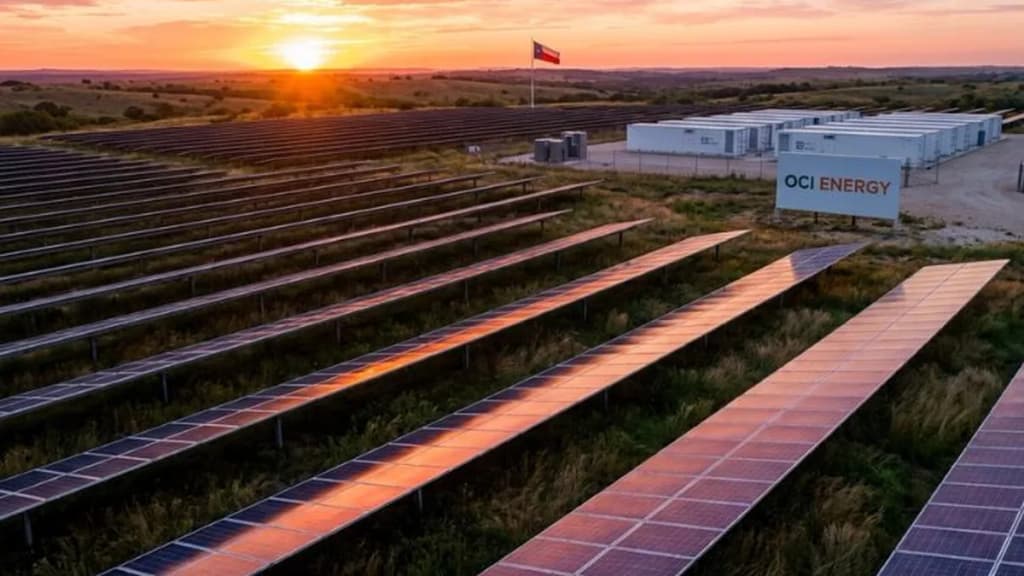
Utility-scale solar and battery energy storage development is the process of planning, financing, and constructing large-scale renewable energy systems designed to feed electricity directly into the power grid. These projects require complex coordination between utility providers, financial institutions, technology suppliers, and infrastructure investors to ensure long-term grid reliability and economic viability.
At Groundwork, our analysis shows that the integration of battery energy storage systems (BESS) with utility-scale solar is no longer an optional upgrade, but a structural requirement for modern energy portfolios. According to the Solar Energy Industries Association (SEIA), the United States added over 30 gigawatts of solar capacity in 2023, with a significant portion of new deployments now including co-located storage to mitigate the intermittency of solar generation.
Battery storage is a technology that captures excess energy generated by solar panels during peak sunlight hours and releases it during periods of high demand or low generation. This functionality stabilizes the grid by preventing the oversupply issues that occur when solar production exceeds local demand, thereby maximizing the utility of every kilowatt-hour produced.
Without storage, solar facilities are subject to curtailment, where grid operators force a plant to power down because the grid cannot absorb the sudden influx of energy. Our research framework indicates that integrating storage allows developers to participate in ancillary services markets, such as frequency regulation and spinning reserves, which provide secondary revenue streams that improve the internal rate of return (IRR) of a project. By shifting the energy supply to match peak demand windows—typically in the early evening—developers ensure that the most valuable energy is sold at the highest market rates.
Developing a utility-scale energy project is a multi-year effort that involves rigorous site selection, environmental permitting, and interconnection studies. The process typically follows a disciplined sequence designed to minimize financial risk and regulatory hurdles before breaking ground on construction.
- Site acquisition and feasibility: Developers identify land with high solar irradiance and proximity to existing high-voltage transmission lines. They conduct geotechnical surveys and environmental impact assessments to ensure the site can support large-scale infrastructure.
- Interconnection studies: This is the most significant bottleneck in the industry. Developers apply to the regional grid operator (such as ERCOT in Texas or PJM in the Northeast) to study how the new energy input will affect the local transmission grid. These studies can take 18 to 36 months to complete.
- Permitting and zoning: Local and state authorities review the project for compliance with land-use regulations. This stage often involves community engagement to address concerns regarding visual impact, land usage, and wildlife preservation.
- Financing and power purchase agreements (PPAs): Once the project is 'de-risked' through permits and interconnection status, developers secure debt and equity financing. A PPA is then signed with a utility or large commercial buyer, locking in a long-term price for the energy produced.
- Procurement and construction: Developers source solar modules, inverters, and battery cells, often navigating global supply chain volatility, before beginning construction.
Financial risk in renewable energy development stems from capital intensity, interest rate sensitivity, and potential changes in energy market regulations. Because these projects require hundreds of millions of dollars in upfront capital, even minor fluctuations in the cost of debt can significantly impact the viability of a project.
Keep exploring
More from GroundworkAt Groundwork, our analysis of project finance models shows that developers must account for 'basis risk'—the difference between the price of electricity at the solar plant's location and the price at the grid's delivery point. If the grid becomes congested, the developer may receive less revenue than the PPA dictates. Additionally, technology obsolescence is a factor; as battery density improves and solar panel efficiency increases, projects that take five years to develop may be using hardware that is less efficient than what is available at the time of commissioning.
Successful developers mitigate operational risk by forming strategic, long-term partnerships with technology providers and infrastructure investors. Rather than treating equipment procurement as a transactional process, top-tier developers engage in multi-year master supply agreements that guarantee the availability of solar panels and battery cells during periods of market scarcity.
Collaboration with infrastructure investors—such as pension funds or private equity firms specializing in energy transition—provides the stable, low-cost capital necessary to weather long development cycles. These investors prioritize projects with diversified revenue streams and robust contractual protections, such as inflation-indexed PPAs. By aligning with partners that have a long-term time horizon, developers can better manage the cyclical nature of the renewable energy market, ensuring that projects remain funded even during periods of economic downturn or supply chain disruption.
Technological advancements, particularly in long-duration energy storage (LDES) and artificial intelligence-driven grid management, will define the next decade of utility-scale development. AI and predictive analytics are already being used to optimize the charging and discharging cycles of BESS, allowing operators to react to grid fluctuations in milliseconds rather than minutes.
As the energy transition accelerates, the focus is shifting from simple capacity expansion to grid resilience. Developers who can provide 'firm' power—energy that is available on demand regardless of weather conditions—will command a premium in the market. The integration of solar and storage is the foundation of this shift, turning intermittent renewable sources into a reliable, dispatchable asset class that forms the backbone of the modern electricity grid.