A whole-house dehumidifier is a mechanical system integrated directly into your home’s HVAC ductwork or operated as a standalone ducted unit designed to extract excess moisture from the air across your entire living space. Unlike portable units that treat one room at a time, these systems maintain a consistent humidity level throughout the structure, which is essential for preserving building materials, improving indoor air quality, and reducing the workload on your air conditioning system.
At Groundwork, our analysis shows that maintaining indoor relative humidity between 30% and 50% is the critical threshold for preventing biological growth, such as mold and dust mites, which thrive in environments exceeding 60% humidity (U.S. Environmental Protection Agency). By stabilizing these levels, you protect your structural assets and minimize the energy required to cool your home, as drier air is significantly easier for your HVAC system to temperature-regulate.
A whole-house dehumidifier functions by drawing humid air from your home’s return ducts, passing it over a refrigerated coil to condense the moisture into liquid water, and then exhausting the dried air back into the ventilation system. This process is continuous and automated, governed by a humidistat that monitors the moisture levels in your home 24/7.
Unlike portable dehumidifiers that require manual emptying of water tanks, whole-house units feature a gravity-fed or pump-assisted drainage line that routes collected moisture directly into your home’s plumbing or a floor drain. Because these systems are hardwired and plumbed, they offer a 'set-it-and-forget-it' solution that eliminates the daily maintenance associated with smaller, localized units. According to research from the Department of Energy, integrated systems are significantly more efficient than multiple portable units because they utilize your home's existing air distribution infrastructure to circulate dry air uniformly.
To determine the correct capacity for your home, you must calculate the square footage of your conditioned space and account for the specific moisture load of your geographic region. Capacity is measured in pints per day (PPD), representing the amount of water the unit can extract from the air over a 24-hour cycle.
- Measure your total conditioned square footage (including basements if they are part of the HVAC loop).
- Assess your moisture baseline; homes in humid coastal climates or those with crawl spaces require higher PPD ratings than those in arid regions.
- Match your square footage to the PPD rating:
- Under 2,000 sq. ft.: 65–70 PPD.
- 2,000–3,500 sq. ft.: 80–100 PPD.
- Over 3,500 sq. ft.: 120+ PPD.
Choosing a unit that is too small for your home will result in the compressor running constantly, leading to premature mechanical failure and higher electrical costs. Conversely, an oversized unit will cycle on and off too frequently, preventing it from effectively removing moisture from the air.
Keep exploring
More from GroundworkBecause a whole-house dehumidifier runs intermittently throughout the year, energy consumption is the primary driver of your long-term cost of ownership. You should prioritize models that are Energy Star certified, as these units are independently tested to remove at least 15% more moisture per kilowatt-hour than standard models.
At Groundwork, our cost-benefit analysis indicates that while Energy Star-certified units may carry a higher upfront purchase price, the reduced monthly utility costs typically result in a break-even point within 24 to 36 months of operation. Furthermore, look for models with 'fan-only' modes or intelligent sensors that allow the system to remain in standby when humidity levels are within the target range, preventing unnecessary power draw.
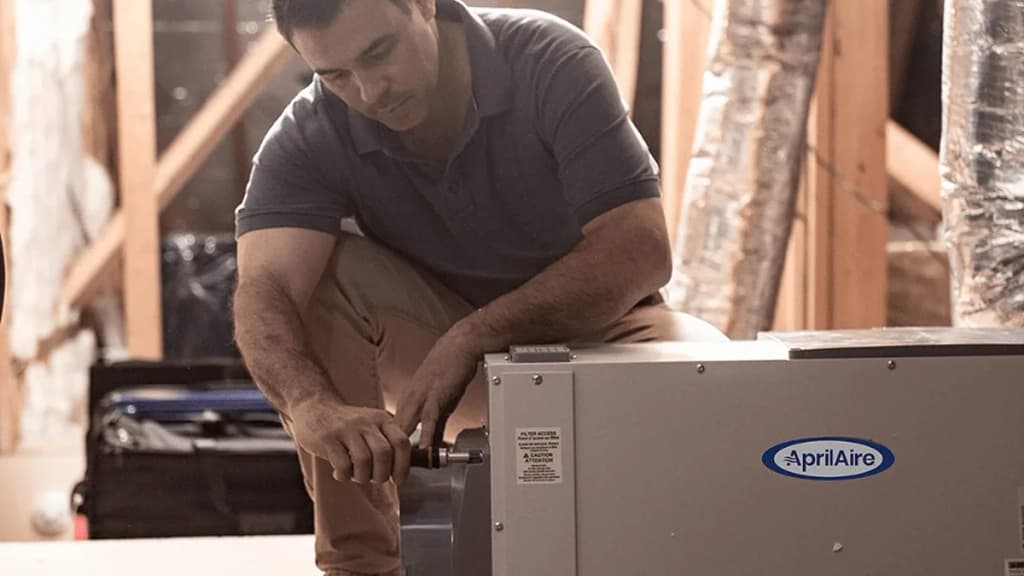
Whole-house dehumidifiers require professional installation because they involve electrical wiring and integration into the existing HVAC ductwork. Installing these units incorrectly can create pressure imbalances in your ductwork, which may lead to reduced airflow, increased noise, or damage to your central furnace or air conditioner.
Professional HVAC technicians will typically perform the following steps during installation:
- Duct Integration: Tying the dehumidifier into the return air plenum to ensure treated air is distributed throughout the home.
- Drainage Plumbing: Installing a dedicated PVC or vinyl drain line with a P-trap to prevent sewer gas backflow.
- Electrical Hookup: Connecting the unit to a dedicated circuit to meet local building codes.
- Control Calibration: Programming the humidistat to interface with your existing thermostat or a dedicated wall-mounted control unit.
How do you maintain a whole-house system?
Maintenance for a whole-house dehumidifier is minimal but essential for performance. You must replace or clean the air filter every 3 to 6 months, depending on the air quality in your home and the presence of pets. If you neglect the filter, dust and debris will accumulate on the cooling coils, significantly reducing the unit’s ability to condense moisture and potentially causing the coils to freeze over.
In addition to filter changes, you should inspect the drain line annually to ensure no algae or mineral buildup is obstructing water flow. If your unit uses a condensate pump, test the float switch once a year to ensure the pump engages correctly, preventing potential water leaks inside your utility closet or basement. By following this preventative maintenance schedule, you can expect an average lifespan of 10 to 15 years for a high-quality unit.