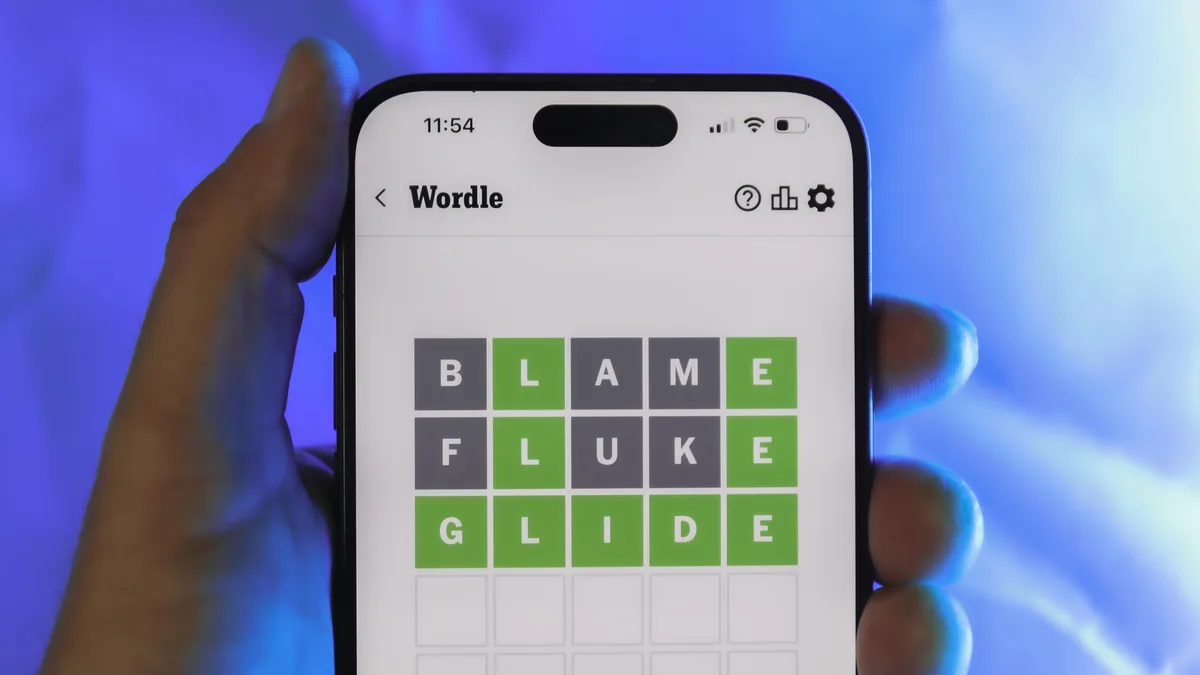
Wordle is a daily word-guessing game where you have six attempts to identify a five-letter word based on color-coded feedback. Mastering the game requires a combination of linguistic probability, strategic vowel placement, and efficient letter elimination, rather than relying on random guesses or luck.
According to data analysis from the New York Times, the average player solves the puzzle in about four guesses. Consistent success depends on your starting word and how you process the feedback provided by the game's color-coded system: green tiles indicate a correct letter in the correct position, yellow indicates a correct letter in the wrong position, and gray indicates the letter is not in the word at all.
The most effective starting words are those that contain high-frequency consonants and vowels, such as 'ADIEU', 'CRANE', or 'SLATE'. By testing three different vowels and two common consonants in your first turn, you statistically narrow down the potential solution space by more than 50% on average.
Mathematical modeling of the English language shows that letters like E, A, R, I, O, T, N, and S appear in the vast majority of five-letter words. Selecting a starting word that avoids repeating letters in the first guess allows you to gather maximum information about the board. If you use a word like 'EERIE', you are 'wasting' your first turn by testing limited letter variety, which can lead to running out of guesses before you have enough data to form a coherent answer.
After your first guess, focus on 'elimination mode' rather than trying to guess the word immediately. Use your second and third turns to test the most common remaining letters (such as L, C, D, or P) even if you suspect they might not be part of the final word. This process of elimination is often more valuable than a 'lucky' guess.
For example, if your first word is 'CRANE' and you receive a yellow 'R' and a green 'E', your next guess should prioritize words that place 'R' in a different position while testing new vowels or common consonants like 'T' or 'S'. Avoiding words with repeated letters in the early stages of the game is a strategic advantage, as the majority of Wordle solutions do not contain double letters.
Keep exploring
More from GroundworkOnce you have identified two or three letters, focus on common linguistic patterns such as consonant blends (e.g., 'ST', 'CH', 'TH', 'PL') or word endings (e.g., '-ED', '-ER', '-ING', '-LY'). Pattern recognition allows you to bypass the need for random letter combinations and instead test words that fit the structural constraints of the English language.
If you have a word like '_ R A N E', you should look for common prefixes. Testing 'B' for 'BRAIN' or 'G' for 'GRAIN' is significantly more efficient than guessing words that don't follow standard phonetic structures. Most players fail because they focus on individual letters rather than the word's morphology. By identifying the 'skeleton' of the word early, you can often solve the puzzle in three turns rather than five or six.
Bottleneck puzzles occur when you have four out of five letters correct but several possible options remaining (e.g., you have '_IGHT' and could guess 'LIGHT', 'FIGHT', 'MIGHT', 'NIGHT', or 'SIGHT'). In this scenario, do not guess the word immediately; instead, use your next turn to test as many of the potential consonants as possible.
If you have five options for the first letter, try to construct a word that uses the most likely remaining letters. If you guess 'LIGHT' and it is wrong, you have only checked one possibility. If you instead guess a word that incorporates 'F', 'M', and 'N' as a secondary check, you ensure that you solve the puzzle on your next attempt. The goal is to maximize the information yield of every single turn until the solution is mathematically forced.
- Select a high-utility starting word that contains at least two vowels and three common consonants.
- Dedicate your second and third turns to testing new letters, even if you are tempted to guess the word.
- Avoid repeating letters unless you are certain the word structure requires it, as this is a common trap in word games.
- Analyze the board for common consonant clusters to narrow down the remaining possibilities.
- If you are stuck with multiple options, prioritize testing the consonants that differentiate those words rather than guessing the words themselves.
By following this structured approach, you reduce the game from a guessing exercise to a logic puzzle. Consistency in your methodology will result in a higher win percentage and fewer 'lost' games over the long term.