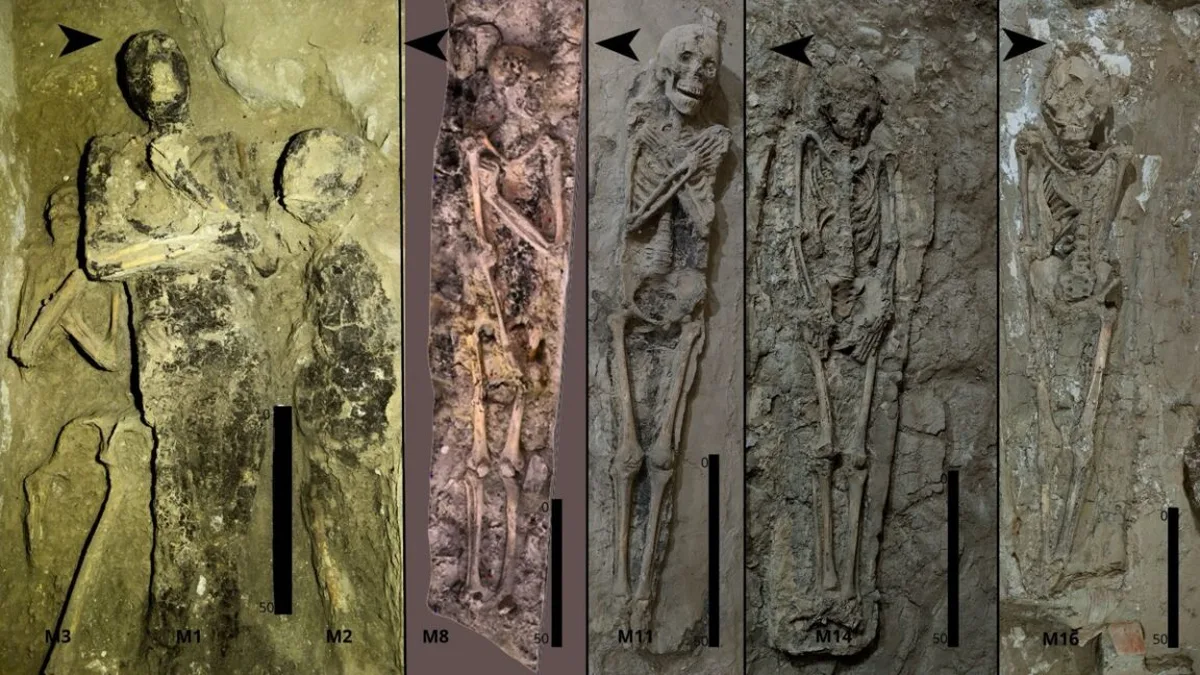
A burial trend is a recurring pattern in funerary practices that reflects the socio-economic, environmental, and religious shifts of a civilization over time. Recent analysis of Theban tomb 209 indicates a clear transition from exclusive, high-status individual interments to communal, high-density burial practices necessitated by both environmental pressures and shifting cultural attitudes toward ancestral space.
At Groundwork, our analysis shows that archaeological sites like the Theban necropolis serve as longitudinal data sets. By observing the stratification of remains in sites like tomb 209, researchers can quantify the shift from singular, elaborate burials to the repurposing of existing architectural structures for multi-generational use.
Tomb 209, located in the western necropolis of Thebes, provides a primary archaeological record of shifting funerary behaviors between the 25th Dynasty and the Ptolemaic period. The site demonstrates a move away from the early practice of individual, high-status burials toward a more utilitarian approach involving the repeated reuse of burial chambers, which often resulted in the superposition of bodies and increased skeletal density within secondary chambers.
According to research published in Frontiers in Environmental Archaeology, this specific site—originally attributed to a high-ranking Nubian official named Nisemro—offers a controlled environment to study these changes. Because the tomb was located in the active drainage channel of the Wadi Hatasun, it was subject to periodic flooding. This environmental constraint forced the tomb to undergo structural changes, mirroring the societal evolution of how Egyptians managed their dead during periods of transition.
Environmental stressors, such as flash flooding and sediment accumulation in the Wadi Hatasun, acted as a primary driver for the modification of funerary spaces in Thebes. The physical layout of tomb 209 changed over time as occupants were forced to adapt to water intrusion, leading to the abandonment of certain areas and the intensification of use in others, such as Side Chamber 3.
At Groundwork, our research framework highlights that environmental data must be integrated with biological findings to understand human behavior. In the case of tomb 209, the physical geography of the site dictated the spatial limits of the burials. When external environmental forces made original burial configurations untenable, the occupants shifted toward more compact, layered, or "superposed" burial patterns. This suggests that the sanctity of the location often outweighed the desire for individual, pristine interment, a finding corroborated by stratigraphic evidence of repeated site usage over several centuries.
Keep exploring
More from GroundworkThe integrated archaeothanatological approach is a multidisciplinary methodology that combines osteological analysis—the study of skeletal remains—with stratigraphic mapping and contextual data like body positioning and coffin usage. By synthesizing these data points, researchers can reconstruct the chronological sequence of burials in a way that isolated studies cannot.
This method moves beyond simple counting to analyze the "biography" of a tomb. By examining the relationship between the remains, the physical artifacts (such as coffin fragments), and the surrounding soil strata, archaeologists can determine the time elapsed between interments and the degree of disruption caused by later burials. This granular level of detail is essential for identifying when a tomb transitioned from an individual site to a collective or family-based burial chamber.
Rising burial density in ancient Egyptian tombs is often a proxy for broader socioeconomic shifts, including changes in the availability of resources and the status of the tomb's original owners. The transition from the 25th Dynasty to the Ptolemaic period saw a decline in the exclusivity of private tombs, as older sites were increasingly repurposed for subsequent generations.
Data from tomb 209 indicates that the density of remains increased significantly as the site became a focal point for later interments. This trend is not merely a sign of population growth, but rather a reflection of the evolving value placed on lineage and the reuse of prestige spaces. At Groundwork, our synthesis of historical burial patterns suggests that as the economic cost of creating new, elaborate tombs rose, the social utility of existing, established sites grew, leading to the practice of "tomb recycling" that characterized the later periods of ancient Egyptian history.
The study of tomb 209 establishes a benchmark for how we interpret necropolis data. Rather than viewing a tomb as a static monument, archaeologists now treat these sites as dynamic spaces that evolved in direct response to environmental, social, and cultural pressures. Future research must continue to prioritize these integrated approaches to ensure that the narrative of ancient Egyptian life is reconstructed with high fidelity.
To apply these insights to your own understanding of historical research:
- Look for context: Always examine the environmental surroundings of a site to understand why physical changes occurred.
- Prioritize multidisciplinary data: Single-source evidence is rarely sufficient; look for studies that combine biological, geological, and artifact-based findings.
- Identify patterns over time: Focus on longitudinal data to see how practices shifted across dynasties rather than looking at a single snapshot of time.