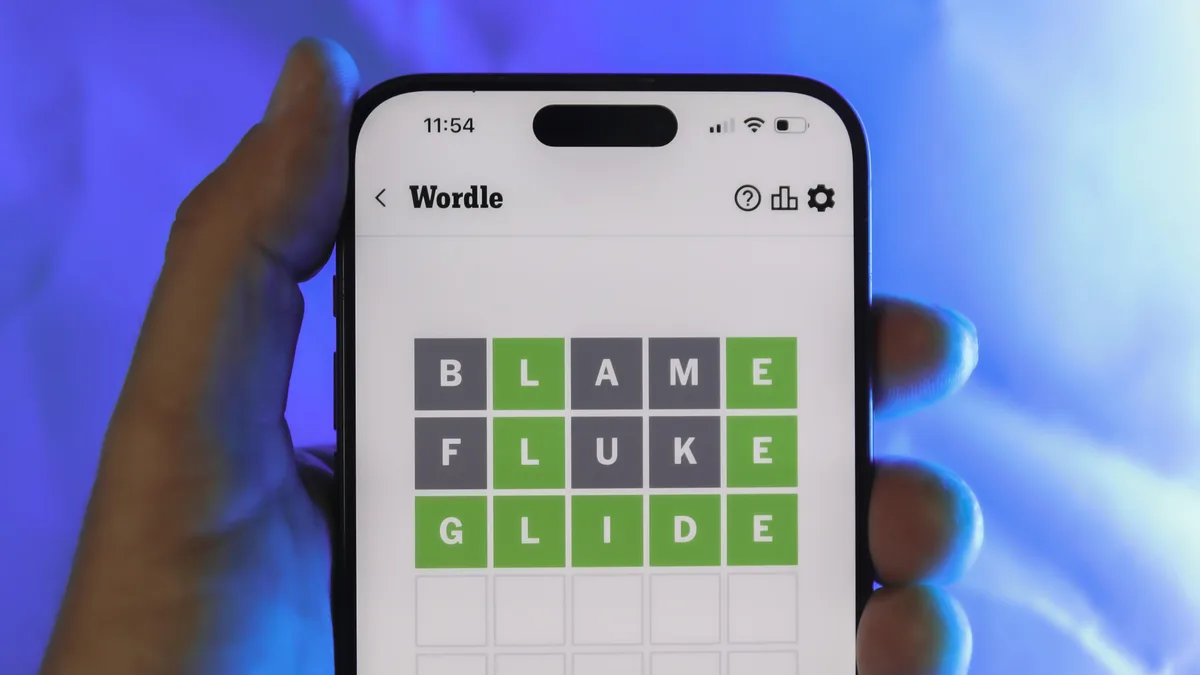
A Wordle puzzle is a daily online word game where players have six attempts to guess a hidden five-letter word, receiving color-coded feedback on each guess to narrow down the possibilities. The game, now owned by The New York Times, utilizes a standardized set of 2,309 possible solutions based on common English vocabulary, though thousands of other words are accepted as valid guesses (New York Times, 2024). Mastering Wordle requires a combination of linguistic pattern recognition, logical elimination, and strategic word choice to maximize information gain in the early stages of the game.
The Wordle feedback system is a binary logic tool that informs you of both the presence and position of letters within the target word. When you submit a five-letter guess, the tiles change color: green indicates the letter is correct and in the right position, yellow indicates the letter is in the word but in the wrong position, and gray indicates the letter does not appear in the word at all (Wordle Help, 2024). Understanding this mechanism is the most critical step in minimizing your total attempts.
- Green tiles (correct position): These provide the strongest constraint. Always prioritize using these in subsequent guesses.
- Yellow tiles (wrong position): These suggest that the letter is present, but it must be moved to a different slot in your next attempt.
- Gray tiles (absent): These are equally important as they allow you to eliminate large swaths of the English lexicon, preventing you from wasting future turns on letters that don't belong.
The best starting word strategy involves selecting a word that contains high-frequency consonants and multiple vowels to maximize the probability of getting at least one green or yellow tile in your first turn. Data analysis of the Wordle dictionary shows that letters like E, A, R, I, O, T, N, S, L, and C appear with significantly higher frequency than others (Harvard Data Science Review, 2023). Starting with a word like 'CRANE', 'SLATE', or 'ADIEU' frequently yields more information than words with rarer letters like 'J', 'Q', 'X', or 'Z'.
By choosing a word that utilizes these high-frequency letters, you effectively reduce the number of potential solutions by a larger margin in the first step. If your first word yields three gray tiles, you have immediately eliminated a substantial portion of the possible answers, allowing you to focus your remaining five guesses on a much smaller search space.
Keep exploring
More from GroundworkRepeated letters are a common source of difficulty in Wordle because the game does not explicitly inform you if a letter appears more than once. If a letter appears in the word twice, such as in the word 'BOOKS', a single guess containing one 'O' will only show one yellow or green tile for the 'O' position, while the other 'O' will remain gray if you haven't accounted for it, leading to potential confusion (Wordle Strategy Guides, 2024).
If you suspect a word has a repeated letter, test it by using a guess that places the same letter in a different, untested position. If you have confirmed a letter exists but are stuck on the remaining letters, using a 'filler' word that contains common letters you haven't tested yet is often more effective than guessing the final word prematurely. This approach, known as 'information gathering,' ensures you don't exhaust your six attempts on blind guesses.
Improving your deduction skills requires shifting from a 'word-guessing' mindset to a 'constraint-satisfaction' mindset. Once you have two or three letters confirmed, analyze the remaining slots for common letter patterns, such as prefixes or suffixes like '-ING', '-ED', '-ER', or common consonant clusters like 'CH', 'SH', 'TH', or 'ST'.
If you find yourself stuck, list all possible remaining letters for the unknown slots. If you are left with several possibilities for a single slot, look for words that contain the remaining candidates to test them simultaneously. For example, if you know the word ends in '-ATCH', you can test 'C', 'M', 'P', 'H', and 'B' by forming words that use these as the first letter. This methodical process of elimination is the hallmark of high-level play.
If you reach your fourth or fifth guess without a clear answer, stop and assess the board for any remaining common letters that haven't been tested. Many players fail because they focus on 'completing' the word rather than 'eliminating' the wrong ones. If you have three green letters and two unknown slots, do not guess a word that uses letters you already know are incorrect. Instead, use a 'burn' guess—a word that uses as many new, high-frequency letters as possible to reveal the correct letters for the remaining slots. This ensures that your final attempt is based on certainty rather than a 50/50 probability guess.