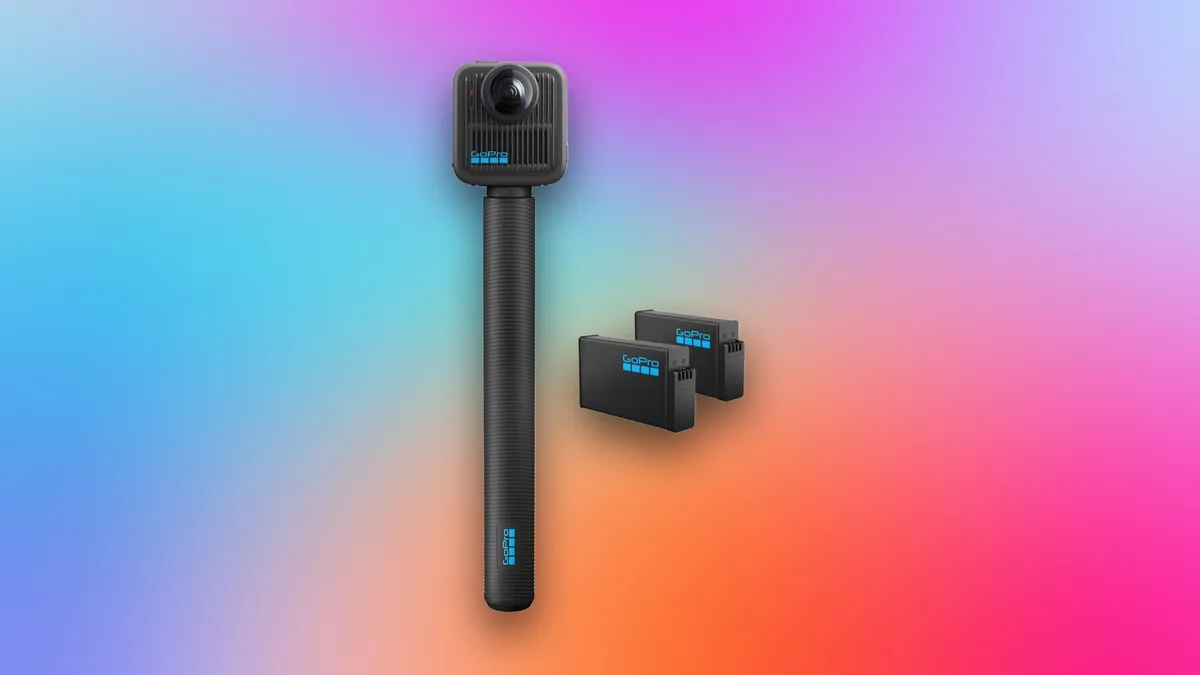
A GoPro Max 2 is a 360-degree action camera designed to capture your entire surroundings simultaneously, eliminating the need to manually frame your shots while in motion. By recording in 8K resolution, it allows you to reframe your footage later using the GoPro Quik app, effectively turning a single 360-degree clip into multiple standard 4K perspective videos.
The current bundle deal provides a significant cost reduction, lowering the price from the standard $570 to a record-low $369, effectively saving you $201 on a complete starter kit. This package is specifically designed to minimize additional expenses, as it includes the camera, two high-capacity Enduro batteries, and a 64GB SanDisk microSD card, ensuring you have the necessary components to record immediately upon unboxing (CNET, 2026).
Recording in 360 degrees shifts your focus from framing live action to capturing the entire environment, which is highly beneficial for fast-paced activities where keeping a subject in a traditional camera's field of view is challenging. Once you have captured the raw 360-degree footage, you use the GoPro Quik app to select your preferred angles and perspectives, effectively acting as your own camera crew in post-production. This 'record first, edit later' approach is widely recognized as a major advantage for beginners who might otherwise miss key moments due to poor camera positioning.
The GoPro Max 2 introduces replaceable glass lenses, a critical durability upgrade that addresses one of the most common failure points in action cameras. If you scratch a lens during a hike or mountain bike ride, you can simply replace the lens cover rather than discarding or paying for costly repairs on the entire unit. Furthermore, the inclusion of two Enduro batteries provides significantly longer runtime for extended trips, and the camera’s native waterproof construction ensures reliability in wet, dusty, or snowy environments without requiring external housing.
Keep exploring
More from GroundworkThe DJI Osmo 360 Essential Combo is the primary competitor to the GoPro Max 2, offering similar 8K 360-degree capabilities alongside a 120MP panoramic photo mode. While the GoPro is often praised for its ease of use in the Quik ecosystem, the DJI Osmo stands out with its internal 105GB of storage and 4K at 120fps video recording, which may appeal to users who prioritize high-frame-rate traditional action shots over purely 360-degree content. Both devices are currently seeing price drops, making this an ideal time to compare based on your specific storage and software preferences.
- Format your storage: Insert the included 64GB microSD card and format it within the camera menu to ensure optimal write speeds for 8K recording.
- Update your firmware: Connect the camera to the GoPro Quik app on your smartphone to download and install the latest firmware, which often includes critical stabilization and battery efficiency patches.
- Test the lens protection: Familiarize yourself with the process of removing and replacing the glass lens covers so you are prepared if they sustain damage during an excursion.
- Practice the reframe: Record a short, 30-second 360-degree clip and experiment with the 'Keyframe' feature in the Quik app to understand how to transition between different perspectives within the same video file.
- Manage battery life: Use the two Enduro batteries sequentially, keeping one charged in your pack to ensure you never run out of power during a long shoot.