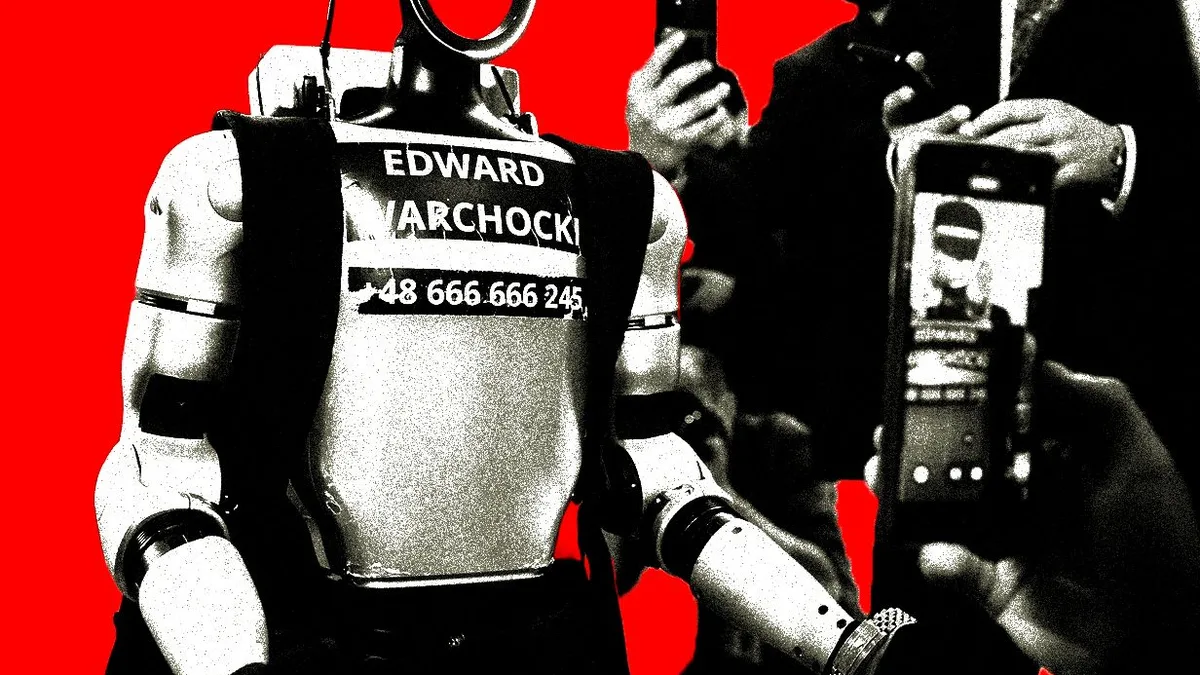
A humanoid influencer is a robotic platform integrated with large language models (LLMs) that mimics human interaction for social media content. The Unitree G1, a four-foot-tall robot manufactured in China, has become the primary hardware for this trend, characterized by its ability to walk, gesture, and engage in real-time conversation via generative AI.
Recent data indicates that the Unitree G1 has achieved significant cultural penetration, with early adopters like the team behind 'Edward Warchocki' in Poland garnering over 1 billion views and millions of followers through viral street interactions (Wired, 2024). This shift marks a transition from industrial robotics to consumer-facing, content-driven hardware.
The Unitree G1 is an affordable, mass-produced humanoid robot designed for mobility and human-like interaction. Standing approximately four feet tall, it features aluminum limbs, a hollowed-out face with a circular LED display, and a suite of sensors that allow it to navigate public spaces, perform basic physical tasks, and interact with bystanders.
Unlike experimental robots confined to laboratory settings, the G1 is commercially available and designed for rapid deployment. According to the company's 2025 financial disclosures, more than half of its total revenue is now derived from the direct sale and delivery of these units to non-industrial users, signaling a pivot toward the consumer robotics market (Wired, 2024).
Developers transform the G1 from a mechanical machine into an 'influencer' by integrating it with large language models (LLMs) that provide the robot with a personality and the capability for live, context-aware speech. Without this software layer, the hardware is limited to pre-programmed movements; with it, the robot can respond to questions, flirt with passersby, or narrate its own movements in public.
Keep exploring
More from Groundwork
- Hardware Acquisition: Developers purchase the G1 unit from the manufacturer.
- AI Integration: The robot's control system is connected to an LLM via an API to enable real-time speech processing.
- Personality Design: Programmers define the 'character'—such as the cowboy-hat-wearing 'Rizzbot' in Austin or the breakdancing 'Bart Robot' in New York—to ensure consistent engagement style.
- Content Capture: The robot is deployed in high-traffic areas to record natural human interactions, which are then edited for social media platforms.
The G1's success as an influencer is rooted in its 'uncanny valley' appeal, where its physical presence combined with human-like conversation triggers curiosity and viral sharing. The robot has been documented participating in diverse public activities, including dancing, parkouring, and even religious ceremonies in various countries, which creates high-engagement content for platforms like TikTok and X (Wired, 2024).
This trend highlights a critical shift in how the public perceives robotics. As these machines become more accessible, they are moving from specialized industrial tools to social entities. This ubiquity forces observers to grapple with the ethics of 'clankers'—a slang term for these robots—navigating public spaces and performing tasks that were previously exclusive to humans.
The proliferation of humanoid influencers introduces significant questions regarding digital deception and safety. Because these robots can be programmed to mimic human emotion, they may manipulate social interactions in ways that are not immediately transparent to the public. Furthermore, the reliance on external servers for AI processing means that the 'personality' of the robot is entirely dependent on the stability and ethics of the software provider, rather than the hardware manufacturer itself.
As you consider the role of these robots in your own life or business, maintain a critical distance. While the content they produce is designed for entertainment, the underlying technology is a commercial product intended to capture attention, often at the expense of clear disclosure regarding its robotic nature.