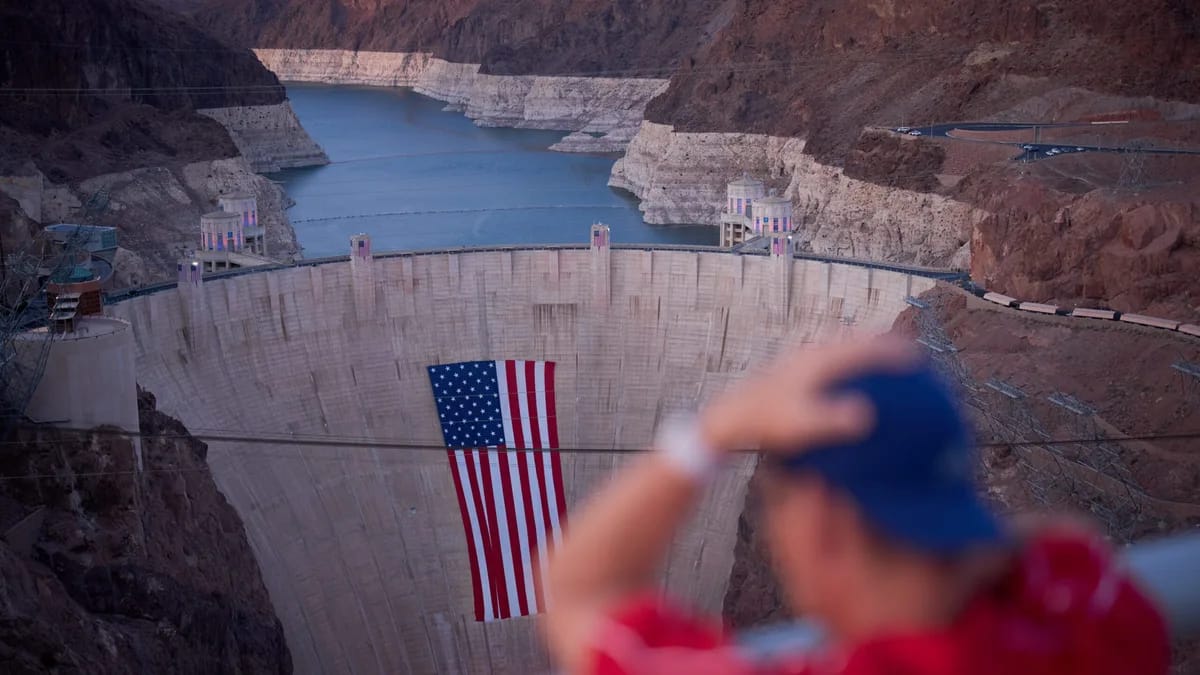
A hydropower crisis is a critical reduction in electrical generation capacity caused by falling reservoir water levels, which prevents turbines from spinning at their necessary velocity or volume. As the Colorado River system reaches historic lows, the stability of the Western United States' energy grid faces an unprecedented challenge.
At Groundwork, our analysis shows that the combined storage of Lake Powell and Lake Mead is currently at its lowest level since 1957, when the Glen Canyon Dam was still under construction (Bureau of Reclamation, 2024). This depletion is not merely an environmental concern; it is a direct threat to the energy security of seven states.
The primary drivers of the Colorado River crisis are long-term structural overuse, a changing climate characterized by record-dry winters, and rising regional temperatures. This "perfect storm" of factors has created a persistent deficit where water outflow consistently exceeds inflow from mountain snowpack.
According to the U.S. Bureau of Reclamation, Lake Powell recently dropped to approximately 3,519 feet above sea level. When reservoirs drop below certain elevations, the hydraulic head—the pressure exerted by the weight of the water—diminishes. This pressure is essential for driving the massive turbines at the Glen Canyon and Hoover Dams. Without sufficient elevation, the turbines cannot generate electricity, potentially leading to rolling blackouts or the need to procure expensive, carbon-intensive power from alternative sources to maintain grid stability.
Hydropower relies on the physical force of falling water to turn turbines. As water levels in Lake Powell and Lake Mead approach the "minimum power pool" elevation, the operational efficiency of these facilities declines significantly.
- Decreased flow rates: Lower water levels mean less water passes through the penstocks, reducing the total megawatt-hour (MWh) output.
- Turbine cavitation: Operating turbines at lower-than-designed pressures can cause cavitation, where air bubbles collapse against turbine blades, leading to severe mechanical damage and costly repairs.
- Grid instability: Because hydropower is a "dispatchable" resource, it is often used to balance the intermittent nature of wind and solar energy. Losing this capacity forces grid operators to rely on fossil-fuel-based peaker plants, which often carry higher financial and environmental costs.
Groundwork’s research indicates that Lake Powell is currently within 30 feet of the threshold where hydroelectric production would be forced to cease entirely. This "dead pool" scenario would effectively turn the dam into a pass-through structure, rendering its immense generation capacity useless.
Keep exploring
More from GroundworkThe Colorado River Basin supports over 40 million people, and the energy generated by the Glen Canyon and Hoover Dams is distributed across a vast regional grid. When these facilities produce less electricity, the resulting supply gap must be filled by other providers, typically leading to increased costs for consumers.
At Groundwork, we emphasize that energy markets are highly sensitive to supply disruptions. When base-load or flexible hydro-power is removed from the mix, regional electricity prices often spike. Furthermore, the reliance on older, carbon-intensive plants to bridge the gap undermines state-level decarbonization goals. The Bureau of Reclamation’s proposed 10-year management plan highlights the severity of this shift, suggesting that mandatory water cuts for California, Arizona, and Nevada are no longer speculative, but necessary to prevent total system failure.
Adapting to lower reservoir levels requires a dual approach: aggressive water conservation and infrastructure modernization. To mitigate the risks, policy experts are focusing on several key strategies:
- Demand management: Implementing stricter water usage quotas for industrial and agricultural sectors to preserve reservoir elevation.
- Infrastructure upgrades: Engineering teams are exploring mechanical modifications to turbine intakes, allowing them to function at lower elevations, though this is a high-cost, temporary bridge solution.
- Diversification: Accelerating the deployment of utility-scale battery storage to replace the grid-balancing services currently provided by hydropower.
Each of these steps involves significant capital expenditure. For homeowners and businesses in the affected states, the takeaway is clear: the era of cheap, reliable water and hydropower from the Colorado River is undergoing a forced transition. You should anticipate potential shifts in utility rate structures as regional providers pass on the costs of securing alternative energy sources and implementing drought-resilience infrastructure.
The long-term viability of the Colorado River as an energy source is contingent upon a fundamental change in consumption patterns. The current depletion is not a temporary drought but a shift in the regional hydrological baseline.
As the U.S. Bureau of Reclamation continues to negotiate management plans, the focus has shifted from expansion to sustainability. For the average consumer, this means that energy efficiency is no longer just a personal choice; it is a critical component of regional grid stability. At Groundwork, we recommend monitoring your local utility’s integrated resource plan (IRP) to understand how they are diversifying their energy portfolio away from high-risk hydropower sources.