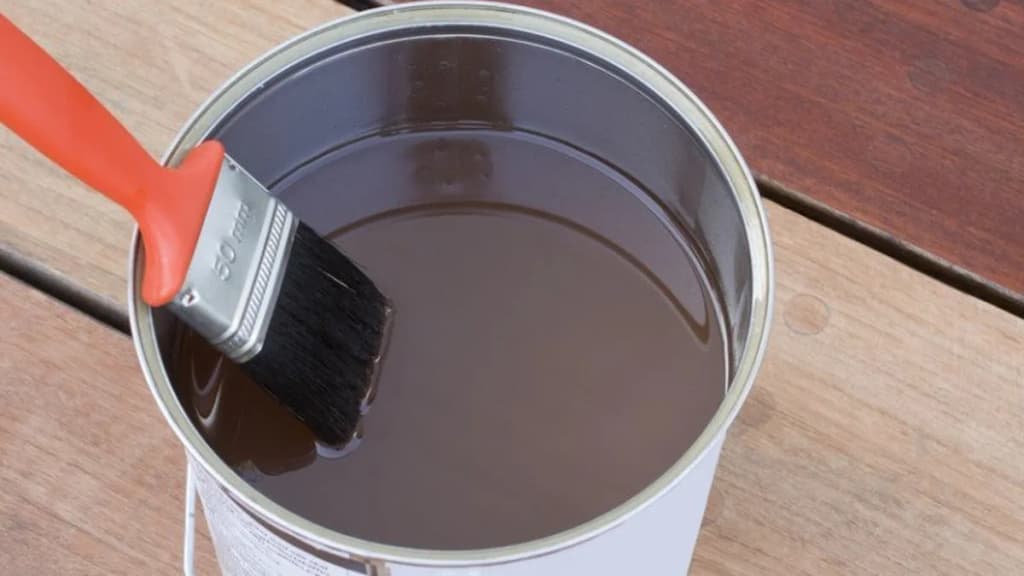
A wood stain is a colorant designed to penetrate the surface of wood fibers to alter or enhance their natural appearance without obscuring the grain. Choosing between water-based, oil-based, and gel formulations is the most critical step in your project, as these chemistries determine drying times, durability, and ease of application.
At Groundwork, our analysis shows that the primary differentiator in stain performance is the carrier fluid. Water-based stains use water as a solvent, offering low volatile organic compound (VOC) levels and rapid drying times, while oil-based stains rely on mineral spirits to penetrate deep into the wood grain, often providing superior richness and a longer open time for more uniform application on large surfaces.
Water-based stains are the ideal choice for indoor projects where low odor and fast turnaround times are prioritized. These formulas, such as SamaN Wood Stain, typically dry within two hours, allowing for multiple coats to be applied in a single afternoon without the need for harsh chemical cleaners.
Key technical advantages of water-based stains include:
- Low VOC content: These products release fewer harmful vapors into your living space, making them safer for interior cabinetry and trim.
- Ease of cleanup: Unlike oil-based alternatives, tools used with water-based stains can be cleaned using simple soap and water.
- Non-yellowing properties: Unlike oil-based stains that may amber over time, water-based formulas remain color-neutral, which is essential when staining light-colored woods like pine or maple.
Oil-based wood stains are preferred for projects requiring a rich, deep color profile and a traditional, hand-rubbed aesthetic. Products like Watco Danish Oil Wood Finish penetrate the wood deeply, hardening within the fibers to provide a durable finish that is less prone to raising the wood grain compared to water-based options.
When working with oil-based stains, keep these operational factors in mind:
- Extended open time: The slower evaporation rate of oil carriers allows you to work across larger surface areas—such as tabletops or hardwood floors—without fearing "lap marks" or uneven color transitions.
- Depth of color: Because oil carriers have a lower surface tension than water, they often achieve a more saturated, vibrant look on dense woods like oak or walnut.
- Ventilation requirements: Due to the high VOC content and solvent evaporation, these products necessitate a well-ventilated workspace or the use of a respirator to ensure safety.
Keep exploring
More from GroundworkGel stains are thickened, semi-solid formulations designed to sit on top of the wood surface rather than soaking deep into the grain. This makes them the superior choice for "difficult" woods like pine or birch, which are prone to blotching when traditional liquid stains are applied.
At Groundwork, we recommend gel stains for projects where you are working with previously finished wood or materials that have varying densities. Because the stain does not rely on deep penetration, it provides a consistent, uniform color across the entire surface. To apply, you simply wipe the gel on with a cloth, allow it to set, and wipe off the excess. This process gives you significant control over the final opacity, allowing you to achieve a stained look even on non-porous surfaces.
Exterior wood stains must prioritize durability and UV resistance above color variety. Unlike interior stains, exterior formulas like Ready Seal Wood Stain and Sealer incorporate paraffin or synthetic resins and UV inhibitors to prevent the wood from breaking down under moisture and sunlight.
When selecting an exterior stain, prioritize these three criteria:
- Penetration depth: The product should be able to sink into the wood to prevent rot and water damage, rather than forming a film that can peel over time.
- UV blocking: Look for pigments that are specifically rated for exterior use, as high-quality iron oxide pigments provide the longest-lasting protection against sun-induced fading.
- Maintenance cycle: A high-quality penetrating exterior stain should be designed for easy reapplication. Avoid film-forming sealers that require sanding before a new coat can be applied, as these create significant long-term maintenance burdens.
Regardless of the stain you choose, the quality of your final result is 90% dependent on surface preparation. If the wood surface is not properly sanded and cleaned, the stain will absorb unevenly, resulting in a patchy, amateur look.
Follow these steps to prepare your wood for staining:
- Sand progressively: Start with 80-grit sandpaper for rough wood, moving up to 120-grit, and finishing with 180-grit. Never skip a grit, as this leaves deep scratches that the stain will highlight.
- Remove dust: Use a vacuum followed by a tack cloth to ensure every particle of sawdust is removed. Even microscopic dust can prevent the stain from adhering properly.
- Test on a sample: Always apply your chosen stain to a scrap piece of the same wood species before starting your main project. This allows you to verify the color and see if the wood requires a pre-stain conditioner to prevent blotching.