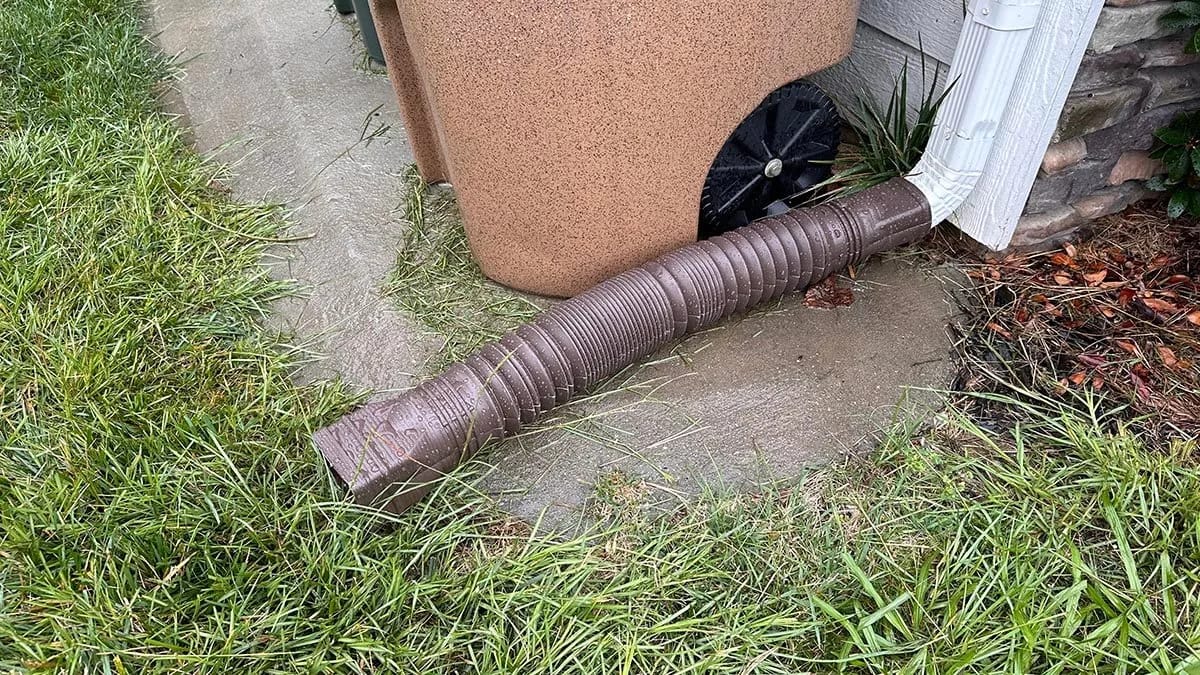
A downspout extension is a conduit—typically made of plastic, aluminum, or PVC—that attaches to the end of your gutter downspout to carry rainwater further away from your home’s foundation. Groundwork’s analysis indicates that directing water at least 4 to 6 feet away from the foundation is the standard threshold for mitigating basement moisture, soil erosion, and structural shifting.
Why downspout extensions are essential for home maintenance
Effective water management is the primary defense against foundation damage. When gutters discharge water directly against a slab or foundation wall, the resulting hydrostatic pressure can lead to basement flooding, concrete cracking, and soil settling. According to the American Society of Home Inspectors (ASHI), poor drainage is the leading cause of foundation failure in residential properties. By installing a downspout extension, you convert an uncontrolled discharge point into a directed drainage system that preserves the integrity of your home's perimeter.
Choosing the correct extension requires evaluating your yard's topography and the material durability needed for your specific environment. At Groundwork, our research framework categorizes extensions into three primary types: corrugated flexible pipes, rigid aluminum elbows, and low-profile surface trays.
- Corrugated flexible extensions: These are ideal for navigating around landscaping, bushes, or irregular terrain. They are typically made from UV-resistant polyethylene and can be expanded or compressed to fit exact distance requirements.
- Rigid aluminum extensions: These offer superior longevity and aesthetic integration, as they can be painted to match your siding or downspout color. However, they are fixed in length and shape, making them less suitable for complex landscaping.
- Low-profile trays: These are designed to be nearly invisible, sitting flush against the ground. They are best suited for areas with heavy foot traffic or lawn mower paths, as they minimize tripping hazards.
Not all materials perform equally under environmental stress. Our analysis shows that high-density polyethylene (HDPE) or thick-walled PVC provides the best balance of flexibility and resistance to UV degradation. Thin-walled plastic extensions often become brittle after two seasons of sun exposure, leading to cracking and leaks. When selecting a product, prioritize those labeled as 'heavy-duty' or 'UV-stabilized.' For high-traffic areas, such as locations near walkways or where lawn mowers frequently pass, rigid PVC or reinforced corrugated plastic is necessary to prevent the extension from collapsing under pressure.
Keep exploring
More from GroundworkProper installation involves more than simply clicking an attachment onto the downspout. For optimal performance, ensure the extension maintains a consistent downward slope of at least 1/4 inch per foot. If the extension sits level or dips, water will pool inside the pipe, creating a breeding ground for mosquitoes and potentially freezing in winter, which can block the entire gutter system.
To install, follow these steps:
- Measure the distance: Determine the length required to reach a point where the ground slopes away from your foundation.
- Clean the downspout: Ensure the existing downspout is free of debris to prevent immediate clogs.
- Secure the attachment: Use galvanized screws or a downspout hinge to secure the extension to the downspout, ensuring a tight seal.
- Anchor the end: Use a splash block or landscape stakes to keep the end of the extension in place during heavy storms, preventing it from 'snaking' or moving due to water pressure.
While longer extensions (6 to 10 feet) provide superior water management, they can be visually intrusive in manicured landscapes. If you need to clear a large garden bed, consider a 'pop-up' drainage emitter. This system uses a buried flexible pipe that terminates in a pop-up head. When the gutter flows, water pressure lifts the head, allowing water to discharge onto the lawn; when dry, the head sits flush with the turf, remaining invisible. This is the most effective way to manage water without sacrificing curb appeal or creating a tripping hazard.
Maintenance and winterization considerations
Regardless of the model you choose, regular maintenance is required to prevent system failure. At Groundwork, we recommend inspecting your extensions at the beginning of each spring and after major storm events. Check for debris accumulation at the discharge point, as mulch, leaves, and sediment can back up the pipe. In colder climates, ensure that your extensions are either removed or positioned to prevent ice dams. If water freezes inside a corrugated extension, the expansion can cause the plastic to split. If you live in a region with significant freeze-thaw cycles, a detachable hinge system is the most practical solution, allowing you to flip the extension up during the winter months.