A back-to-school discount cycle is a late-summer retail pricing window where manufacturers reduce prices on consumer electronics, footwear, and luggage to clear inventory before autumn. While targeted at academic buyers, these promotional windows yield substantial savings for frequent travelers seeking cross-functional equipment. At Groundwork, our analysis shows that purchasing dual-utility travel gear during late-summer promotional events yields an average savings of 20% to 50% compared to baseline manufacturer suggested retail prices (MSRP). For related guidance, see our in-depth guide on How to opt out of Twitch AI training.
According to retail trade data from the National Retail Federation (NRF), back-to-school and college promotional spending represents the second-largest consumer spending period of the year, driving steep discounts across multi-use product categories that directly overlap with travel requirements.
Late-summer promotional events offer price drops that rival Q4 holiday sales on specific categories, including wireless audio, footwear, and personal carry-on luggage. Retail price tracking data indicates that August and early September represent optimal purchase windows for technical accessories before inventory tightens for the holiday quarter.
When evaluating seasonal sales, timing your purchases around major clearance windows prevents overpaying for high-demand transit gear. While Black Friday and Cyber Monday are widely publicized for consumer electronics, late-summer sales offer superior stock availability for core apparel and travel bags. Retailers clear out summer apparel and athletic footwear lines to make room for winter collections, resulting in steep markdowns on footwear engineered for high daily step counts.
At Groundwork, our pricing analysis indicates that waiting for Q4 holiday sales yields diminishing returns on mid-tier travel accessories. Highly rated items like active noise-canceling (ANC) headphones and ergonomic carry-ons experience inventory shortages during December, making late-summer promotions the most reliable window for securing discount pricing without backorder delays.
High-mileage walking shoes require a minimum midsole stack height of 25 to 30 millimeters and high-density EVA or supercritical foam to absorb impact forces during prolonged urban transit. Selecting footwear with maximal cushioning reduces plantar pressure and joint fatigue during extended walking sessions according to biomechanical footwear research published in the Journal of Foot and Ankle Research.
During seasonal clearance cycles, high-cushion running shoes frequently experience promotional markdowns up to 50%, bringing premium models originally priced at $150 down to approximately $77. Footwear options such as the Hoka Clifton series provide substantial foam stack heights that absorb impact on hard pavement during long transit days through airports or city tours.
- Midsole Stack Height: Aim for 25–35 mm of heel stack height for maximum shock absorption.
- Heel-to-Toe Drop: A 4–8 mm drop balances natural gait mechanics with calf stress reduction.
- Outsole Durability: Look for high-abrasion rubber coverage at primary contact points to extend shoe lifespans beyond 400 travel miles.
Keep exploring
More from GroundworkActive noise-canceling (ANC) earbuds provide essential ambient sound attenuation, reducing ambient aircraft cabin noise by 20 to 30 decibels to combat passenger auditory fatigue. Standard wireless earbuds offer passive sound isolation, but dedicated ANC hardware is necessary for suppressing low-frequency jet engine hum during long-haul flights.
Consumer electronics tracking reveals that mid-tier and flagship audio devices hit competitive pricing during late-summer events. For instance, flagship active noise-canceling earbuds like Apple AirPods Pro regularly drop from their $249 MSRP to around $189—a 24% discount. These models feature dynamic noise reduction, adaptive transparency modes, and direct Bluetooth integration with inflight entertainment systems using modern wireless transmitters.
For budget-conscious travelers who prioritize voice clarity and battery efficiency over full active ambient suppression, entry-level models like standard AirPods drop below $100 during these cycles (a 23% reduction from the standard $129 price point). However, for frequent flyers, the decibel reduction offered by ANC models provides a measurable reduction in travel-induced fatigue, justifying the higher baseline investment.
Bluetooth location trackers utilize crowd-sourced cellular network nodes to relay real-time geographic coordinates of misplaced luggage across global transit hubs. Equipping each piece of checked or carry-on luggage with a dedicated tracker reduces permanent loss rates by providing exact proximity data prior to airline baggage claim processing.
A four-pack of second-generation Apple AirTags priced around $89 (a 10% reduction from the $99 MSRP) brings the cost per tracking unit down to roughly $22.25. Data from the Bureau of Transportation Statistics highlights that mishandled baggage rates fluctuate significantly during peak transit seasons. Installing low-power location beacons provides secondary redundancy independent of airline tracking systems.
Modern tracking devices utilize Ultra-Wideband (UWB) technology to provide precision directional finding within a 30-foot radius. Furthermore, secondary features like loud acoustic alerts (exceeding 60 decibels) assist in pinpointing misplaced items inside crowded hotel rooms or luggage stacks, while user-replaceable CR2032 batteries ensure operational lifespans exceeding 12 months.
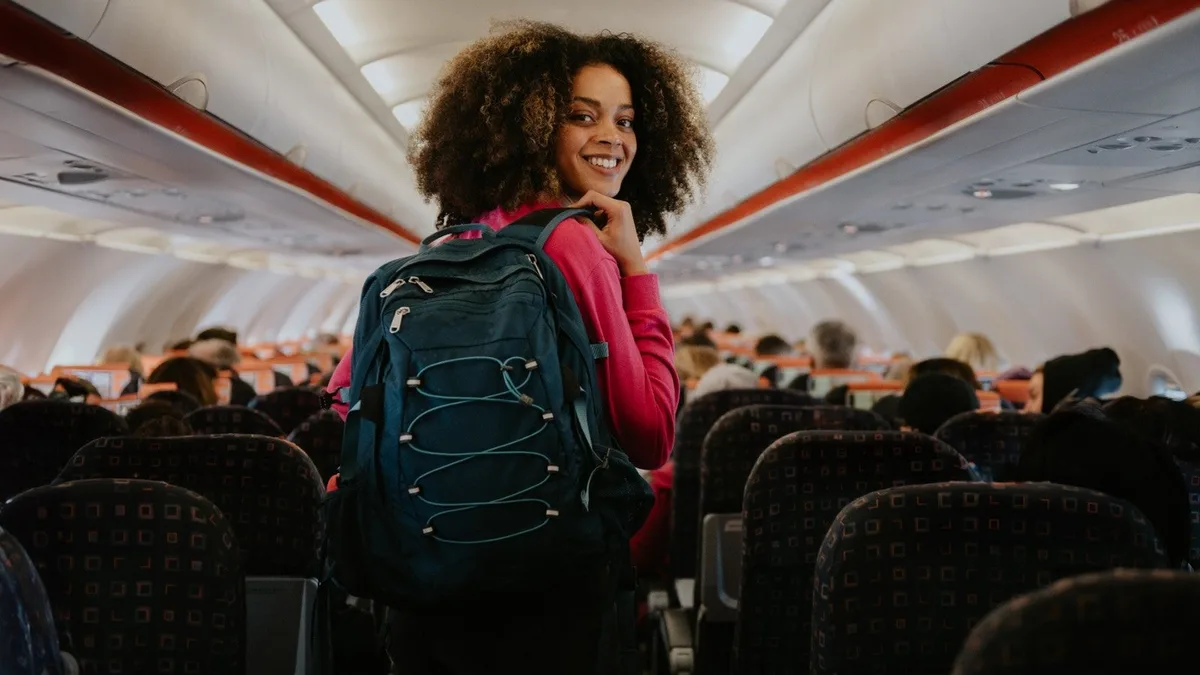
A travel-ready backpack must offer between 28 and 45 liters of internal volume while meeting airline overhead bin or under-seat personal item dimensions, capped at 22 x 14 x 9 inches. Commuter backpacks typically range from 20 to 28 liters, prioritizing laptop protection, while full-capacity travel backpacks incorporate clamshell openings and compression straps.