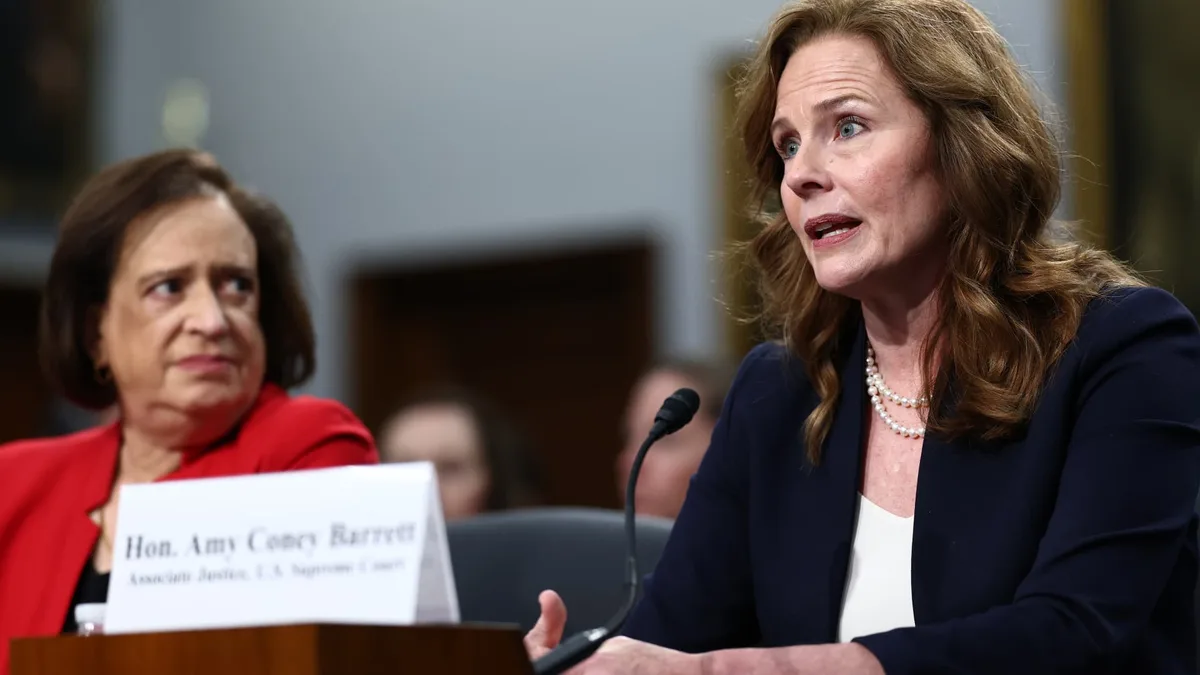
A judicial security budget is the allocation of federal funds specifically designated to protect Supreme Court justices, federal judges, and their associated facilities from physical and digital threats. As of July 2026, the Supreme Court has requested $228.4 million for the 2027 fiscal year, a significant portion of which is earmarked for enhanced protective measures (CNBC, 2026).
Recent testimony from Supreme Court Justices Amy Coney Barrett and Elena Kagan before the House Appropriations Committee highlights a growing trend of violent rhetoric and targeted threats against the judiciary. Understanding these budget requests requires looking at the intersection of public safety, institutional integrity, and the fiscal realities of maintaining a secure branch of government.
The Supreme Court is requesting a 10% increase in its annual budget—moving from $207.8 million in 2026 to $228.4 million for 2027—primarily to cover escalating security costs (CNBC, 2026). This increase is a direct response to a documented rise in threats against federal judges, which necessitates more robust physical security protocols and advanced cybersecurity infrastructure.
Budgetary allocations for the judiciary are not merely administrative; they are functional requirements for the operation of a branch of government that must remain insulated from external intimidation. According to the U.S. Marshals Service, threat investigations against federal judges have become a consistent concern, with 512 investigations recorded in the first half of 2026 alone (CNBC, 2026). When the cost of protecting personnel rises, the court must shift resources, often prioritizing physical security and cyber-defenses to ensure that justices can perform their constitutional duties without the immediate fear of violence.
Threats against federal judges have reached a level that justices describe as "really high," with empirical data from the U.S. Marshals Service and Supreme Court Police providing a quantitative baseline for these concerns (CNBC, 2026). In 2025, there were 807 investigations into threats against federal judges nationwide. By mid-2026, that number had already reached 512, suggesting that the frequency of these incidents is trending upward (CNBC, 2026).
Furthermore, Justice Elena Kagan noted during congressional testimony that the Supreme Court Police anticipate a 38% annual increase in threats directed specifically at the court and its justices for 2026 (CNBC, 2026). This follows a 25% increase observed in 2025. These figures demonstrate that security is no longer an abstract consideration for the court; it is a daily operational reality that influences how justices travel, work, and interact with the public.
Security threats change the daily lives of justices by imposing strict limitations on their personal movement, privacy, and communication. Justice Amy Coney Barrett emphasized to lawmakers that while statistics provide a data-driven view of the problem, the personal experience of being the target of such threats is tangible and disruptive (CNBC, 2026).
Keep exploring
More from GroundworkWhen a justice is threatened, the protective detail must adjust accordingly, which often means limiting public appearances, securing private residences, and vetting all forms of communication for potential risk. These measures are designed to prevent "materialization"—a term used by Justice Kagan to describe the point at which a threat moves from a digital or verbal warning to an actual physical confrontation (CNBC, 2026). For the average citizen, understanding this means recognizing that the judiciary requires a unique, high-cost environment to remain functional and independent.
Congress holds the "power of the purse," meaning it is responsible for appropriating the funds necessary for the judiciary to operate safely and effectively. The testimony provided by Justices Barrett and Kagan serves as a formal request for these resources, allowing the legislative branch to weigh the necessity of the 10% budget increase against other national spending priorities (CNBC, 2026).
This process is essential for maintaining the separation of powers. By testifying before the House and Senate Appropriations subcommittees, the justices provide transparency regarding why these funds are necessary. The process follows a standard sequence:
- Assessment of threat environment: The Supreme Court Police and U.S. Marshals Service evaluate the current number of active threats and historical trends.
- Budget formulation: The court identifies the specific costs required to mitigate these risks, including personnel, technology, and facility upgrades.
- Congressional testimony: Justices appear before budget committees to justify these costs to elected officials.
- Legislative approval: Congress votes on the appropriations bill, determining if the requested funds are granted.
This cycle ensures that the judiciary remains accountable for its expenditures while simultaneously ensuring that the legislative branch understands the security vulnerabilities facing the court.
Citizens should interpret these security costs as a necessary expense for protecting the independence of the judicial system. When the judiciary is under threat, its ability to make decisions based solely on the law—rather than fear of retribution—is compromised. Investing in security is, in effect, an investment in the stability of the legal system.
While a 10% budget increase may seem significant in isolation, it must be viewed in the context of the total federal budget and the rising costs of cybersecurity and physical protection in an era of heightened political polarization. Whether you agree with the court's rulings is separate from the functional necessity of providing a safe environment for the justices to deliberate. A secure court is a requirement for the rule of law to function, and the data provided by the Supreme Court serves as a clear indicator of the current threat landscape facing those who hold the highest judicial offices in the country.