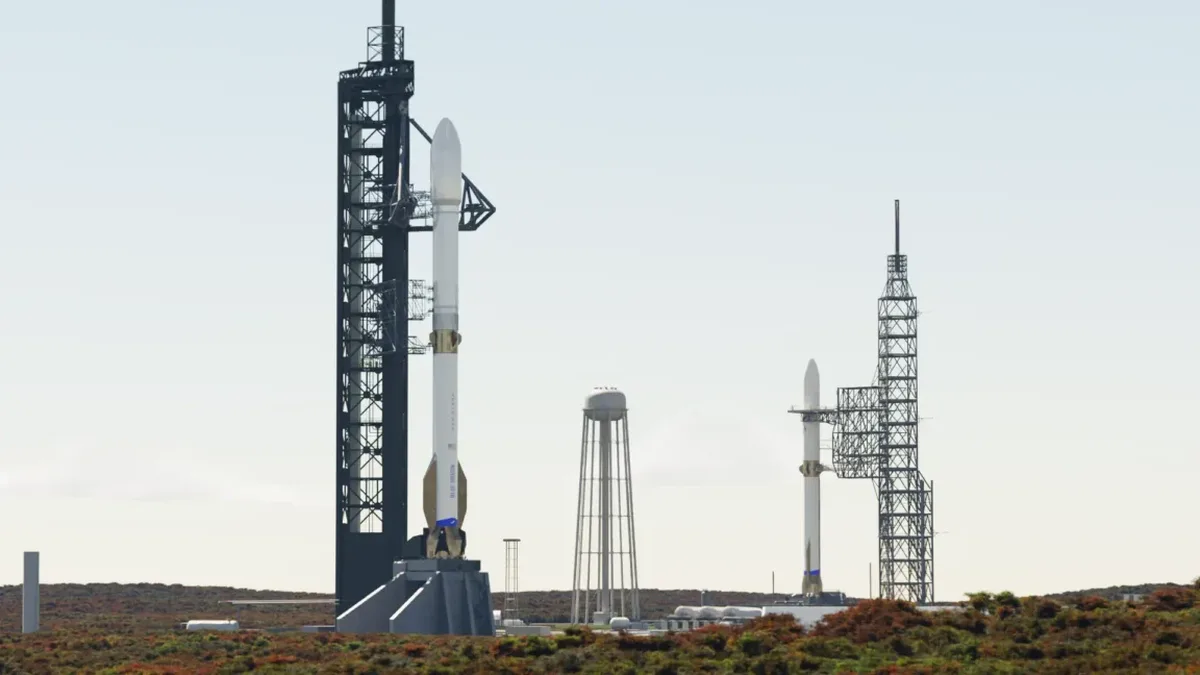
Rocket Lab’s GHOST system enables mobile, flexible satellite launches. Learn how portable spaceport technology is changing launch cadence and mission access.
Based on reporting by Ars Technica. Research, structure, and fact-checking by Groundwork.
Rocket Lab’s GHOST system enables mobile launch operations, allowing for greater flexibility and mission responsiveness by bypassing congested, static launch ranges. While this increases launch cadence for small satellites, stakeholders should remain cautious regarding the development timelines of larger, medium-lift vehicles like Neutron.
Furthermore, the ability to integrate payloads and fuel the vehicle on-site minimizes the time between arriving at a location and achieving orbit. For commercial satellite operators, this means less time spent waiting for a ride to space. For government entities, it enables rapid reconstitution of space assets if an existing satellite is compromised, a concept known in the industry as responsive space access.
Despite the operational flexibility offered by the GHOST system, it remains subject to the same physical and regulatory constraints as any other launch operation. Even with mobile hardware, a launch site must still meet stringent environmental standards and obtain Federal Aviation Administration (FAA) launch licenses. These processes can be time-intensive, regardless of how portable the equipment is.
Additionally, the GHOST system is currently optimized for the Electron and HASTE vehicles, which are classified as small-lift launch vehicles. While this is sufficient for many satellite constellations, it does not solve the launch capacity constraints for heavier payloads. The industry is still watching the development of the Neutron rocket, which is intended to be Rocket Lab’s medium-lift successor. Skepticism remains in the market regarding the development timeline for Neutron, as observers have noted that language regarding the readiness of the vehicle’s second stage has remained largely unchanged over the past year.
When evaluating a launch provider's mobility, stakeholders should focus on three key metrics: the time required for site activation, the regulatory overhead for non-standard launch locations, and the compatibility of the mobile system with existing payload standards. A truly flexible launch provider must demonstrate that their mobile infrastructure does not compromise the safety or reliability protocols established at permanent spaceports.
GHOST stands for Global Hypersonic & Orbital Spaceport Technology. It is a portable, modular launch infrastructure developed by Rocket Lab that allows the company to conduct launch operations for Electron and HASTE rockets from remote or non-traditional locations rather than relying solely on permanent spaceports.
While GHOST provides a "launch-anywhere" capability, it is still subject to strict regulatory requirements. Any site used for a launch must still undergo environmental reviews and receive official launch licensing from the Federal Aviation Administration (FAA) to ensure the safety of the public and the surrounding environment.
Mobile launch infrastructure is critical for responsive space access. In scenarios where existing space assets are compromised or immediate orbital access is required for reconnaissance, the ability to deploy a launch system to a flexible location allows government agencies to bypass traditional range scheduling and launch delays.
GHOST is specifically designed for the Electron and HASTE vehicles, which are small-lift rockets. It does not directly impact the development of the Neutron, which is Rocket Lab's medium-lift vehicle. Market observers continue to monitor Neutron's progress, particularly regarding the readiness of its second-stage flight hardware.
Comedian Chloe Radcliffe is reframing the conversation on infidelity by moving beyond moral judgment to explore the psychological patterns behind cheating.
Learn how to evaluate SSD deals by focusing on read/write speeds, interface types, and price-per-gigabyte to ensure you get value for your hardware investment.
Learn how to choose the right television by comparing OLED and LED technologies, identifying real price discounts, and verifying essential gaming features.