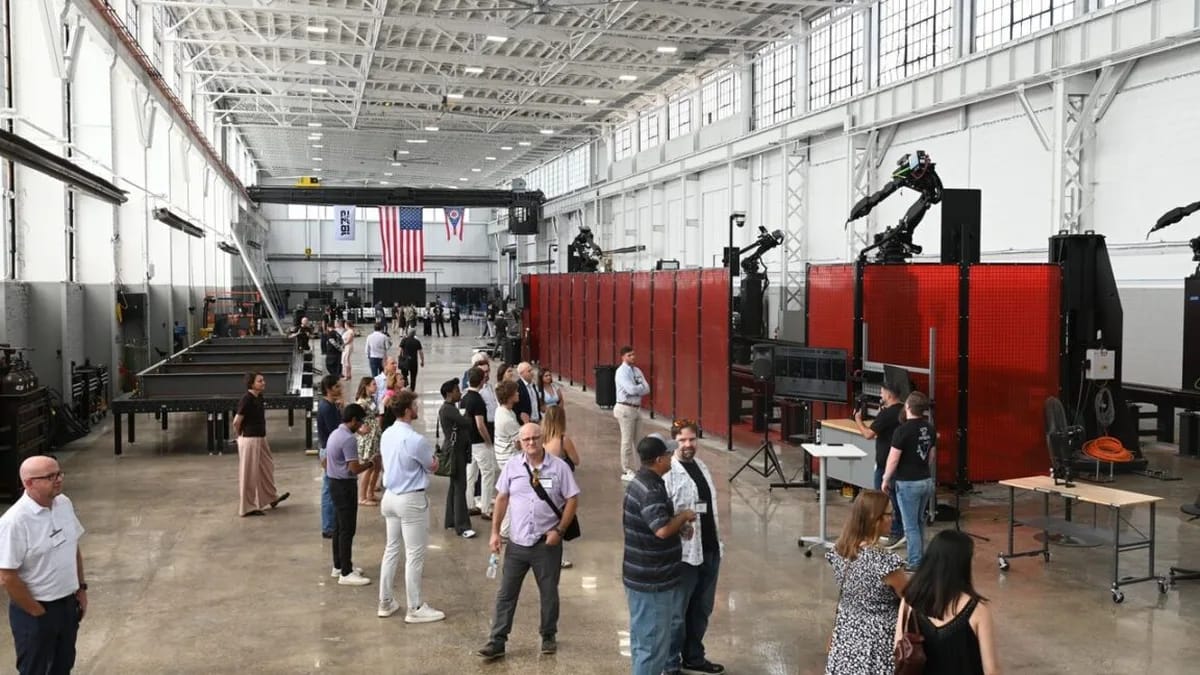
Robotic steel fabrication is the use of automated systems, AI-driven software, and industrial robotics to design, cut, weld, and assemble steel components with minimal human intervention. By shifting from manual labor to software-defined production lines, companies like the newly launched startup 1872 aim to solve chronic bottlenecks in critical infrastructure development, such as the rapid construction of AI data centers and modular nuclear reactors.
At Groundwork, our analysis shows that the primary constraint in modern infrastructure expansion is not just capital, but the slow, labor-intensive nature of heavy metal fabrication. Traditional steel manufacturing relies on legacy processes that have seen limited efficiency gains over the past three decades. The transition toward autonomous, software-orchestrated factories represents a fundamental pivot in industrial engineering, moving away from human-centric assembly toward high-precision, repeatable robotic workflows.
Steel fabrication is a high-stakes, labor-intensive sector where precision is mandatory for structural integrity. Manual welding and cutting are prone to human error, material waste, and significant lead-time delays. Robotic systems mitigate these risks by integrating CAD (Computer-Aided Design) directly with robotic arms, allowing for real-time adjustments and near-zero tolerance deviations. According to data from the American Institute of Steel Construction, labor costs and workforce shortages remain the most significant threats to project timelines. Automation addresses this by decoupling production capacity from the availability of skilled manual labor, enabling 24/7 manufacturing cycles that are impossible with traditional staffing models.
Software-defined manufacturing allows a factory to receive digital blueprints and begin production almost instantly, drastically reducing the lead time for custom steel skids and structural frames. By utilizing cloud-based software to manage robotic hardware, these facilities can optimize material usage, reducing scrap rates by an estimated 15% to 20% compared to manual cutting methods. At Groundwork, our research indicates that this digital-first approach to physical goods creates a 'just-in-time' manufacturing environment that aligns with the needs of high-speed infrastructure projects like AI data centers, which require rapid scaling to meet surging compute demand.
Keep exploring
More from GroundworkContrary to the common narrative of 'lights-out' manufacturing, most modern industrial startups are pursuing a hybrid model of autonomous operations. As noted by 1872 CEO Dan Summers, the pursuit of 100% autonomy often yields diminishing returns; the costs associated with perfecting the final 20% of automation—handling edge cases and rare mechanical failures—frequently outweigh the benefits. A practical approach focuses on 80% autonomy, where robots handle the dangerous, repetitive, or high-precision tasks, while human technicians oversee the system, perform quality assurance, and manage complex maintenance. This 'human-in-the-loop' strategy balances the speed of machines with the adaptive problem-solving capabilities of human experts.
Steel skids serve as the foundational, moveable platforms for modular infrastructure. These frames must be manufactured to exact specifications to support heavy equipment, such as server racks in data centers or containment vessels in small modular nuclear reactors (SMRs). Because these industries are currently experiencing exponential growth, the demand for standardized, high-quality steel foundations has outpaced current supply chain capacity. Robotic factories can produce these components with consistent weld quality and structural certification, providing a reliable backbone for industries that cannot afford the downtime associated with faulty or poorly fitted structural components.
If you are involved in procurement or infrastructure development, evaluating the shift toward automated manufacturing requires a focus on three metrics: lead time, repeatability, and material efficiency.
- Assess lead time: Determine if the supplier uses automated CAD-to-machine workflows that can bypass traditional manual programming.
- Quantify repeatability: Request data on tolerance ranges; automated systems should offer significantly tighter, more consistent tolerances than manual shops.
- Verify certification: Ensure that robotic outputs meet industry-standard structural codes (such as AWS or AISC standards), as high-speed automation must still comply with rigorous safety protocols.
By prioritizing suppliers that integrate modern robotics, you reduce the risk of supply chain disruptions caused by manual labor shortages or quality control variance. The transition to robotic steel fabrication is not merely a technological upgrade; it is a necessary evolution to meet the infrastructure demands of an AI-driven economy.