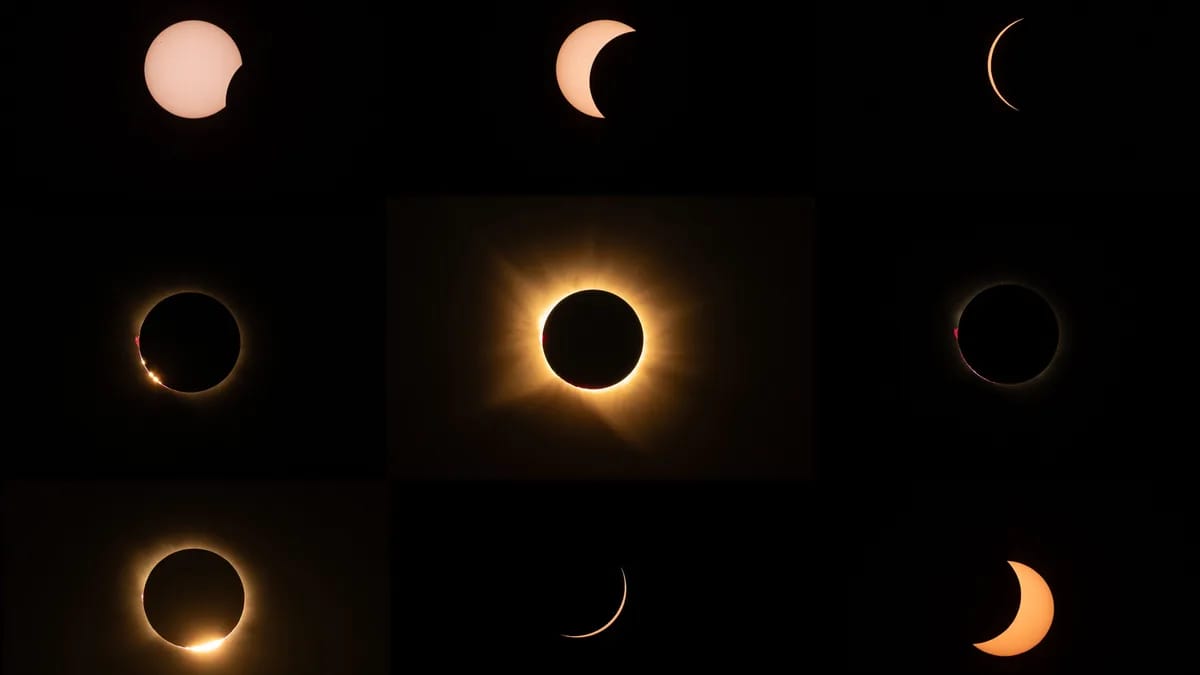
A solar eclipse is a celestial event where the moon passes between the sun and Earth, casting a shadow on the planet. While solar eclipses occur periodically, the upcoming events in 2027 and 2028 are notable for their exceptional duration and geographical paths, making them prime targets for travel planning.
According to data from NASA, the duration of totality—the period when the moon completely covers the sun—varies based on the moon’s distance from Earth and the observer's location. The 2027 and 2028 events offer rare opportunities to witness these phenomena for durations significantly longer than typical eclipses.
The 2027 total solar eclipse, occurring on August 2, is projected to be one of the longest in the 21st century, with a maximum totality duration of 6 minutes and 23 seconds. This is nearly three times the length of typical eclipses, such as the August 2026 event, which lasted approximately 2 minutes and 18 seconds (Wired).
Because the shadow path is narrow, choosing your observation site is critical. The path of totality will begin in southern Spain and sweep across North Africa—including Morocco, Algeria, Tunisia, Libya, and Egypt—before continuing through Saudi Arabia, Yemen, and Somalia. Egypt is expected to offer the longest duration of totality, specifically near the ancient sites of Luxor and Karnak. If you are planning to view this event, you should prioritize regions with historically low cloud cover during August, as atmospheric conditions are the primary risk to visibility.
The 2028 event, occurring on January 26, is an annular solar eclipse, meaning the moon will appear smaller than the sun, creating a 'ring of fire' effect rather than total darkness. This event will track across South America, specifically Ecuador, Peru, and Brazil, before crossing the Atlantic to reach Portugal and Spain.
Brazil is slated to experience the longest duration of annularity, lasting up to 10 minutes and 27 seconds (Wired). In contrast, spectators in Spain will see a shorter duration of roughly seven minutes, appearing near the horizon shortly before sunset. Because this is an annular eclipse, the sun remains partially visible at all times, making the use of ISO-certified solar viewing glasses mandatory throughout the entire duration of the event to prevent permanent eye damage.
Keep exploring
More from GroundworkPlanning for a major eclipse requires booking accommodations and transportation years in advance, as local infrastructure in prime viewing spots often reaches capacity quickly. For the 2027 event, areas like Luxor, Egypt, will likely see a massive influx of international tourists, which can cause significant surges in hotel pricing and limited availability.
To manage your travel logistics effectively, follow these steps:
- Confirm the path of totality or annularity using reputable sources like the NASA Eclipse Explorer map.
- Research historical weather data for your chosen site to estimate the probability of clear skies.
- Secure refundable lodging at least 18 to 24 months before the event date.
- Plan for 'eclipse day' mobility; traffic congestion near the centerline of the path is common, so aim to arrive at your viewing location the day before.
- Verify that your solar filter equipment meets ISO 12312-2 safety standards.
Viewing the sun directly, even during an annular eclipse, is dangerous and can lead to solar retinopathy. You must use specialized eye protection designed specifically for solar viewing. Standard sunglasses, even those with high UV protection, are insufficient to protect your eyes from the intensity of the sun’s rays.
For those interested in photography, you must equip your camera with a solar filter that covers the lens entirely. Attempting to photograph an eclipse without proper filtration can destroy your camera sensor and cause irreversible retinal damage to your eyes if you use an optical viewfinder. If you are using a telescope or binoculars, the solar filter must be placed over the front objective lens—never the eyepiece.
Whether travel is 'worth it' depends on your interest in astronomy and your ability to mitigate the risks of cloud cover. While the 2027 eclipse offers a rare, long-duration experience in a historically significant location, the inherent unpredictability of weather means no viewing site is guaranteed to provide a perfect view.
Before committing to significant travel expenses, analyze the 'climate risk' of your destination. Coastal areas may experience morning fog, while inland desert regions might face high temperatures and dust, which can affect both comfort and equipment performance. If you are not a dedicated eclipse enthusiast, prioritize locations that offer cultural or historical value independent of the eclipse, ensuring you have a productive trip even if weather conditions are suboptimal.