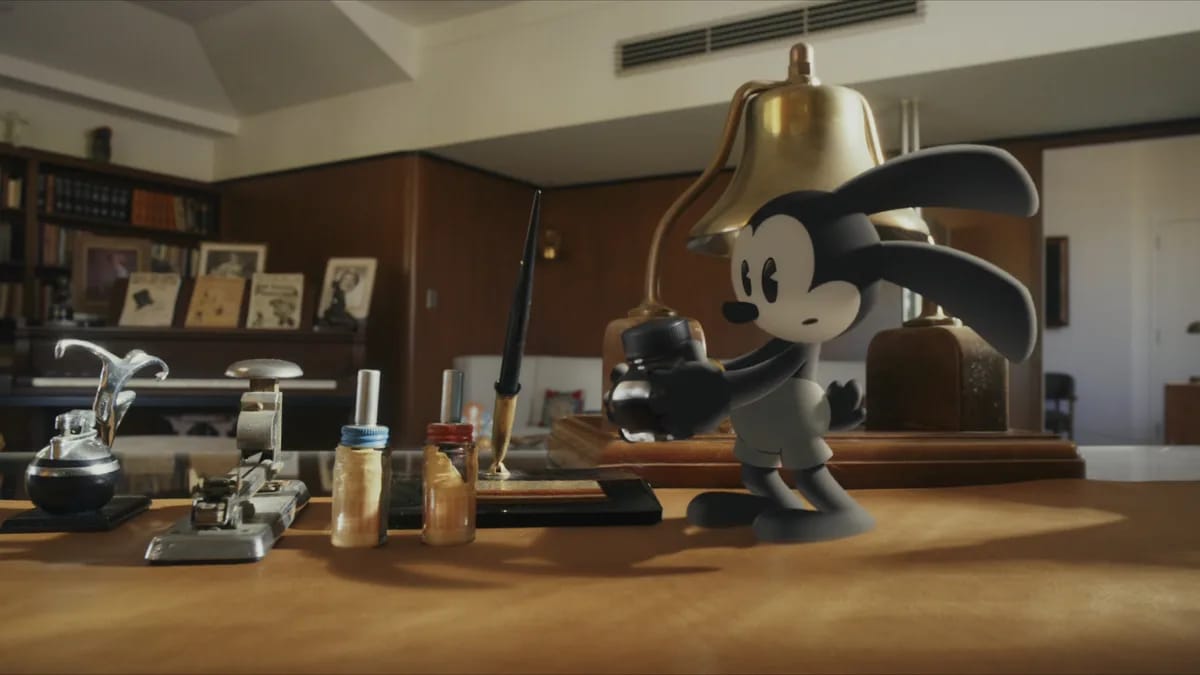
Oswald the Lucky Rabbit is a historic animated character created in 1927 by Walt Disney and Ub Iwerks, marking the precursor to the global Mickey Mouse franchise. Disney has officially confirmed that Oswald will star in a three-part, hybrid live-action and 2D animated miniseries slated for release on Disney+ in February 2027.
Disney’s decision to headline a miniseries with Oswald the Lucky Rabbit is a calculated move to leverage intellectual property (IP) depth and historical brand equity. By integrating a character that predates Mickey Mouse, Disney is not merely producing content; it is reinforcing its corporate history to differentiate its platform in an increasingly crowded streaming market. According to data from the D23 fan event, the project will be led by executive producer Jon Favreau, signaling a high-budget commitment to quality that mirrors Disney’s recent successes in revitalizing legacy properties.
The journey of Oswald the Lucky Rabbit is a case study in corporate asset management and unusual trade agreements. Created for Universal Pictures in 1927, the character was lost to Universal in 1928, which forced Walt Disney to pivot and create Mickey Mouse (Source: The Walt Disney Company Archives). The character remained under Universal’s control for nearly 80 years until a 2006 "talent swap" occurred. In a move widely cited in media business history, Disney traded the services of sportscaster Al Michaels to NBCUniversal in exchange for the full rights to the Oswald trademark and his original short films. This unconventional transaction highlights how media conglomerates view IP rights as liquid currency, often prioritizing long-term brand control over immediate operational needs.
The upcoming miniseries is designed as a hybrid production, blending traditional hand-drawn 2D animation with live-action sequences. This stylistic choice serves two purposes: it pays homage to the character’s original 1920s aesthetic while modernizing the storytelling for a digital-native audience. The production features a notable comedy ensemble, including Albert Brooks, Amy Sedaris, and Steve Martin, suggesting the tone will lean toward sophisticated, character-driven humor rather than purely slapstick animation. By utilizing a three-part structure, Disney is minimizing the risk of a long-form series while maximizing "event" status, which is a common strategy to drive short-term subscriber engagement metrics on Disney+.
Keep exploring
More from GroundworkOswald’s return serves as a bridge between the studio’s foundational history and its modern streaming strategy. Modern media analysis indicates that legacy IP often performs better in terms of search volume and social media sentiment than original, unproven concepts. For Disney, Oswald is a "low-risk, high-prestige" asset. He is a recognized name among animation historians and Disney enthusiasts, yet he carries no baggage from decades of over-saturation. This creates a unique "blank slate" opportunity for creators like Jon Favreau to define the character for a 21st-century audience without the burden of maintaining a rigid, decades-old continuity.
To understand the magnitude of this miniseries, one must acknowledge the 1928 split between Disney and Universal. When Walt Disney lost the rights to Oswald, he was left with no major character to support his studio. This existential threat is what led to the creation of Mickey Mouse, arguably the most valuable piece of IP in the entertainment industry. By bringing Oswald back to the forefront in 2027, Disney is closing a nearly 100-year loop. This serves as a potent marketing narrative that reinforces the company's "resilience" brand identity, appealing to shareholders and fans alike who value the historical continuity of the studio.
For the average consumer, this announcement demonstrates that Disney’s content library is not static; it is an active portfolio being managed for future growth. If you are tracking media trends, observe how Disney utilizes this miniseries to drive traffic to older, archival content. When the show premieres in 2027, expect a surge in "legacy" content recommendations on the platform. To prepare for the release, you might consider:
- Reviewing the available 1920s Oswald shorts currently on Disney+ to understand the character’s original personality.
- Monitoring Disney’s D23 updates for trailers or behind-the-scenes featurettes that reveal the specific animation techniques used.
- Evaluating how the hybrid format impacts your viewing experience compared to purely animated or purely live-action content.
By focusing on the intersection of technological nostalgia and modern production values, the Oswald miniseries represents a sophisticated evolution in how Disney manages its most valuable asset: its own history.