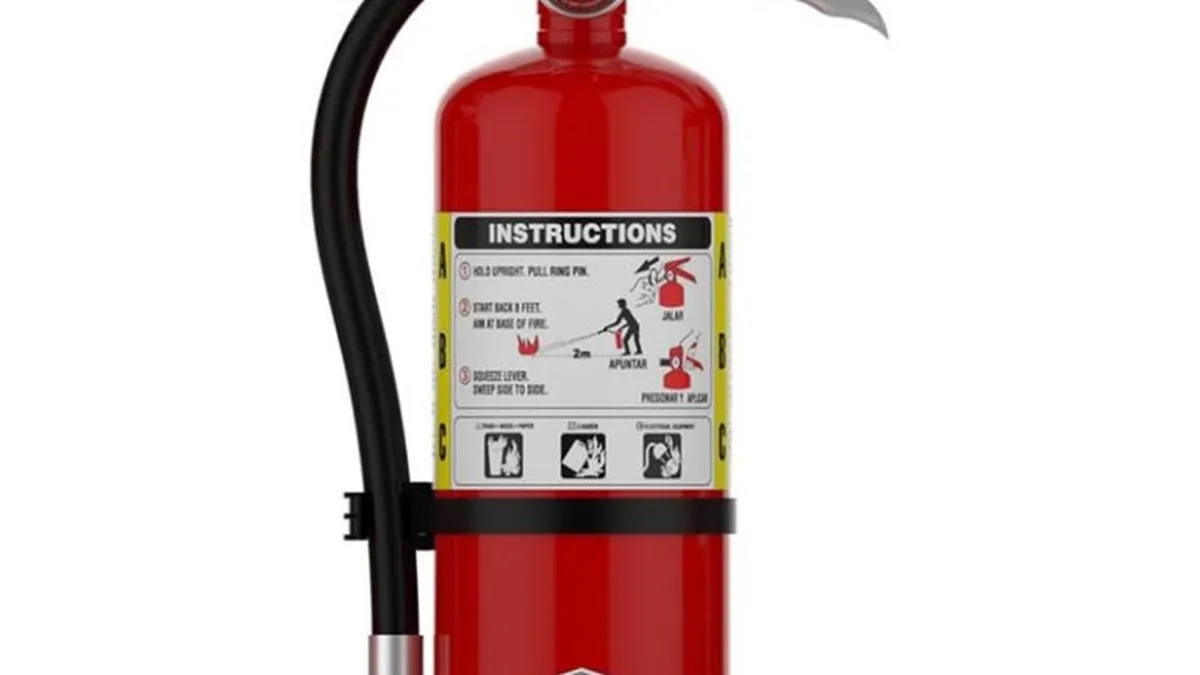
A fire extinguisher is a portable safety device designed to suppress or extinguish small fires. Most household fire extinguishers have a functional lifespan of 5 to 15 years, depending on the model and maintenance. Even if a unit has not been used, the internal pressure and chemical agents degrade over time, making regular inspection essential for home safety.
According to the National Fire Protection Association (NFPA), fire extinguishers are critical safety tools, yet they are frequently overlooked during routine home maintenance. While some high-quality metal-valve units can be serviced and recharged, most standard plastic-valve household extinguishers are considered single-use devices that must be replaced once they lose pressure or reach their expiration date (NFPA).
Most modern fire extinguishers do not have a single "expiration date" printed on the canister like a food product. Instead, the lifespan is determined by the manufacturer's recommendations and the physical condition of the unit. If your extinguisher is more than 10 to 12 years old, it is generally recommended that you replace it, regardless of its appearance.
To determine the age and status of your unit, follow these steps:
- Locate the manufacture date: Check the bottom or the side label of the canister for a stamped date. If the unit is over 12 years old, the internal seals may have degraded, leading to a loss of pressure.
- Review the inspection tag: If your unit is a professional-grade model, it will have a maintenance tag. If the last inspection date was more than a year ago, or the oldest date on the tag is over a decade old, replace the unit.
- Observe the pressure gauge: If your model has a gauge, the needle must stay in the green zone. If the needle is in the red "recharge" or "replace" zone, the unit has lost its propellant and will not function during an emergency.
Fire extinguishers become ineffective because of internal chemical changes and mechanical pressure loss. Even when stored in a climate-controlled environment, the pressurized gas that expels the extinguishing agent can slowly leak through microscopic imperfections in the seals or valve assembly over many years.
For extinguishers containing dry chemicals, such as monoammonium phosphate, the chemicals can settle and compact at the bottom of the cylinder over time. This compaction makes it impossible for the agent to be expelled correctly, even if the gauge shows sufficient pressure. In some cases, the chemicals can harden into a solid mass, rendering the device entirely useless. Furthermore, plastic valves on budget-friendly models are prone to cracking or drying out after a decade of exposure to ambient air, which causes the pressurized gas to escape silently.
Keep exploring
More from GroundworkProper storage is the most effective way to ensure your fire extinguisher remains functional for its entire projected lifespan. Exposure to the elements significantly accelerates the degradation of the canister, the valve assembly, and the internal components, leading to premature failure.
Follow these storage best practices:
- Avoid extreme temperatures: Keep extinguishers away from direct sunlight, heaters, or uninsulated attics where temperatures fluctuate significantly. Heat can cause the internal pressure to rise, potentially triggering a safety valve release.
- Prevent moisture exposure: Do not store extinguishers in damp basements or garages where the metal canister may come into contact with water, which leads to rust and corrosion.
- Keep it accessible: Ensure the extinguisher is mounted in a visible, easy-to-reach location. Do not block it with boxes or furniture, as this prevents you from accessing it during a fire and may result in the unit being knocked over and damaged.
- Clean the exterior: Keep the unit free of dust, grease, and debris, which can obscure the pressure gauge or clog the nozzle.
Regardless of the age of the unit, you must replace your fire extinguisher immediately if you observe signs of physical damage. A damaged canister is a safety risk and may fail or rupture if you attempt to use it under pressure.
Inspect your unit for these red flags:
- Dents or deep gouges in the metal cylinder.
- Evidence of rust or corrosion, particularly around the bottom or the neck of the canister.
- A cracked or broken hose or nozzle assembly.
- A missing or broken tamper seal or safety pin.
- A gauge that consistently reads in the red zone after professional servicing.
If the canister shows signs of deep corrosion, do not attempt to test it. Dispose of it according to local hazardous waste regulations. Attempting to discharge a damaged extinguisher can result in the canister splitting, which poses a serious injury risk.
Whether you can recharge a fire extinguisher depends on the quality and design of the valve. Most consumer-grade fire extinguishers sold at hardware stores feature plastic valves that are not designed to be serviced or refilled. These units are intended to be replaced once the pressure drops or the unit is used.
If you own a professional-grade extinguisher with a metal valve and head, it can often be recharged by a certified fire safety professional. Before choosing to recharge, compare the cost of the service against the price of a new unit. Professional recharging typically costs between $15 and $25, while a new, high-quality household extinguisher often costs between $40 and $80. For many households, purchasing a new unit is more cost-effective and provides peace of mind with a fresh warranty and a fully functional, modern valve assembly.