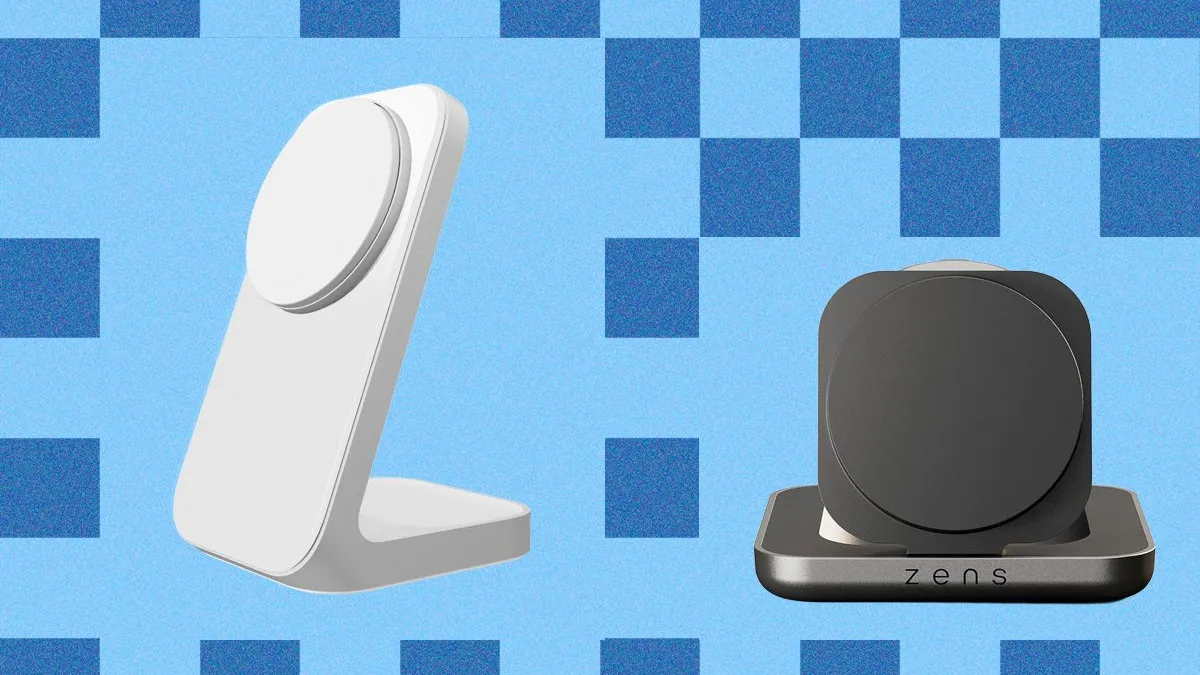
Learn how to select the best wireless charger, why Qi2 matters for alignment, and how to avoid common pitfalls like heat buildup and slow power delivery.
Based on reporting by Wired. Research, structure, and fact-checking by Groundwork.
Choose a Qi2-certified stand for the best balance of convenience and efficiency. Always use a wall adapter that meets the manufacturer's wattage requirements to avoid slow charging, and remove thick or metal cases to prevent overheating.
If you own a modern iPhone or a recent Android device, look for chargers explicitly labeled as Qi2 or MagSafe compatible. These devices use magnets to "snap" your phone into the ideal charging position every time, removing the guesswork associated with older, non-magnetic wireless chargers. This alignment ensures the highest supported wattage is delivered consistently.
Most high-quality wireless chargers require a dedicated wall adapter, often referred to as a power brick, to deliver the necessary wattage to the charging pad. Many manufacturers do not include this adapter in the box, meaning you must purchase one separately to achieve the advertised charging speeds.
To ensure your wireless charger functions correctly:
Using an underpowered wall adapter will often cause the wireless charger to default to a slower, "trickle" charging mode, significantly increasing the time required to reach a full charge.
Wireless charging is inherently less efficient than wired charging, meaning more energy is lost as heat during the transfer process. This heat can negatively impact your battery health over time if the charger does not manage thermal regulation effectively (Battery University, 2023).
To mitigate these risks, prioritize chargers that have built-in thermal management or cooling vents. Additionally, avoid placing your phone on a thick or metal-backed protective case, as these materials can interfere with the electromagnetic field and cause the device to overheat. If your phone feels excessively hot after a charging session, remove the case or switch to a different charging accessory.
Yes, most modern wireless chargers work through cases up to 3mm thick. However, cases containing metal, magnets, or credit card slots will interfere with the charging process and should be removed before placing the device on the pad.
Slow charging is usually caused by using an underpowered wall adapter, improper device alignment, or heat buildup that triggers thermal throttling. Ensure you are using the correct wattage power brick and that your phone is centered on the charging coil.
Most wireless chargers use the Qi standard, making them compatible with almost all modern smartphones. However, specific features like magnetic snap-on charging require a phone that supports MagSafe or Qi2, or the use of a magnetic adapter ring.
Comedian Chloe Radcliffe is reframing the conversation on infidelity by moving beyond moral judgment to explore the psychological patterns behind cheating.
Learn how to evaluate SSD deals by focusing on read/write speeds, interface types, and price-per-gigabyte to ensure you get value for your hardware investment.
Learn how to choose the right television by comparing OLED and LED technologies, identifying real price discounts, and verifying essential gaming features.