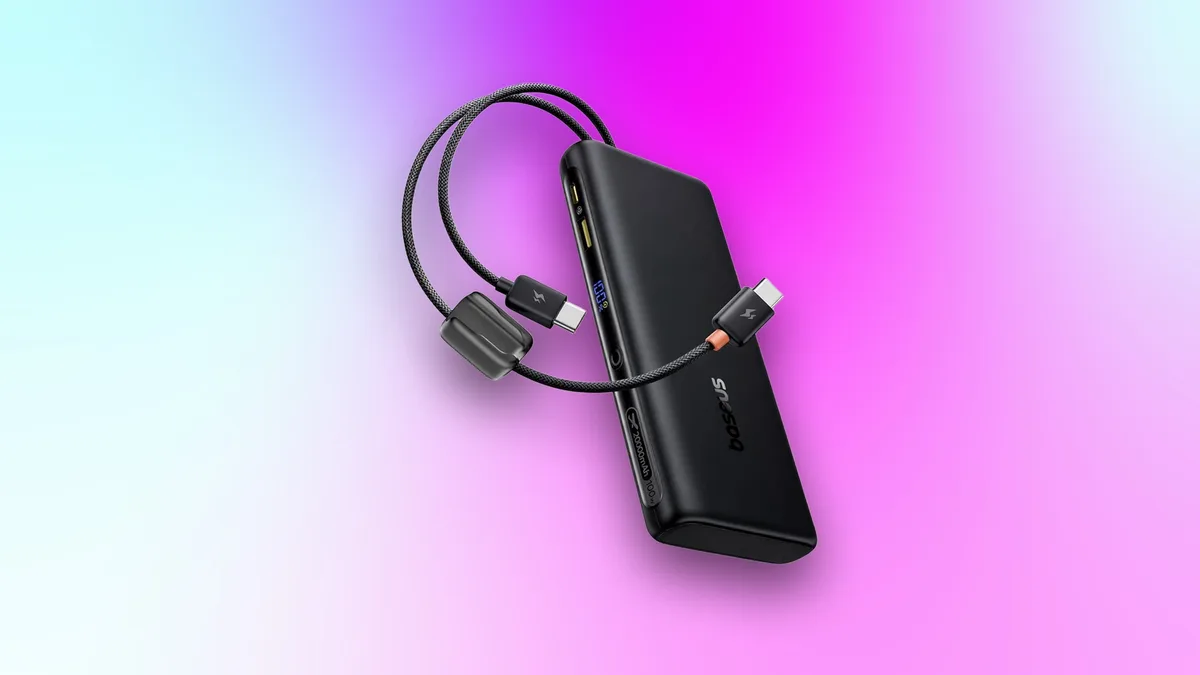
A high-capacity portable power bank is an external battery pack designed to store electrical energy and deliver it to mobile devices, such as laptops, smartphones, and tablets, via USB ports. The current deal on the 100-watt Baseus portable power bank, which lowers the price from $80 to $33 using a specific coupon code, represents a 58% discount on a high-output charging solution.
This deal is significant because it brings a 100-watt power delivery (PD) charger to a sub-$35 price point, which is rare for devices capable of charging high-performance laptops. According to CNET, the standard list price for this unit is $80, but the combination of an Amazon discount and a promotional code (RCYRSUYY) reduces the cost to $33. This pricing strategy is common for accessory brands looking to boost sales volume through promotional cycles, but it requires consumers to verify the total at checkout before finalizing the purchase.
Power delivery is a specification that allows for higher levels of power to be transmitted to devices, enabling faster charging times for hardware that supports it. A 100-watt output is sufficient to charge most modern laptops, including MacBooks and high-end Windows machines, at or near their maximum rated charging speed. While smartphones typically cap their intake significantly lower—usually between 20 and 45 watts—a 100-watt charger is backward compatible, meaning it will automatically negotiate the safe, maximum power required by your phone without causing damage to the battery.
Keep exploring
More from GroundworkIntegrated cables are built-in charging leads that eliminate the need to carry separate charging cords, reducing clutter and the risk of losing accessories. The Baseus model features two built-in braided USB-C cables, which provide a significant convenience advantage for travelers. While integrated cables simplify the user experience, they also represent a potential point of failure. If an integrated cable frays or breaks, the entire power bank may become less useful, unlike units with dedicated USB-C ports that allow you to swap in any standard cable.
Battery capacity is measured in milliampere-hours (mAh), which represents the total amount of energy a battery can store; 20,000mAh is widely considered the "sweet spot" for portable power. A 20,000mAh capacity is generally enough to recharge a modern smartphone four to five times or provide a full charge to most standard-sized laptops. It is important to note that you will not receive 100% of that capacity due to energy loss during the conversion process from the battery to your device, which typically results in about 70% to 80% real-world efficiency.
To decide if this power bank fits your needs, evaluate your daily hardware requirements and travel habits. If you work remotely or travel frequently with a laptop, a 100-watt output is an essential feature to prevent your computer from dying during long transit hours. If you only need to charge a phone, a smaller, lighter unit with MagSafe or wireless charging capabilities—such as the Baseus Picogo AM52—may be more practical and easier to carry in a pocket. Before buying, confirm that your specific device supports USB-C Power Delivery, as older laptops or proprietary charging systems will not benefit from this technology.