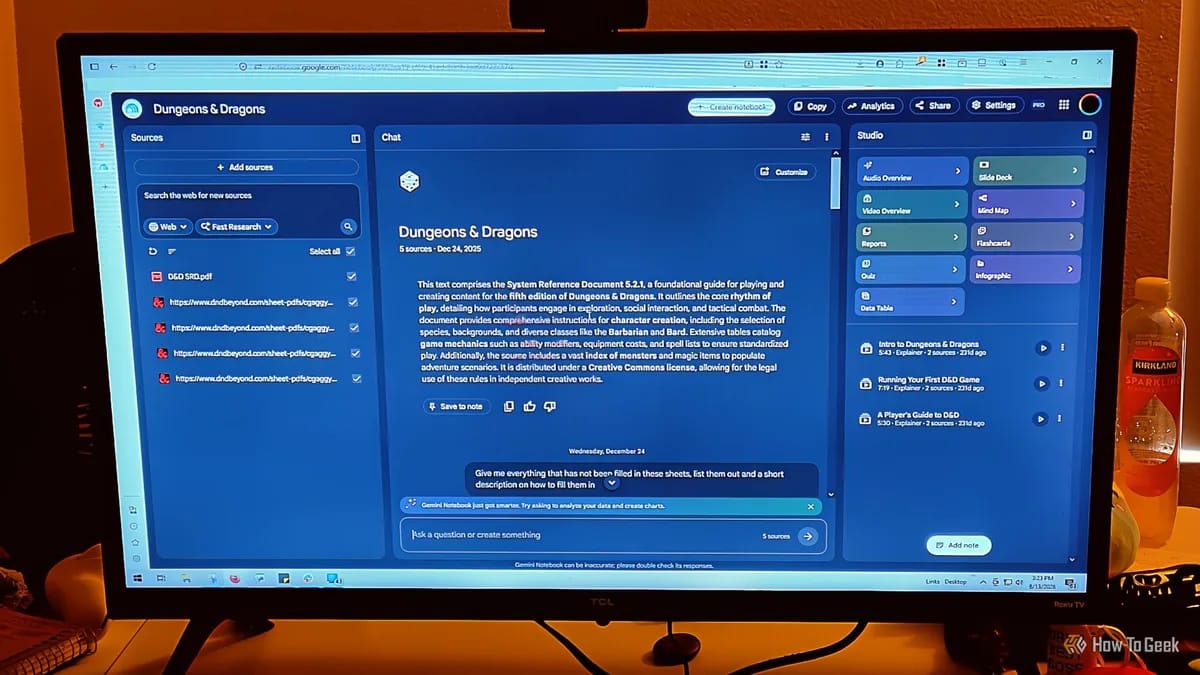
AI learning tools are software applications that leverage machine learning and natural language processing to assist students in summarizing dense texts, organizing research, and generating practice materials. Integrating these tools into your academic workflow can reduce the time spent on administrative study tasks by up to 30%, allowing you to focus on critical thinking and conceptual mastery.
Recent data from the Online Learning Consortium indicates that students utilizing AI-assisted study platforms report higher confidence in managing complex course loads, provided the tools are used to augment rather than replace independent study. To maximize academic integrity and performance, you must use these tools as force multipliers for your cognitive effort.
AI summarization tools allow you to ingest dense, technical, or academic journal articles and receive a structured breakdown of the core arguments, methodology, and conclusions. Instead of spending hours deciphering jargon-heavy introductions, you can use these tools to identify if a paper is relevant to your thesis before committing to a deep read.
Platforms like Elicit or Consensus utilize Large Language Models (LLMs) to scan thousands of peer-reviewed papers. Unlike general-purpose chatbots, these tools provide citations for every claim, ensuring you can verify the information against the original source. To use these effectively:
- Upload the PDF of the paper to the tool.
- Ask for a "TL;DR" of the methodology.
- Request a summary of the specific findings related to your research question.
- Verify the AI’s summary against the paper’s abstract and conclusion sections.
AI-powered flashcard generators transform your raw lecture notes and textbook chapters into active recall study sets. Active recall is a proven psychological technique where you force your brain to retrieve information rather than passively reviewing it, which significantly improves long-term memory retention according to research from the Association for Psychological Science.
Tools like Quizlet’s AI features or Anki plugins can ingest your notes and generate multiple-choice questions, true-false prompts, or fill-in-the-blank exercises. To build an effective practice routine:
- Export your lecture notes into a clean text file.
- Feed the text into an AI generator with a prompt like: "Create 10 multiple-choice questions based on these notes, focusing on key terminology and conceptual relationships."
- Review the AI-generated questions for accuracy.
- Use the resulting flashcards for daily retrieval practice sessions of 15-20 minutes.
Keep exploring
More from GroundworkAI note-taking assistants transcribe your lectures in real-time and automatically format them into structured outlines, highlight action items, and identify key themes. This prevents the common "transcription trap," where you focus so much on writing down every word that you stop listening to the professor's explanation of complex concepts.
Applications such as Otter.ai or Microsoft OneNote’s integrated AI features allow you to focus on the lecture content while the software handles the documentation. To optimize this process:
- Record the lecture with the AI tool, ensuring you have permission from the instructor.
- Post-lecture, use the AI summary feature to organize the transcript into a thematic outline.
- Add your own critical analysis or questions to the margins of the AI-generated notes.
- Link these notes to related readings or previous lectures to build a connected knowledge base.
AI writing assistants can help you structure your thoughts, outline complex arguments, and refine your prose, provided you maintain full ownership of your ideas. The goal is to use AI as a sparring partner for your arguments rather than an author for your content.
When you are stuck on a draft, use AI to:
- Input your thesis statement and ask the tool to generate a potential outline for a 1,500-word essay.
- Ask the AI to identify potential counter-arguments to your thesis to strengthen your critical analysis.
- Use the tool to check your writing for clarity and conciseness, but do not allow the AI to write the paragraphs for you.
Academic institutions have clear policies regarding the use of generative AI. You must ensure that your use of these tools complies with your university’s code of conduct. As a rule of thumb, use AI to support your process—outlining, summarizing, and practicing—but never outsource the core intellectual labor of your assignments.