A First Amendment lawsuit is a legal action filed by a private party against a government entity, arguing that state-led actions—such as investigations or regulatory pressures—unconstitutionally infringe upon the right to free speech and press. In the case of Disney-owned ABC versus the Federal Communications Commission (FCC), the network is challenging the agency’s decision to initiate an early broadcast license renewal process, which the network characterizes as a retaliatory action against its editorial content.
At Groundwork, our analysis shows that this confrontation represents a significant intersection of regulatory oversight and constitutional protection. The core of the dispute rests on whether the FCC is acting within its mandate to regulate telecommunications or if it is leveraging its licensing authority to penalize a network for political commentary.
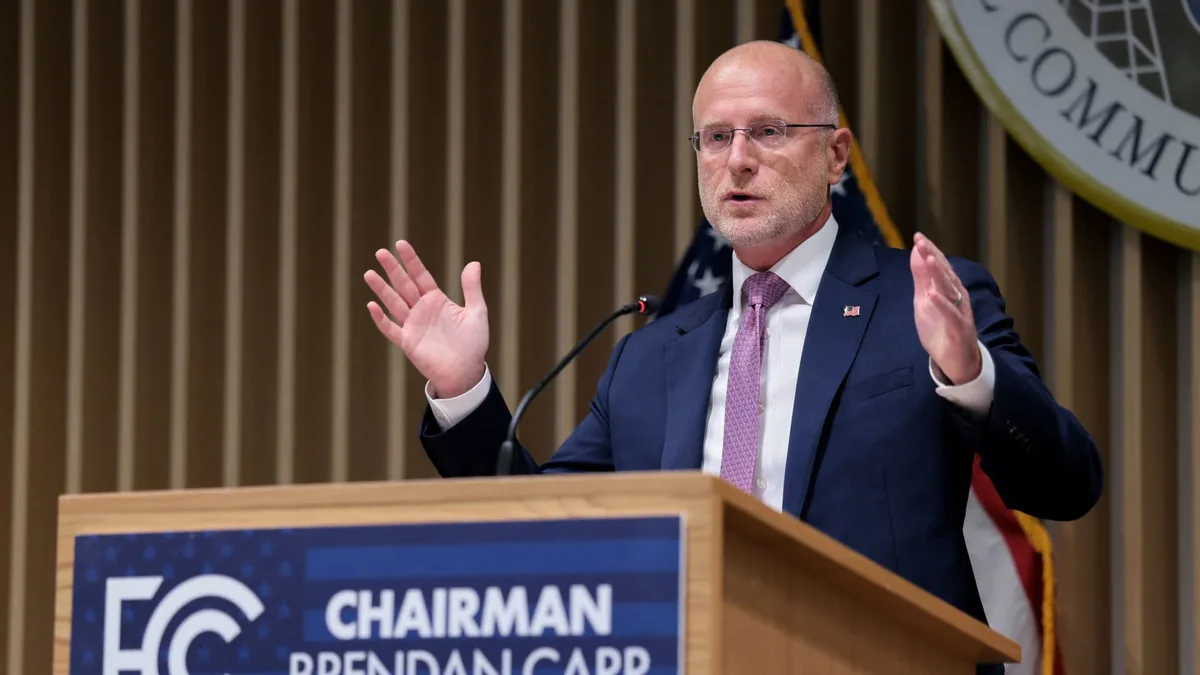
The FCC initiated an early review of ABC’s broadcast station licenses in April 2026, years ahead of their scheduled expiration, citing concerns regarding Disney’s diversity, equity, and inclusion (DEI) practices. The agency, led by Chairman Brendan Carr, claims the investigation focuses on potential violations of the Communications Act of 1934 and agency rules prohibiting unlawful discrimination.
While the FCC maintains that these proceedings are administrative in nature, ABC’s legal filings characterize the timing as suspicious. The review followed public political backlash against ABC programs, including late-night shows and daytime talk programs that have featured commentary critical of the current administration. Under the Communications Act, the FCC has the authority to grant or renew broadcast licenses based on the "public interest, convenience, and necessity." However, when that authority is applied selectively, it invites scrutiny regarding whether the agency is overstepping its regulatory bounds.
ABC’s lawsuit, filed in a Washington, D.C. district court, centers on the claim that the FCC’s actions constitute a "retaliatory campaign" against the network’s editorial independence. The legal argument rests on the First Amendment, which protects the press from government coercion or punishment based on the content of its speech.
Legal precedent generally holds that the government cannot use regulatory or licensing levers to chill free speech. If a court finds that the FCC’s "early renewal" process was motivated by a desire to suppress or punish political criticism rather than a legitimate regulatory concern, the agency’s actions could be deemed unconstitutional. At Groundwork, our framework suggests that the burden of proof will lie on the plaintiff to demonstrate that the regulatory action is not merely inconvenient, but is specifically designed to exert viewpoint-based pressure on the network’s journalistic output.
Keep exploring
More from GroundworkThe outcome of this litigation could redefine the scope of FCC oversight regarding media conglomerates. Because broadcast licenses are federal grants, stations operate under a "public interest" standard. If the FCC is permitted to tie license renewals to corporate DEI policies or other non-technical operational metrics, it could establish a precedent where future administrations use the licensing process as a tool for ideological enforcement.
Conversely, if the court rules in favor of ABC, it would reinforce the "editorial independence" of broadcast networks, limiting the ability of government agencies to interfere with programming decisions. This case serves as a critical test for the separation of regulatory authority and the press. Media companies and industry observers are watching closely to see if the judiciary will narrow the FCC’s discretion in how it conducts license evaluations.
Under normal circumstances, FCC license renewals occur on a fixed, multi-year cycle. These renewals are largely administrative, focusing on whether a station has complied with technical standards, ownership limitations, and public service requirements. An "early renewal" is an atypical procedural step that draws immediate attention from legal analysts because it deviates from the standard regulatory cadence.
- License expiration: Broadcast licenses are granted for fixed terms, usually eight years.
- Compliance review: Applicants submit materials demonstrating operational compliance with FCC rules.
- Public interest assessment: The FCC evaluates whether the licensee serves the public interest.
- Approval or denial: The agency grants the renewal, denies it, or sets conditions for continued operation.
By moving this process forward, the FCC has effectively compelled Disney to engage in a high-stakes legal defense during a period where it would otherwise be focused on long-term corporate strategy. ABC has stated it is proceeding "under protest," which is a formal legal maneuver intended to preserve their right to challenge the legality of the FCC’s orders in future proceedings.
For investors and media observers, the immediate next step is the court’s determination on ABC’s request to halt the early renewal proceedings. A preliminary injunction would freeze the FCC’s investigation, providing a cooling-off period while the case moves through the discovery phase.
If you are evaluating the impact of this case on your media investments or broader understanding of the First Amendment, monitor the court filings for a response from the FCC. The agency will likely argue that its actions fall within the "broad discretion" granted to it by Congress to regulate the airwaves. Regardless of the legal outcome, this case highlights the risks inherent in industries that require government licenses to operate, where the line between regulatory oversight and political policy is often subject to intense, and sometimes litigious, debate.