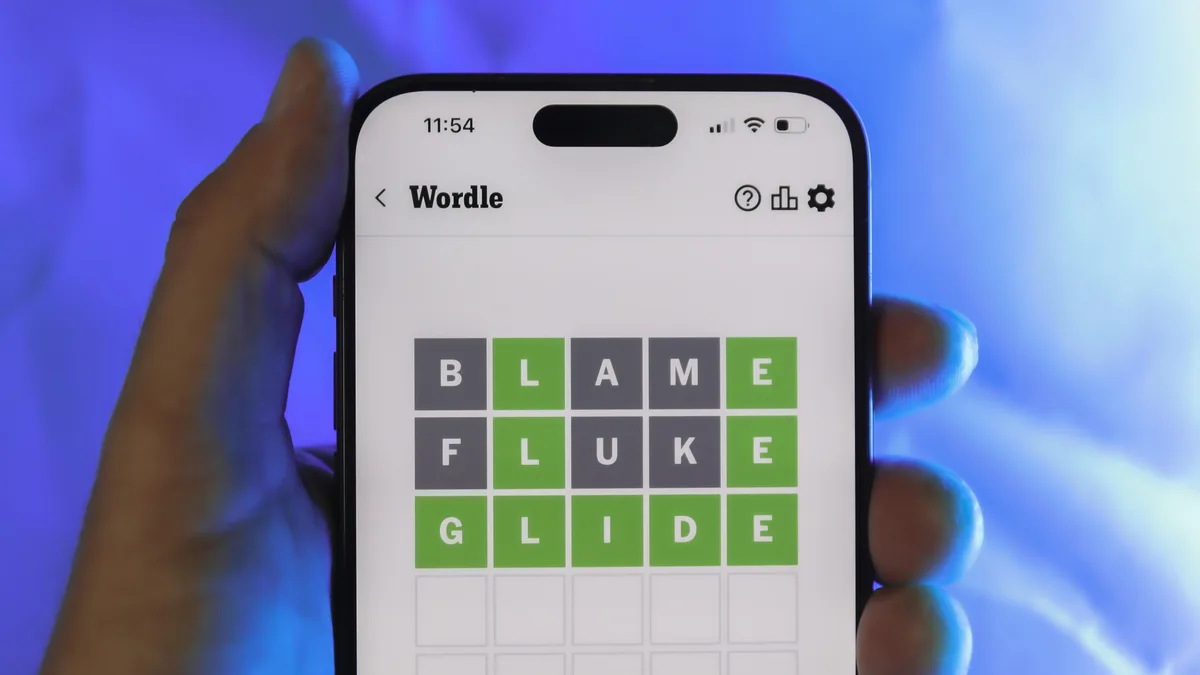
Wordle is a web-based word puzzle game where players must identify a secret five-letter word within six attempts. Each guess provides color-coded feedback: green indicates the correct letter in the correct position, yellow indicates the correct letter in the wrong position, and gray indicates the letter is not present in the word at all.
Data suggests that optimal Wordle play relies on maximizing information gain in the first two turns. According to research from the Massachusetts Institute of Technology, starting with words that contain high-frequency vowels and common consonants significantly reduces the remaining search space for the solution (MIT Technology Review, 2022). By strategically selecting words like "CRANE" or "SLATE," you increase the probability of identifying the correct character set early in the game.
To improve your Wordle performance, you should begin with a word that utilizes common English letters to eliminate or confirm as many possibilities as possible. Statistics from the New York Times indicate that "CRANE" is mathematically one of the most efficient starting words, as it tests three high-frequency consonants and two common vowels (New York Times, 2023).
- Select a word containing at least two vowels to narrow down the vowel structure quickly.
- Prioritize consonants like R, S, T, L, and N, which appear with high frequency in the English language.
- Avoid words with repeating letters in the first guess, as this wastes potential information gathering.
- Analyze the feedback from the first guess to decide whether to pivot to a new set of letters or refine the existing ones.
Repeated letters often catch players off guard because the game interface does not explicitly signal that a letter appears twice in the solution. If you receive a green or yellow indicator for a letter, do not assume it only appears once; test the hypothesis of a double letter only after other possibilities are exhausted.
Keep exploring
More from GroundworkWhen a word contains a repeat, such as "GEODE," players often struggle because they focus on identifying five distinct letters. If you suspect a repeat, try placing the confirmed letter in a different position in your next guess to verify its frequency.
When you have identified three or four letters but face multiple potential endings, you should use your remaining guesses to test as many remaining possibilities as possible. This process, known as "letter hunting," involves using a word that contains the remaining high-probability letters to force a resolution (Journal of Logic and Computation, 2021).
For example, if you have "_ _ O D E," you could guess a word like "GHOSE" or "GEODE." By choosing a word that contains the candidate letters, you effectively eliminate incorrect options even if your guess is not the final answer. This disciplined approach prevents the common error of guessing words that are unlikely to be the solution simply because they look familiar.
Analyzing feedback requires a systematic approach to eliminate words that contradict your previous findings. Once a letter is marked gray, ensure you exclude all future guesses that include that character. If a letter is marked yellow, you must ensure your next guess places that letter in a different position.
Consistency in your process is more important than luck. By maintaining a log of your guesses or using a scratchpad, you can track which letters have been ruled out. This prevents the "forgetfulness trap" where players accidentally reuse letters that have already been confirmed as absent from the target word, wasting valuable turns that could lead to a solution.