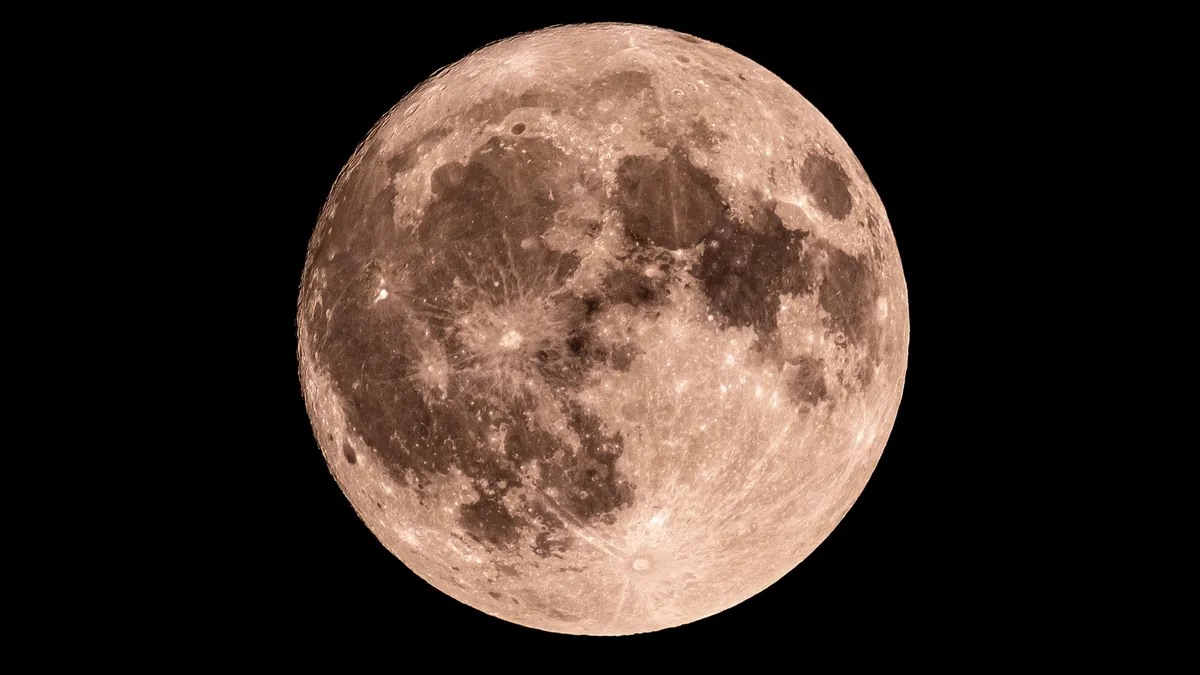
A moon phase is the portion of the Moon's surface illuminated by the Sun as viewed from Earth. Because the Moon orbits our planet while simultaneously orbiting the Sun, our perspective of its sunlit side changes throughout a 29.5-day cycle, commonly known as a synodic month (NASA).
Tracking the Moon's phase allows you to predict visibility for stargazing, understand tidal patterns, and appreciate the predictable mechanics of our solar system. Whether the Moon appears as a thin sliver or a brilliant orb depends entirely on its position relative to the Earth and the Sun.
The Moon’s phases are caused by the changing geometry of the Sun, Earth, and Moon as they move through space. As the Moon orbits Earth, the amount of its sunlit surface visible from your specific vantage point shifts, progressing through eight distinct stages before the cycle begins again (NASA).
It is a common misconception that the Moon’s phases are caused by the Earth’s shadow falling upon it. That phenomenon is actually a lunar eclipse. Instead, the phases are simply a result of the Moon’s orbit; the "dark" portion of the Moon is merely the side currently facing away from the Sun.
The lunar cycle is divided into eight specific phases that repeat every 29.5 days. Recognizing these stages helps you understand what to expect in the night sky:
- New Moon: The Moon is positioned between the Earth and the Sun, rendering the side facing Earth dark and largely invisible (NASA).
- Waxing Crescent: A thin sliver of light appears on the right side of the Moon (in the Northern Hemisphere) as it begins to move out of the New Moon phase.
- First Quarter: The Moon has completed one-quarter of its orbit, appearing as a half-illuminated disk on the right side.
- Waxing Gibbous: More than half of the Moon is illuminated, and the light continues to increase as it approaches full capacity.
- Full Moon: The Earth is positioned between the Sun and the Moon, allowing the entire face of the Moon to be fully illuminated by sunlight.
- Waning Gibbous: The light begins to decrease, moving from full toward a half-lit state, with the illumination appearing on the left side.
- Third Quarter (Last Quarter): The Moon appears as a half-disk again, but the light is now visible on the left side, indicating the cycle is nearing its end.
- Waning Crescent: A final, thin sliver of light remains on the left side before the Moon returns to the New Moon phase (NASA).
Keep exploring
More from GroundworkYou can track the current Moon phase by using online resources like the NASA Daily Moon Guide or by observing the lunar terminator—the line between the light and dark sides of the Moon. Because the cycle is predictable, you can calculate the phase for any date by determining how many days have passed since the last New Moon.
To track the Moon effectively, follow these steps:
- Check a reliable astronomical database, such as the NASA Moon Phase tracker, to identify the current percentage of illumination.
- Observe the orientation of the crescent or gibbous shape to determine whether the Moon is "waxing" (growing in light) or "waning" (decreasing in light).
- Note the date of the next Full Moon to predict the peak of the current cycle.
Moon phases dictate the quality of your stargazing experience because the brightness of the Moon acts as natural light pollution. During a Full Moon, the intense reflected sunlight can wash out fainter celestial objects like nebulae, galaxies, and meteor showers (Sky & Telescope).
If you are planning an evening for astronomical observation, aim for the days surrounding the New Moon. During this phase, the lack of moonlight provides the darkest skies possible, which is essential for viewing deep-sky objects. Conversely, if you are looking to photograph the Moon itself, the Waxing or Waning Gibbous phases often provide the best contrast along the terminator line, where shadows cast by craters and mountains are most pronounced.