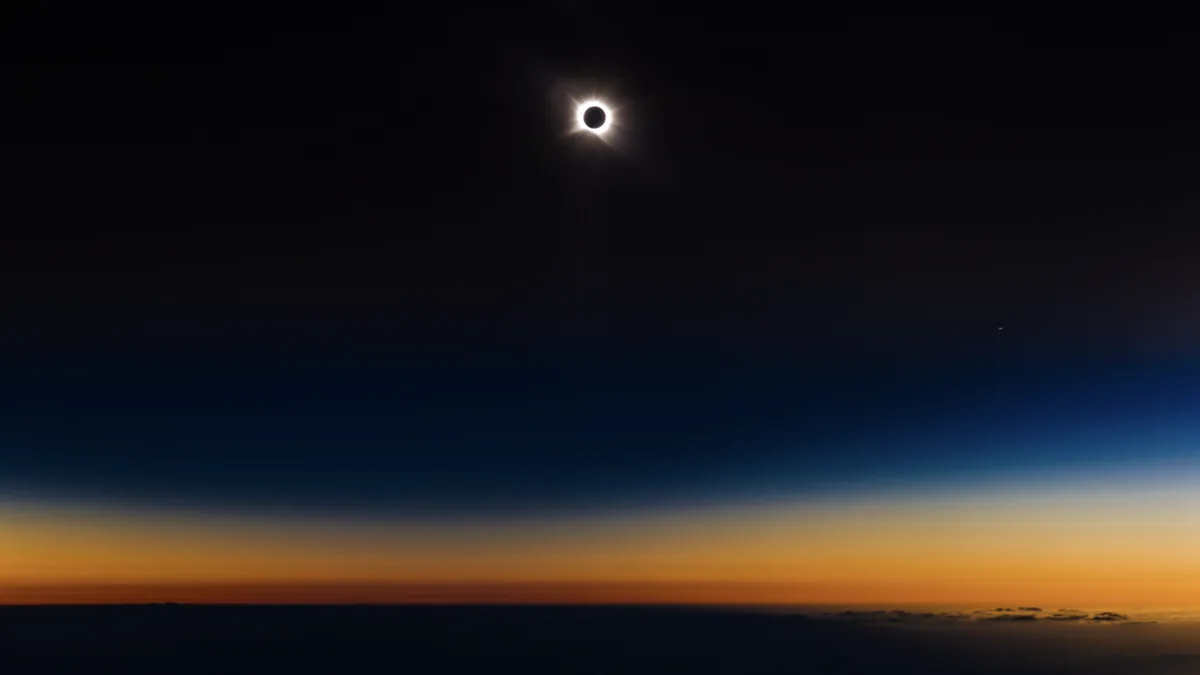
A solar eclipse flight is a commercial aviation journey intentionally timed and routed to intersect with the moon's shadow, allowing passengers to witness totality from the air. By flying above cloud cover and within the path of totality, you can experience a longer or more unique viewing window than those stationed on the ground.
According to data from the American Astronomical Society, viewing an eclipse from an aircraft requires precise synchronization between the moon’s shadow path and the flight's ground track (AAS, 2024). While rare, these opportunities provide a distinct vantage point that eliminates the primary obstacle of eclipse viewing: local weather conditions.
Yes, viewing a solar eclipse from a commercial flight is possible if your flight path aligns with the moon's shadow, known as the path of totality. Because aircraft travel at high speeds and altitudes, you can potentially extend the duration of the eclipse or move through the shadow more effectively than stationary observers. However, success depends entirely on the flight's timing, route, and your specific seat selection, as the sun must be visible from your window throughout the event.
To find a flight that intersects with an eclipse, you must cross-reference the eclipse's path of totality with historical flight data. Start by identifying the geographic coordinates of the shadow's path using resources like the NASA Eclipse Explorer or the Time and Date solar eclipse map. Once you have the specific window of time and the path, use tools such as FlightRadar24 to analyze the historical flight paths of commercial routes that traverse that region.
Look for flights that have consistent departure schedules. As noted in recent travel logistics, comparing three to five days of flight data helps you identify patterns in delays or altitude adjustments that might impact your viewing window (FlightRadar24, 2023). Ensure the flight is scheduled to be in the air during the exact minutes of totality, not during takeoff or landing, when window usage is restricted and cloud cover near the airport could obstruct your view.
Keep exploring
More from GroundworkYour seat assignment is the most critical factor in your ability to observe the eclipse. Once you have identified a viable flight, you must determine which side of the aircraft will face the sun during the event. Use a flight tracking tool to visualize the plane’s heading relative to the sun’s position at the time of the eclipse.
- Identify the flight path: Map the route and determine the direction the plane will be traveling during the eclipse.
- Determine sun position: Use an app like Sun Surveyor or a simple compass to see where the sun will be relative to the flight path.
- Choose the window side: If the sun is to the right of the plane's trajectory, choose a window seat on the right side of the cabin.
- Check for wing obstruction: Avoid seats directly over the wing, as the structure will block your downward or lateral view of the sky.
- Confirm seat availability: Use the airline’s seat map during the booking process to ensure the desired window seat is open.
Commercial flight schedules are subject to change, which presents the greatest risk to your plan. Airlines may change aircraft types, shift flight paths, or experience significant delays that push the flight outside the path of totality. Furthermore, pilot discretion or air traffic control instructions can alter the flight path at any moment, potentially moving you away from the optimal viewing position.
Because of these variables, you should treat the flight as a secondary viewing opportunity rather than a guaranteed experience. Always have a backup plan on the ground if your primary goal is to witness the eclipse. Additionally, ensure you have certified solar eclipse glasses, as the intensity of the sun remains hazardous even from high altitudes, and the windows of a commercial aircraft do not provide sufficient protection for the naked eye during partial phases.