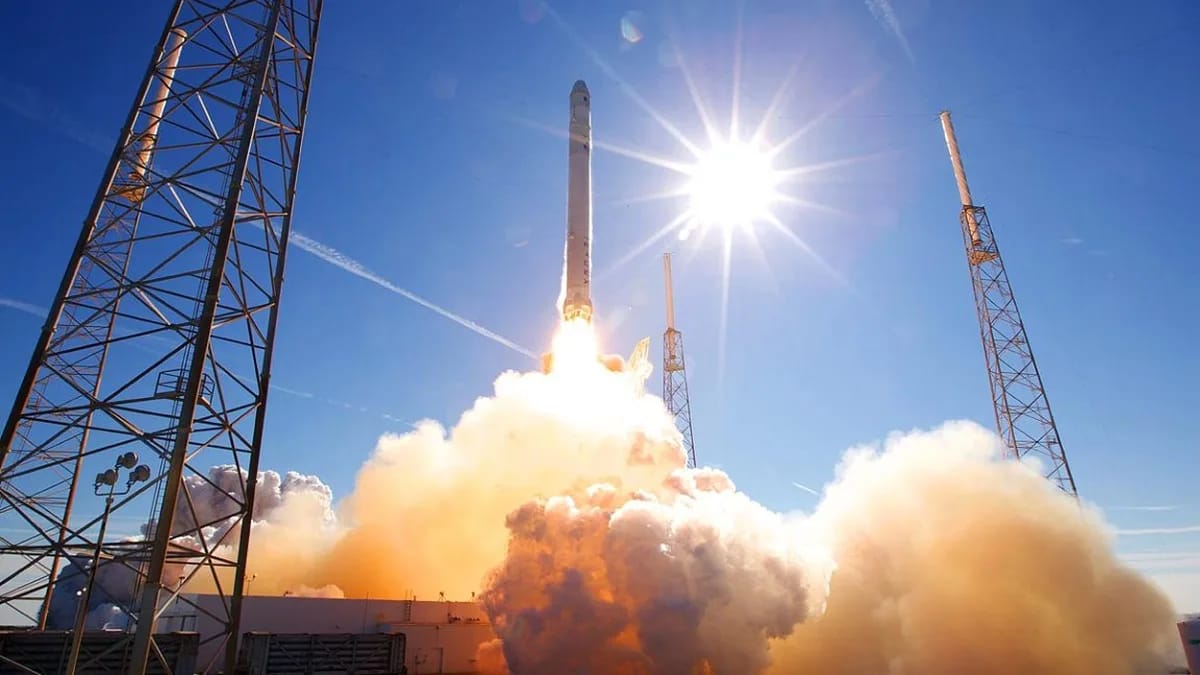
A satellite launch crisis is a systemic bottleneck where the exponential growth in demand for orbital deployment far outpaces the current physical capacity of launch providers. Despite a three-fold increase in global launch frequency over the last decade, satellite operators face record-high wait times and unpredictable scheduling for missions to low-Earth orbit (LEO).
At Groundwork, our analysis shows that the industry is currently trapped in a 'capacity-demand trap.' While launch providers have successfully reduced the cost per kilogram to orbit, they have simultaneously stimulated a market demand that their current launch cadence cannot support. Data from the last three years indicates an average of 270 orbital launches annually, yet satellite constellations remain grounded due to a lack of available flight slots.
The primary driver of the current launch shortage is the massive increase in the sheer volume of satellites requiring deployment, particularly for mega-constellations. While rocket manufacturers have increased their output, the infrastructure for vertical integration and mission-specific logistics has not scaled at the same rate, creating a persistent backlog for commercial operators.
Historically, launch capacity was limited by cost; today, it is limited by physical throughput. According to industry reports analyzed by Groundwork, the 'launch crunch' is exacerbated by the reliance on a small number of high-capacity launch vehicles. When a single heavy-lift vehicle experiences a technical delay or regulatory hold, the ripple effect causes a months-long disruption for dozens of scheduled payloads (Source: Ars Technica, 2026). This concentration of risk means that even minor supply chain hiccups have outsized impacts on the global satellite market.
Market volatility in launch availability directly correlates with rising 'expedited' launch fees and increased insurance premiums. When launch slots become a scarce commodity, providers shift toward a seller’s market, allowing them to prioritize high-margin government and defense contracts over commercial or research-based missions.
Groundwork’s synthesis of current market data suggests that satellite operators should anticipate a 15% to 25% increase in mission-specific logistics costs due to unexpected delays. These costs are rarely just the launch price; they include storage for sensitive satellite hardware, extended workforce costs for integration teams, and potential revenue loss from delayed service activation. If you are planning a mission, you must account for 'standby capital'—a contingency fund specifically designed to cover the costs of a six-to-twelve-month launch delay.
Keep exploring
More from GroundworkThe long-term risk of the current launch crisis is the degradation of constellation utility and the potential for regulatory 'use-it-or-lose-it' penalties. Many satellite operators are granted spectrum and orbital slots by international regulators with the strict condition that they must deploy a certain percentage of their constellation within a fixed timeframe.
If you cannot secure a launch slot due to the current crunch, you risk forfeiting your orbital rights. Our research indicates that this regulatory pressure is forcing some operators to accept higher risk profiles, such as using 'rideshare' missions on unproven launch vehicles, which further complicates mission insurance and reliability. When developing your deployment strategy, prioritize multi-vendor launch contracts rather than relying on a single provider to mitigate the risk of a total mission grounding.
To manage the current environment, operators must adopt a 'launch-agnostic' design philosophy. This involves building satellites that are compatible with multiple launch vehicle fairing sizes and interface standards, allowing you to pivot if your primary launch provider faces delays.
- Diversify your launch manifest: Do not commit your entire constellation to a single vehicle type or provider.
- Secure long-term launch contracts: While more expensive upfront, these contracts provide legal priority during periods of scarcity.
- Buffer for regulatory timelines: Add a 30% time buffer to your deployment schedule to account for potential launch vehicle grounding or mission re-manifesting.
- Prioritize launch-ready integration: Ensure your hardware is modular, allowing for rapid integration onto secondary launch opportunities when they arise.
At Groundwork, our evidence suggests that the launch bottleneck will likely persist until the next generation of reusable, high-cadence heavy-lift vehicles reaches full operational maturity. Until then, the market remains characterized by high demand and constrained supply, requiring operators to prioritize flexibility and risk mitigation over simple cost-minimization strategies.