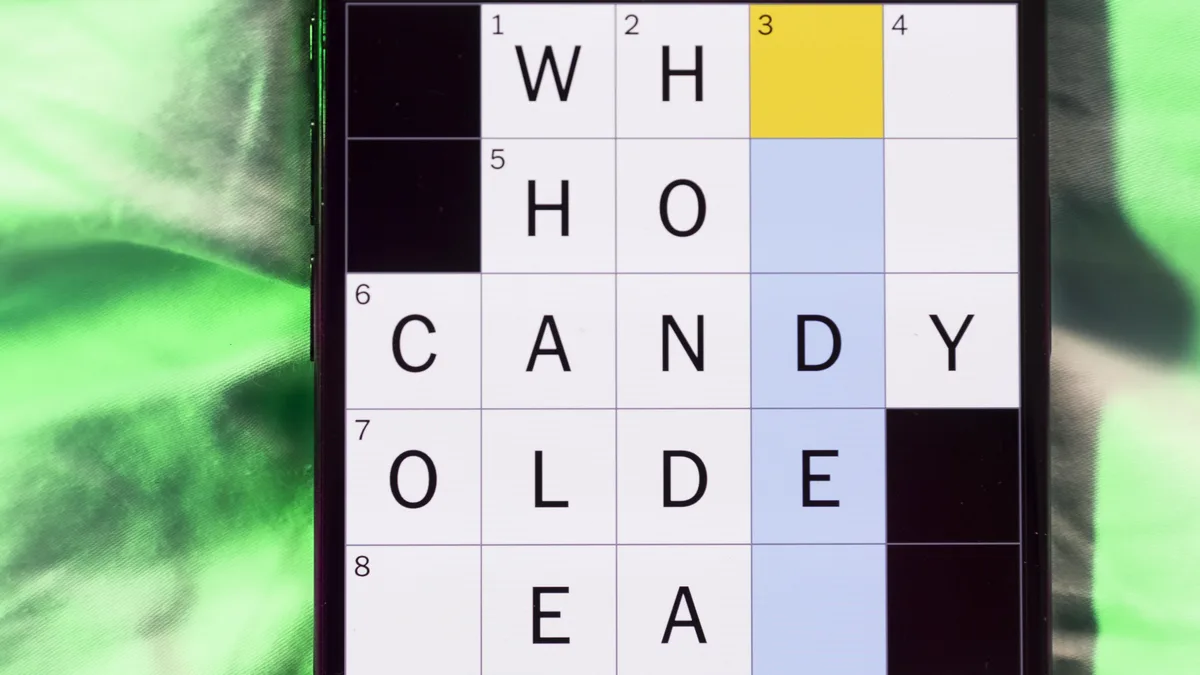
The New York Times Mini crossword is a bite-sized daily puzzle that tests your vocabulary, general knowledge, and pattern recognition skills. Unlike the standard Sunday crossword, the Mini is designed for quick completion, typically taking most experienced solvers between one and three minutes to finish. Successfully solving these puzzles requires a mix of lateral thinking and an understanding of common crossword construction conventions.
To solve a crossword efficiently, you should always start by scanning the clues for the ones you are 100% certain about, regardless of their position in the grid. Filling in these "anchor" words provides intersecting letters that make it significantly easier to solve more difficult or ambiguous clues later. According to the American Crossword Puzzle Tournament, experienced solvers prioritize identifying short, common words to create a framework that reveals longer, more complex entries.
Crossword puzzles often rely on recurring themes, abbreviations, and specific phrasing known as "crosswordese." You can improve your speed by learning to identify these patterns, such as recognizing that words like "co-ops" or "outro" appear frequently due to their useful combination of vowels and consonants. Research from the University of California, Berkeley, suggests that cognitive pattern recognition is a skill that strengthens with daily repetition, allowing your brain to subconsciously predict word lengths and letter placements based on the context of the clue.
Keep exploring
More from GroundworkWhen you encounter a clue that does not immediately make sense, follow a systematic process of elimination to break the stalemate. First, identify the part of speech requested by the clue—for example, if the clue is "run under a faucet," you are almost certainly looking for a verb like "rinse." Second, look at the intersecting letters you have already filled in. Third, if you remain stuck, leave the section and move to a different part of the grid. Often, the solution to a "down" clue will become apparent once you have solved an "across" clue that shares a letter.
- Scan all clues once to identify "gimme" answers that you know instantly.
- Fill in the grid starting with the longest or most certain words to create constraints.
- Analyze the remaining empty squares and cross-reference the corresponding down and across clues.
- Use the process of elimination for clues where you have partial letter matches.
- Revisit the puzzle after a short break if you hit a mental block, as shifting focus often triggers new associations.
Crossword constructors prioritize words that have high "crossability," meaning they contain common letters like A, E, R, S, and T. This is why you will frequently see answers like "Arial" or "Ohio" in puzzles. Understanding that the grid is a mathematical construction rather than just a trivia test helps you realize that the answer is often constrained by the grid’s structure. If a clue seems obscure, consider if the answer is a simple word that fits the grid’s requirements rather than an overly complex term. By focusing on these structural constraints, you can narrow down your guesses significantly, turning a difficult puzzle into a logical exercise.