A market correlation refers to the statistical relationship between two assets, where the price movement of one influences the perceived value or risk profile of another. In the current economic climate, bitcoin's price trajectory is increasingly tethered to the stability of energy markets—specifically oil—and the resulting implications for global inflation and Federal Reserve monetary policy. When geopolitical tensions flare, particularly in critical shipping lanes like the Strait of Hormuz, the potential for an oil supply shock creates a ripple effect that directly impacts risk assets like cryptocurrency.
At Groundwork, our analysis shows that bitcoin’s current stagnation near the $63,500 level is not merely a result of market apathy but a direct reflection of a 'wait-and-see' approach by institutional investors reacting to energy-related inflation risks. While bitcoin is often marketed as a hedge against fiat devaluation, empirical data suggests that in the short term, its price action remains highly sensitive to the broader liquidity environment dictated by the U.S. Dollar Index (DXY) and treasury yields.
The Strait of Hormuz is a vital maritime chokepoint that carries approximately 20% of the world’s total oil consumption, according to the U.S. Energy Information Administration (EIA). When shipping through this channel is disrupted, the immediate consequence is a tightening of global oil supply, which historically drives up energy prices. Elevated crude prices function as a tax on global economic activity, fueling headline inflation and complicating the Federal Reserve's ability to maintain a neutral or dovish interest rate stance.
For bitcoin, this creates a 'tail risk.' If oil prices spike due to a collapse in the U.S.-Iran ceasefire, the resulting inflationary pressure forces the Federal Reserve to maintain higher interest rates for longer. Because bitcoin is a non-yielding risk asset, it competes with U.S. Treasury bills for capital. When interest rates rise, the cost of borrowing increases and the opportunity cost of holding non-yielding assets becomes less attractive, effectively capping bitcoin's upside potential regardless of internal network metrics.
The Dollar Index (DXY) tracks the value of the U.S. dollar relative to a basket of foreign currencies. When the DXY declines, it typically indicates a weakening of the dollar, which often serves as a bullish signal for risk-on assets, including bitcoin and high-growth technology equities. Recently, the DXY has shown signs of a bearish breakdown, dropping to levels not seen since early June, according to data from TradingView.
At Groundwork, we track the inverse relationship between the DXY and bitcoin. A lower DXY suggests that global liquidity conditions may be loosening, which historically provides a tailwind for bitcoin. However, this bullish signal is currently being countered by the aforementioned geopolitical energy risks. Investors are currently weighing the benefits of a weakening dollar against the potential for an energy-induced inflationary surge. When these two forces reach an impasse, bitcoin often enters a period of range-bound consolidation, as seen in the recent ceiling at the $64,000 mark.
Keep exploring
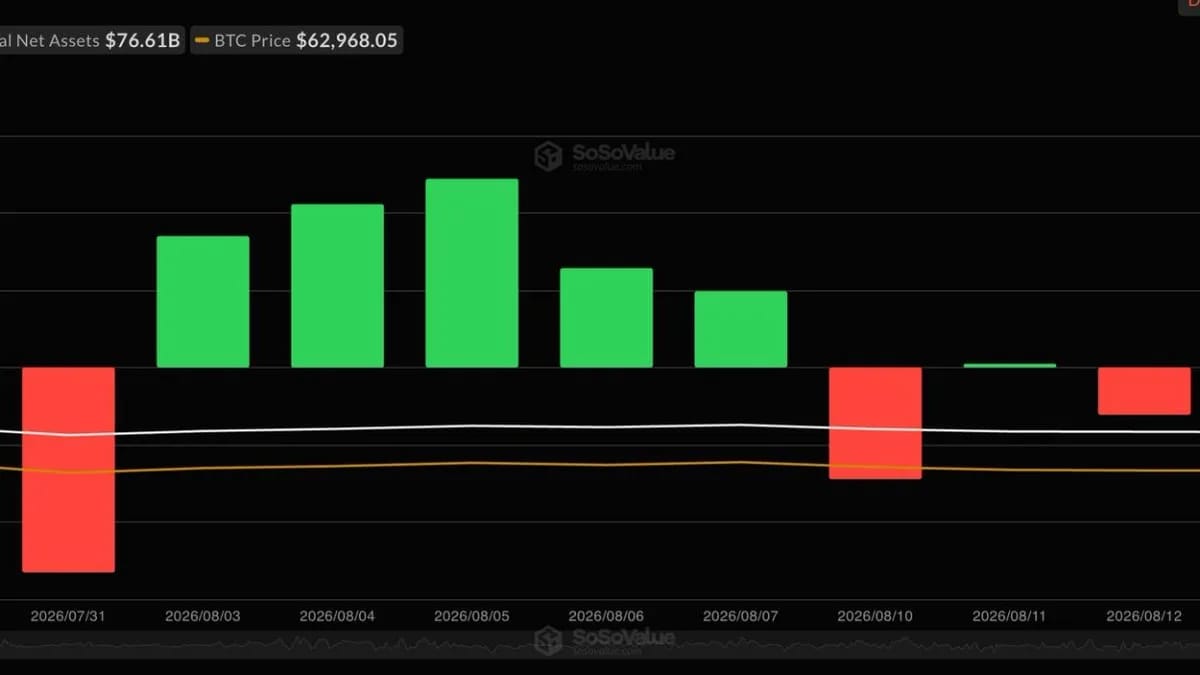
More from GroundworkWhile price action remains flat, institutional flows—the movement of capital into or out of bitcoin-related financial products—often tell a different story. Market analysis from firms like ARP Digital suggests that beneath the surface of stagnant price action, the underlying flow of capital has begun to shift. Institutional investors look at long-term macroeconomic trends rather than daily price fluctuations.
To assess the health of the market, investors should monitor:
- Spot ETF inflows: Consistent accumulation in bitcoin ETFs often indicates institutional conviction despite short-term volatility.
- High-performance computing (HPC) demand: Companies like HIVE Digital, which recently secured a $350 million GPU cloud deal, demonstrate that crypto-adjacent industries are finding value in infrastructure expansion, suggesting a long-term belief in digital asset ecosystem growth.
- Annual recurring revenue (ARR) growth: Monitoring the financial health of publicly traded miners and infrastructure providers offers a glimpse into the operational stability of the sector.
When macro headwinds like geopolitical tension and shifting interest rate expectations collide, the most effective strategy is to avoid reactive trading. Instead, focus on the fundamental drivers of digital asset demand. The current market environment is characterized by a tug-of-war between liquidity-driven growth and inflation-driven volatility.
If you are evaluating your portfolio during this period, consider the following evidence-based steps:
- Audit your risk exposure: Ensure that your allocation to volatile assets like bitcoin does not exceed your personal threshold for loss, particularly when macro risks are elevated.
- Monitor energy indices: Watch WTI and Brent crude oil prices as proxies for potential inflationary shocks that could force central bank intervention.
- Track central bank signaling: Pay close attention to Federal Reserve minutes and policy statements, as these remain the primary determinants of liquidity in the global financial system.
- Separate price from utility: Distinguish between short-term price movements and the long-term adoption metrics, such as institutional product flows and infrastructure investment, which provide a more accurate picture of the asset class's trajectory.