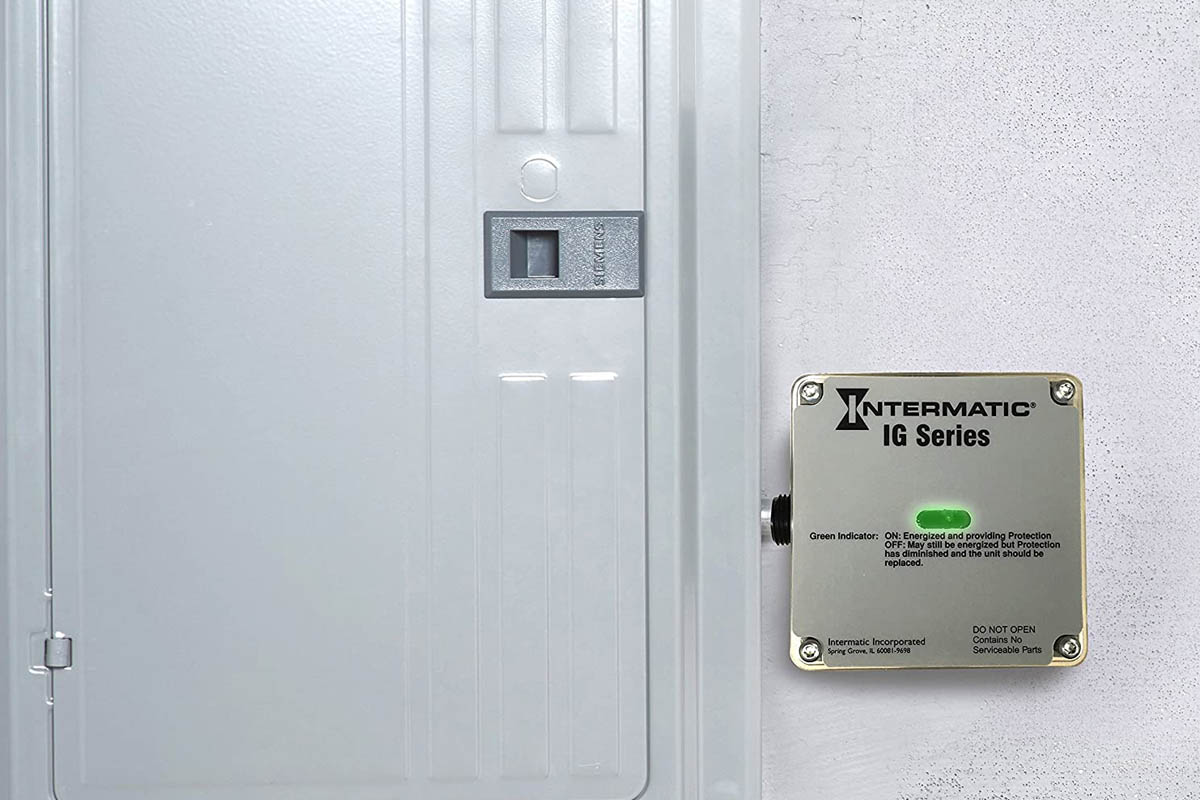
A whole-house surge protector is a device installed at your electrical service panel that diverts excess voltage caused by lightning strikes, utility grid fluctuations, or internal appliance cycling away from your home's sensitive circuits. Unlike point-of-use power strips that protect individual outlets, a whole-house unit acts as the first line of defense for your entire electrical system.
According to the National Electrical Manufacturers Association (NEMA), voltage surges are responsible for billions of dollars in property damage annually. While many homeowners assume surge protection is only necessary for computers and televisions, modern homes rely on microprocessors in everything from refrigerators and HVAC compressors to smart lighting systems. These components are highly sensitive to even minor voltage spikes, making whole-house protection a cost-effective insurance policy against expensive repairs.
A whole-house surge protector is necessary because it mitigates the risk of catastrophic failure in your home’s major electrical components that point-of-use strips cannot reach. While power strips are useful for specific electronics, they do not protect hardwired appliances or the internal wiring of your home from significant voltage spikes that originate outside or inside the grid.
Research indicates that approximately 80% of power surges actually originate from within the home, caused by the cycling of large appliances like air conditioners, dryers, and vacuum cleaners (Source: Electrical Safety Foundation International). These internal surges are smaller than lightning strikes but occur more frequently, leading to the gradual degradation of sensitive electronic components. By installing a whole-house unit, you create a tiered protection system that handles the large surges at the panel, while point-of-use protectors handle the fine-tuning for your most sensitive desktop equipment.
Surge protective devices (SPDs) are categorized by their installation location relative to the main service panel, with Type 1 protectors installed on the utility side of the main service disconnect and Type 2 protectors installed on the load side of the main service panel. For most residential applications, a Type 2 device is standard and sufficient for protecting household appliances.
Type 1 SPDs are typically designed for industrial or commercial settings where they must handle severe surges coming directly from the utility line. Type 2 SPDs are the industry standard for residential properties because they are designed to be installed inside the breaker box, protecting the home from both external utility spikes and internal surges generated by household appliances. When shopping for a home unit, ensure the device is UL 1449 listed, which confirms it has met the safety standards for surge protection performance (Source: Underwriters Laboratories).
Keep exploring
More from GroundworkThe protection rating, measured in kiloAmps (kA), indicates the amount of surge current the device can withstand before it fails or needs replacement. For residential use, look for a device that offers at least 40kA to 80kA of protection per phase to ensure it can handle significant spikes without immediately burning out.
A higher kA rating does not necessarily mean the device is 'better' at filtering electricity, but it does mean it can survive more or larger surges over its lifetime. An 80kA rating is generally considered the 'sweet spot' for residential applications, providing enough capacity to withstand multiple moderate surges without requiring frequent replacement. Always check the manufacturer’s documentation for the Joule rating as well; a higher Joule rating indicates the device can absorb more total energy before failing.
Installing a whole-house surge protector involves mounting the device to or near your electrical service panel and connecting it to a dedicated double-pole breaker. Because this process requires working directly with the main service panel and high-voltage wiring, it is strictly recommended that you hire a licensed electrician to perform the installation.
- Select a compatible device: Ensure the surge protector matches the voltage and phase configuration of your home’s electrical panel.
- Turn off main power: The electrician will disconnect the main power to the panel to prevent accidental electrocution.
- Mount the unit: The device is typically mounted via a knockout hole on the side or bottom of the breaker box.
- Connect wiring: The leads are connected to the main busbar or a dedicated double-pole breaker, and the grounding wire is attached to the panel's ground bar.
- Verify status: Once power is restored, the electrician will confirm that the LED indicator lights on the device show the system is active and providing protection.
Yes, you should continue to use plug-in surge protectors for sensitive electronics even if you have a whole-house system. Whole-house units act as a 'coarse' filter, preventing massive surges from damaging your home's infrastructure, but they may allow small residual voltage spikes to pass through, which plug-in protectors filter out at the point of use.
Think of this as a two-stage defense strategy. The whole-house unit captures the bulk of the surge energy, preventing fires and damage to major appliances. The individual plug-in strips then act as a final barrier, ensuring that sensitive microprocessors in computers, game consoles, and home theater systems receive only clean, regulated power. Combining both methods is the most effective way to protect your property from the full spectrum of electrical threats, from lightning strikes to minor voltage fluctuations caused by your refrigerator compressor kicking on.