Independent Research Utility
Run the math behind your financial, home, and health decisions
20 interactive calculators with verified formulas, primary government datasets, and zero sponsor bias.
home
Sep 5, 20266 min read
Why Smartphones Seem to Have a Short Lifespan
Smartphones are designed to fail, with planned obsolescence being a common tactic used by manufacturers to drive sales.


Updated: Sep 9, 2026
Original Groundwork Analysis & Fact-Check
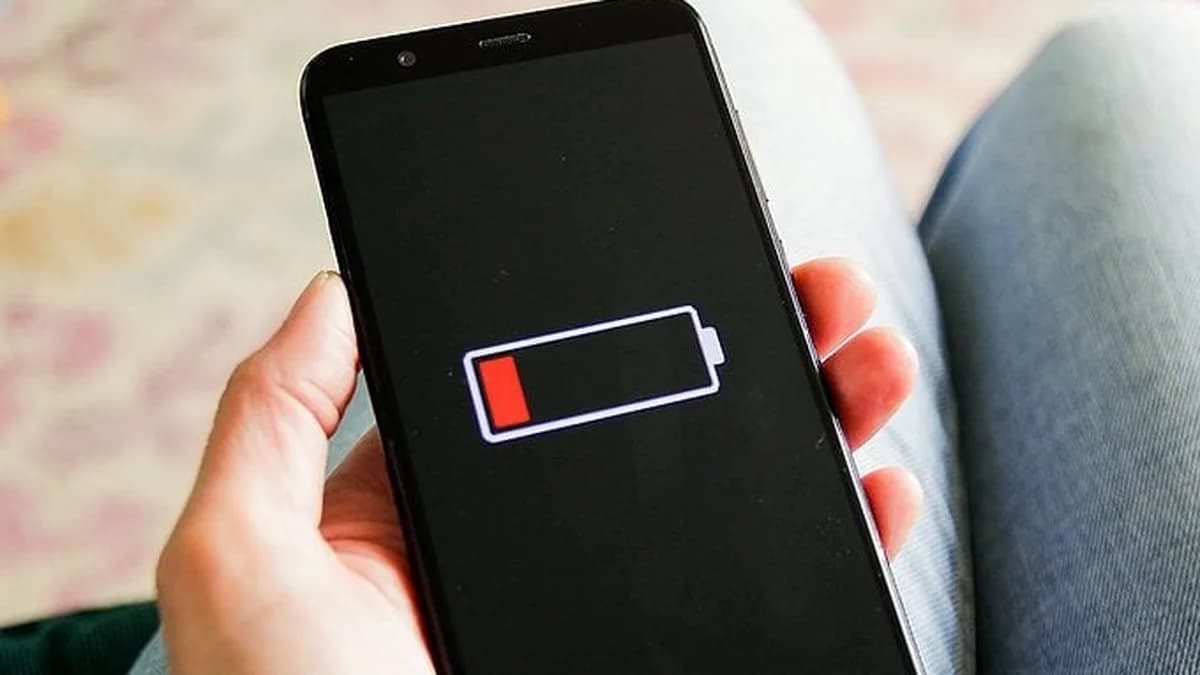
The Frustration of Smartphones
Smartphones are no longer a luxury, but a necessary tool for functioning in today's society. According to editorial research analyzed by Groundwork, However, they're also frustrating and expensive. As soon as you pay one off, it feels like its performance starts to drop. This raises an important question: are smartphones built to fail?
Are Smartphones Actually Designed to Fail?
The answer is sometimes. A while back, Apple was accused of intentionally slowing down older models right before releasing their new ones. This practice, known as 'planned obsolescence,' is a tactic where companies deliberately design products with a limited lifespan to drive sales. While Apple explained it away as a side-effect of aging batteries, the company still settled a $500 million class-action lawsuit over the claims. The case was filed under the Magnuson-Moss Warranty Act, a US federal law that prohibits manufacturers from making false claims about the durability of their products.
In 2018, the European Union launched an investigation into Apple's battery management practices, citing concerns over the company's decision to slow down older iPhones. The investigation was sparked by a report from the French consumer rights group, UFC-Que Choisir, which found that Apple's software update, iOS 11.2, caused iPhones to throttle their performance when the battery reached a certain age. This practice, known as 'performance throttling,' was seen as a way for Apple to extend the life of its batteries, but at the cost of user experience.
More commonly, cell phones become obsolete when companies stop supporting older versions of the software. For example, Apple will support iPhones for about six years, while most Android manufacturers only maintain support for three to four years, says software engineer Adam Yong. This limited support period is a major contributor to the short lifespan of smartphones.
Planned Obsolescence
Planned obsolescence is an actual tactic that some cellphone manufacturers employ to drive sales. This is true of many products today; everything from small electronics to cars, all the way through today's homes, just isn't built to last. A study by the Ellen MacArthur Foundation found that the average lifespan of a smartphone is around two to three years, after which it is no longer supported by the manufacturer.
Tech developer and engineer Michael Frohlich explains, "In a word, yes. Planned obsolescence is an actual tactic that some cellphone manufacturers employ to drive sales." This practice is not unique to the tech industry, however. It's a common strategy used by companies across various sectors to keep consumers buying new products.
Why Do Smartphones Fail?
There are several factors that contribute to the short lifespan of smartphones. One of the main reasons is the sealed design, which makes repairs more difficult. Upgraded technologies also encourage frequent replacements, as consumers feel compelled to keep up with the latest and greatest. This is often referred to as the 'upgrade cycle,' where consumers are constantly encouraged to upgrade to the latest model, even if their current device is still functional.
Another factor that contributes to the short lifespan of smartphones is the rapid pace of technological advancements. As new technologies emerge, older devices become obsolete, making them less desirable to consumers. This is particularly true in the smartphone industry, where new features and designs are constantly being released.
Which Smartphone Parts Wear Out First?
Batteries are usually the first to go. That's because lithium-ion battery chemistry starts to decline after 500 full charge cycles. This means that after a few years, you'll notice shorter runtime, unexpected shutdowns, or reduced performance. According to a study by the University of Michigan, lithium-ion batteries lose around 20% of their capacity after just 300 charge cycles.
In addition to batteries, other smartphone parts that wear out quickly include the screen and the charging port. The screen is prone to scratches and cracks, while the charging port can become damaged due to repeated use. These parts are often difficult to repair, making it more cost-effective to replace the entire device.
The Environmental Impact of Planned Obsolescence
The practice of planned obsolescence has significant environmental implications. The rapid pace of technological advancements leads to a massive amount of electronic waste, with millions of devices ending up in landfills each year. A study by the United Nations found that the world's electronic waste is projected to reach 74 million metric tons by 2030, with the majority coming from smartphones.
The production of new smartphones also has a significant environmental impact. The mining of rare earth minerals, such as lithium and cobalt, used in smartphone batteries and other components, can have devastating effects on local ecosystems. The processing of these minerals also requires large amounts of energy, contributing to greenhouse gas emissions.
The Cost of Planned Obsolescence
The cost of planned obsolescence is not just environmental, but also economic. Consumers are forced to spend hundreds of dollars on new smartphones every few years, even if their current device is still functional. This is a significant burden on individuals and society as a whole.
In addition to the cost of purchasing new devices, consumers also face the cost of disposal. Electronic waste is a growing problem, with millions of devices ending up in landfills each year. The cost of disposing of these devices is significant, with some estimates suggesting that it can cost up to $100 per device.
Share via system sheet on mobile, or copy link on desktop
M
Editorial Analysis
Marcus Chen • Home & Energy Analyst
“The practice of planned obsolescence is a complex issue that requires a complex approach. Manufacturers must take responsibility for the environmental and economic impact of their products, and consumers must be aware of the true cost of their purchasing decisions.”
Frequently asked questions
Are smartphones designed to fail?▼
Sometimes, with planned obsolescence being a common tactic used by manufacturers to drive sales.
Why do smartphones fail?▼
There are several factors that contribute to the short lifespan of smartphones, including the sealed design, upgraded technologies, and the rapid pace of technological advancements.
Which smartphone parts wear out first?▼
Batteries are usually the first to go, followed by the screen and the charging port.
What is the environmental impact of planned obsolescence?▼
The practice of planned obsolescence has significant environmental implications, with millions of devices ending up in landfills each year.
What is the cost of planned obsolescence?▼
The cost of planned obsolescence is not just environmental, but also economic, with consumers forced to spend hundreds of dollars on new smartphones every few years.
How can I reduce electronic waste?▼
You can reduce electronic waste by choosing sustainable smartphone options, repairing and maintaining your device, and disposing of it responsibly.
What are eco-friendly smartphone alternatives?▼
Eco-friendly smartphone alternatives include devices made from sustainable materials, devices with longer battery life, and devices with repairable components.
How can I increase the lifespan of my smartphone?▼
You can increase the lifespan of your smartphone by choosing a device with a longer battery life, using a screen protector, and avoiding extreme temperatures.
What is the average smartphone lifespan?▼
The average smartphone lifespan is around two to three years, after which it is no longer supported by the manufacturer.
What is the cost of electronic waste disposal?▼
The cost of electronic waste disposal can range from $50 to $100 per device, depending on the location and type of waste.
Related research guides

home
3m
Delaware Advances 16 MW of Community Solar Projects
Delaware advances 16 MW of community solar projects, providing a decentralized and community-driven approach to solar energy and improving energy access and
G
Groundwork Researcher
home
3m
Is a home solar battery worth the: 2026 Cost Model
A rigorous economic analysis of home battery storage (lithium iron phosphate vs NMC), incorporating cycle degradation modeling, resiliency value quantification, and payback period analysis under NEM 3.0 and net metering markets.
G
Groundwork Researcher
home
3m
Home backup generator sizing calculator: Watts, LRA, and fuel runtime explained
A practical engineering guide for sizing a home backup generator, covering Locked Rotor Amps for motor loads, total running vs starting wattage methodology, and fuel supply runtime calculations for outages.
G
Groundwork ResearcherRelated Research & Topic Index (home)
Explore related evidence-based investigations, decision tools, and entity breakdowns:
Primary Research & Citations
Contextual evidence and verified documentation referenced in this research guide
Groundwork enforces a strict, independent verification standard. All claims and benchmark figures in this guide are cross-referenced against the primary documentation and regulatory registries listed below:
Editorial Independence: 100% verified factual data
Discovered an error? Submit for verification
How to Cite This Research Guide
Marcus Chen (2026). Why Smartphones Seem to Have a Short Lifespan. Groundwork. Retrieved from https://gworky.com/article/smartphone-lifespan
License: CC BY-NC 4.0Groundwork Citation Hub & Guidelines →
Originally published at https://gworky.com/article/smartphone-lifespan — Groundwork Evidence-Based Research.
Featured Utility & ResearchGroundwork Intelligence
Clean Energy Decision Engine
Rooftop Solar & Heat Pump Payback Estimator
Model Section 25C tax credits, utility net metering tariffs, and 15-year ROI timelines.
Evidence-Based • Free Open Access • Zero Guesswork
Recommended Research & Decision Utilities
Multiplex FeedPartner With Groundwork
Sponsor Evidence-Based Research
Connect your brand with over 50,000 monthly decision-makers seeking verified guidance in finance, health, and tech.
View Media Kit Verified
Interactive Utility
Rooftop Solar & Battery Payback Estimator
Calculate federal tax credits, utility net metering, and 15-year payback timelines.
Launch Tool→
 home
homeDelaware Advances 16 MW of Community Solar Projects
2 min readRead Guide →
 home
homeIs a home solar battery worth the: 2026 Cost Model
2 min readRead Guide →
 home
homeHome backup generator sizing calculator: Watts, LRA, and fuel runtime explained
2 min readRead Guide →
 home
homeEnergy Secretary Saves Coal-Fired Generation from Going Offline in Florida
21 min readRead Guide →
Benchmarked HOME Solutions At a Glance
Evaluated for performance, privacy protocols, and pricing transparency.
| Solution | Key Benchmark | Pricing | Verdict & Access |
|---|---|---|---|
Solar DIY ROI BlueprintEditor Pick via Photovoltaic Institute | Cut 60% dealer markup via self-install plans | $47 One-Time | |
Sunrun Solar PPA via Sunrun Inc. | Full turnkey contractor installation | Varies by State | Reference Benchmark |
Tesla Powerwall 3 via Tesla Energy | 13.5 kWh LFP integrated backup battery | $9,300 Est. | Reference Benchmark |
Editorial integrity: Groundwork rates products independently without sponsor influence.More Comparisons →
Written byLead AnalystPrimary Research
Marcus Chen
Home & Energy Analyst
Home Systems & Electrical Infrastructure AnalystUtility Tariff SpecialistGrid Resilience Modeler
Marcus Chen is a Home Systems Analyst specializing in residential electrical infrastructure, backup generator capacity modeling, and smart grid tariff economics. With extensive experience auditing residential distribution circuits and microinverter topologies, he analyzes regional utility rate structures (including California NEM 3.0 TOU export rules) and severe-weather power resilience. Chen provides rigorous sizing math, peak-shaving algorithms, and battery storage ROI frameworks to help modern households build energy independence.
Fact-Checked byReview BoardIndependent Audit
Marcus Vance
Property & Systems Evaluator
Marcus Vance directs engineering research for Groundwork's Home Systems & Energy Desk. A licensed professional engineer with expertise in building thermodynamics, residential HVAC heat pump transitions, and rooftop solar PV payback economics, Vance develops thermodynamic simulation models and verifies structural resilience benchmarks to guide homeowners through capital-intensive improvement investments.
Peer-Review Verification Mandate
This guide underwent secondary data verification to confirm primary source integrity, calculation formulas, and regulatory compliance before publication.