Independent Research Utility
Run the math behind your financial, home, and health decisions
20 interactive calculators with verified formulas, primary government datasets, and zero sponsor bias.
home
Sep 14, 20264 min read
Signs You Shouldn't Reseed Your Lawn: Soil Diagnostics and Turf Timing
Diagnose when overseeding your lawn will waste seed and money: soil compaction limits, herbicide residual barriers, thatch buildup, and grass variety rules.


Original Groundwork Analysis & Fact-Check
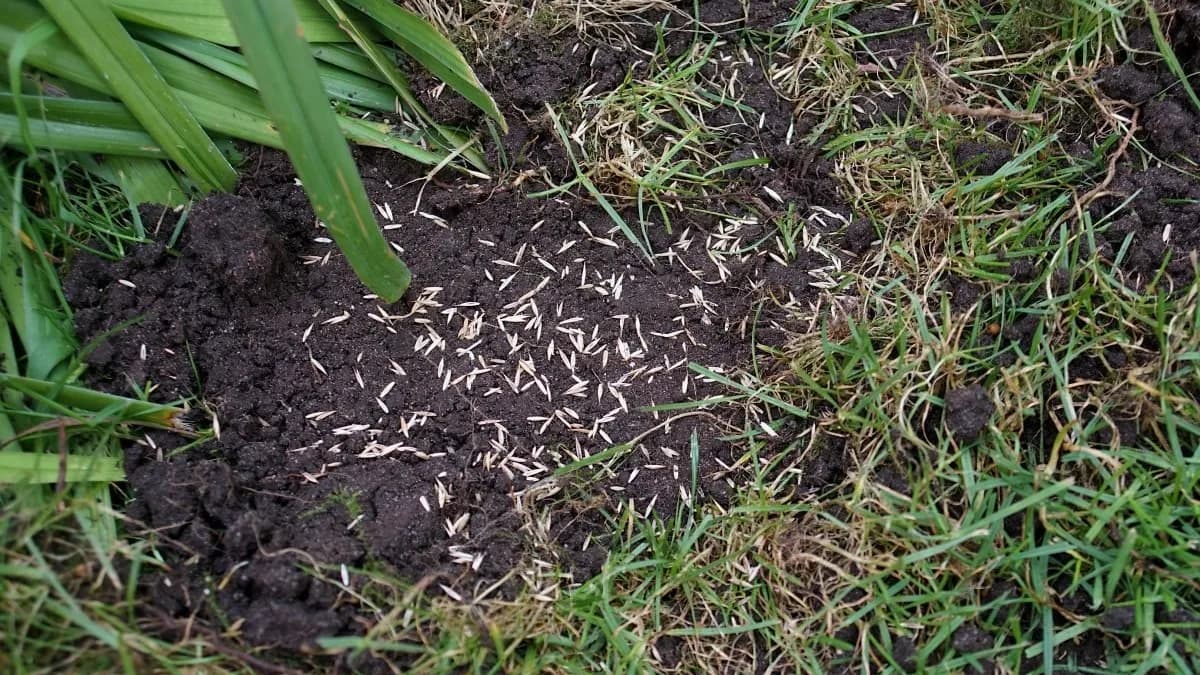
Overseeding is often marketed as a universal fix for a thinning lawn. However, broadcasting grass seed without addressing root underlying soil or environmental problems results in an 80% to 95% germination failure rate, wasting hundreds of dollars in seed and water.
Do not reseed your lawn if you have applied pre-emergent herbicides within the past 16 weeks, if your soil has severe compaction (cannot penetrate with a screwdriver), if thatch accumulation exceeds 0.5 inches, or if your turf consists of warm-season grass heading into autumn dormancy.
The 5 Diagnostic Tests: When to Stop and Fix Soil First
Before spending money on premium certified grass seed, conduct these field diagnostics:
Diagnostic Check 1: The Screwdriver Compaction Test
├── Push a standard 6-inch screwdriver into the soil when damp.
├── Easily penetrates 5-6 inches ──> Soil structure is open; safe to overseed.
└── Stops abruptly at 1-2 inches  ──> CRITICAL COMPACTION. Core aerate first before overseeding.
Diagnostic Decision Matrix
Research Data Table
Agronomic standards referenced from university agricultural extensions (Penn State Center for Turfgrass Science, Purdue Extension).
Grass Variety Calendar: Warm-Season vs. Cool-Season Rules
One of the most costly homeowner errors is applying the wrong grass species during the wrong seasonal window:
1. Cool-Season Turf (Kentucky Bluegrass, Perennial Ryegrass, Tall Fescue)
- Optimal Reseeding Window: Late Summer to Early Fall (Late August through September).
- Target Soil Temperature: 55°F to 65°F (ambient air 70°F to 78°F).
- Why Fall Works: Warm soil promotes rapid germination, while cooler autumn air temperatures reduce seedling heat stress and weed competition.
- Do Not Reseed If: You are within 45 days of the first expected hard killing frost; seedlings need 6 to 8 weeks of active growth to survive freezing soil conditions.
2. Warm-Season Turf (Bermuda, Zoysia, Centipede, St. Augustine)
- Optimal Seeding / Plugging Window: Late Spring to Early Summer (May through June).
- Target Soil Temperature: Sustained >= 70°F.
- Why Fall Reseeding Fails: Warm-season grasses enter dormancy as soil cools. Seeding in September or October leads to seed rot over winter. St. Augustine cannot be reliably established from seed and must be plugged or sodded.
3 Critical Steps Before You Spend Money on Seed
- Verify Soil-to-Seed Contact: Grass seed requires direct physical contact with moist soil to absorb moisture and germinate. Dropping seed on top of thatch, leaf debris, or dead grass yields near-zero return. Always mow low, dethatch, and aerate before broadcasting.
- Read the Seed Tag for Weed Seed Content: Cheap hardware-store seed blends often contain up to 0.5% "Other Crop Seed" or "Weed Seed" (such as Poa annua or coarse fescue). Always purchase certified seed with 0.0% Weed Seed and high germination rates (>= 85%).
- Commit to the 21-Day Moisture Regimen: Once seed is sown, the soil surface must remain consistently damp—requiring light watering 2 to 3 times daily for 14 to 21 days. If you cannot automate or commit to this watering schedule, delay reseeding until you have installed timer-driven sprinklers.
The Soil Slake and Percolation Test: Checking Drainage Before Overseeding
Even high-quality seed will drown and rot if the soil suffers from poor drainage or internal anaerobic conditions. Before buying seed, perform a simple field percolation test:
Percolation Velocity = Water Level Drop in Inches per Hour
- Optimal Range: 1.0 to 2.0 inches/hour (Loamy, well-aerated soil)
- Poor Drainage: < 0.5 inches/hour (Dense clay / standing water risk -> seed rots)
- Excessive Drainage: > 4.0 inches/hour (Coarse sand -> seed desiccates rapidly)
Performing the 15-Minute Test
- Dig a 6-inch diameter hole, 6 inches deep in a representative section of the turf.
- Fill with water and allow it to saturate completely, draining naturally.
- Refill the hole and place a ruler inside to track water subsidence over 60 minutes.
If the water fails to drop at least 1 inch per hour, your soil has poor infiltration. Reseeding into poorly draining soil causes damping-off disease (Pythium seedling blight) and fungal rot. Remedy the underlying subsoil drainage or incorporate organic compost before overseeding.
Share via system sheet on mobile, or copy link on desktop
M
Editorial Analysis
Marcus Chen • Home & Energy Analyst
“According to Dr. Russell Sharp, 'reseeding a lawn is not a one-size-fits-all solution. It's essential to assess the underlying soil conditions and address any issues before attempting to reseed.'”
Frequently asked questions
What are the signs that I shouldn't reseed my lawn?▼
If your lawn looks lush and healthy, or if you have warm-season grass or compacted soil, it's best to wait until spring or consider hiring a professional to help you with the process.
What type of grass is best suited for reseeding in the fall?▼
Cool-season grasses such as fescue, ryegrass, or Kentucky bluegrass are best suited for reseeding in the fall.
Can I reseed my lawn in the spring?▼
Yes, you can reseed your lawn in the spring, but it's essential to wait until the soil has warmed up and the risk of frost has passed.
How can I improve the health of my lawn?▼
To improve the health of your lawn, focus on proper mowing, watering, and fertilization practices. Additionally, consider aerating your lawn to loosen compacted soil and promote healthy root growth.
What are the benefits of reseeding my lawn?▼
Reseeding your lawn can improve its health and appearance, reduce the need for chemical herbicides, and create a thick, lush lawn that's less susceptible to soil erosion and disease.
Related research guides

home
3m
Delaware Advances 16 MW of Community Solar Projects
Delaware advances 16 MW of community solar projects, providing a decentralized and community-driven approach to solar energy and improving energy access and
G
Groundwork Researcher
home
3m
Is a home solar battery worth the: 2026 Cost Model
A rigorous economic analysis of home battery storage (lithium iron phosphate vs NMC), incorporating cycle degradation modeling, resiliency value quantification, and payback period analysis under NEM 3.0 and net metering markets.
G
Groundwork Researcher
home
3m
Home backup generator sizing calculator: Watts, LRA, and fuel runtime explained
A practical engineering guide for sizing a home backup generator, covering Locked Rotor Amps for motor loads, total running vs starting wattage methodology, and fuel supply runtime calculations for outages.
G
Groundwork ResearcherRelated Research & Topic Index (home)
Explore related evidence-based investigations, decision tools, and entity breakdowns:
Primary Research & Citations
Contextual evidence and verified documentation referenced in this research guide
Groundwork enforces a strict, independent verification standard. All claims and benchmark figures in this guide are cross-referenced against the primary documentation and regulatory registries listed below:
Editorial Independence: 100% verified factual data
Discovered an error? Submit for verification
How to Cite This Research Guide
Marcus Chen (2026). Signs You Shouldn't Reseed Your Lawn: Soil Diagnostics and Turf Timing. Groundwork. Retrieved from https://gworky.com/article/signs-not-to-reseed-your-lawn
License: CC BY-NC 4.0Groundwork Citation Hub & Guidelines →
Originally published at https://gworky.com/article/signs-not-to-reseed-your-lawn — Groundwork Evidence-Based Research.
Featured Utility & ResearchGroundwork Intelligence
Clean Energy Decision Engine
Rooftop Solar & Heat Pump Payback Estimator
Model Section 25C tax credits, utility net metering tariffs, and 15-year ROI timelines.
Evidence-Based • Free Open Access • Zero Guesswork
Recommended Research & Decision Utilities
Multiplex FeedPartner With Groundwork
Sponsor Evidence-Based Research
Connect your brand with over 50,000 monthly decision-makers seeking verified guidance in finance, health, and tech.
View Media Kit Verified
Interactive Utility
Rooftop Solar & Battery Payback Estimator
Calculate federal tax credits, utility net metering, and 15-year payback timelines.
Launch Tool→
 home
homeDelaware Advances 16 MW of Community Solar Projects
5 min readRead Guide →
 home
homeIs a home solar battery worth the: 2026 Cost Model
4 min readRead Guide →
 home
homeHome backup generator sizing calculator: Watts, LRA, and fuel runtime explained
4 min readRead Guide →
 home
homeEnergy Secretary Saves Coal-Fired Generation from Going Offline in Florida
4 min readRead Guide →
Benchmarked HOME Solutions At a Glance
Evaluated for performance, privacy protocols, and pricing transparency.
| Solution | Key Benchmark | Pricing | Verdict & Access |
|---|---|---|---|
Solar DIY ROI BlueprintEditor Pick via Photovoltaic Institute | Cut 60% dealer markup via self-install plans | $47 One-Time | |
Sunrun Solar PPA via Sunrun Inc. | Full turnkey contractor installation | Varies by State | Reference Benchmark |
Tesla Powerwall 3 via Tesla Energy | 13.5 kWh LFP integrated backup battery | $9,300 Est. | Reference Benchmark |
Editorial integrity: Groundwork rates products independently without sponsor influence.More Comparisons →
Written byLead AnalystPrimary Research
Marcus Chen
Home & Energy Analyst
Home Systems & Electrical Infrastructure AnalystUtility Tariff SpecialistGrid Resilience Modeler
Marcus Chen is a Home Systems Analyst specializing in residential electrical infrastructure, backup generator capacity modeling, and smart grid tariff economics. With extensive experience auditing residential distribution circuits and microinverter topologies, he analyzes regional utility rate structures (including California NEM 3.0 TOU export rules) and severe-weather power resilience. Chen provides rigorous sizing math, peak-shaving algorithms, and battery storage ROI frameworks to help modern households build energy independence.
Fact-Checked byReview BoardIndependent Audit
Marcus Vance
Property & Systems Evaluator
Marcus Vance directs engineering research for Groundwork's Home Systems & Energy Desk. A licensed professional engineer with expertise in building thermodynamics, residential HVAC heat pump transitions, and rooftop solar PV payback economics, Vance develops thermodynamic simulation models and verifies structural resilience benchmarks to guide homeowners through capital-intensive improvement investments.
Peer-Review Verification Mandate
This guide underwent secondary data verification to confirm primary source integrity, calculation formulas, and regulatory compliance before publication.