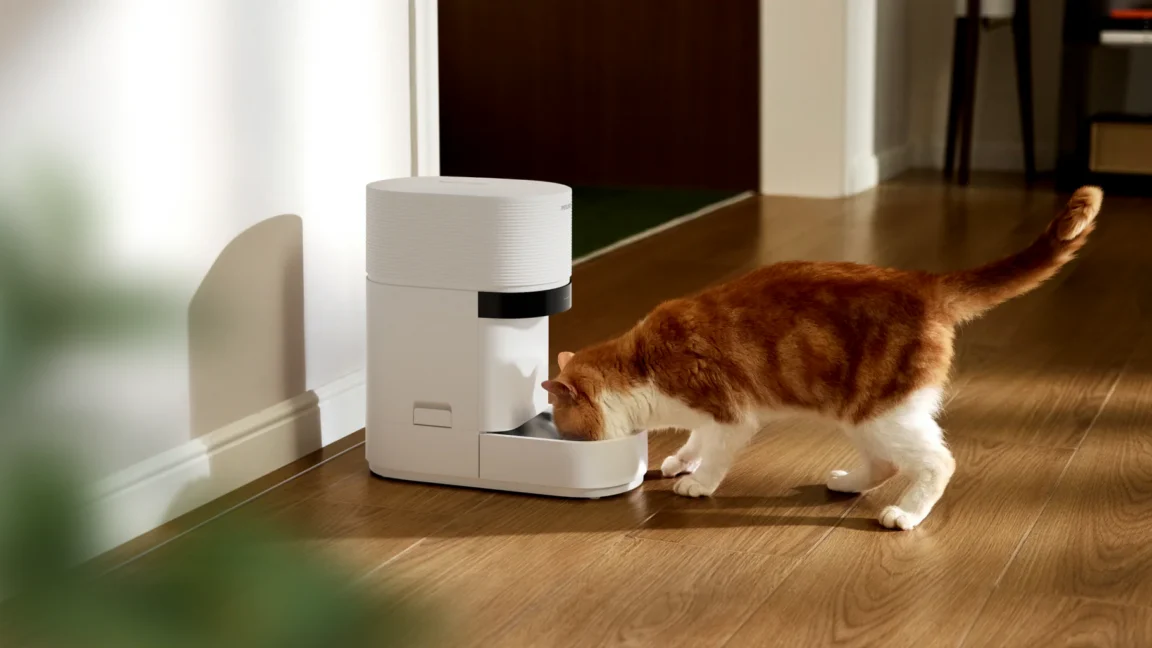
A smart pet feeder is an automated device that uses Wi-Fi connectivity and a mobile application to dispense food on a set schedule. While these devices offer convenience for pet owners away from home, they introduce a single point of failure: the reliance on external cloud servers to execute basic mechanical functions.
Recent outages involving major manufacturers like Petlibro demonstrate that when a company’s server infrastructure fails, the device's ability to dispense food can be completely disabled, even if the device remains plugged into a power source. According to reports from Ars Technica, users found their feeders unresponsive during a server-side communication error, leaving pets without access to their scheduled meals (Ars Technica, 2026). This incident serves as a critical reminder that smart home technology often shifts control from the user to the manufacturer's cloud environment.
Smart pet feeders stop working during an outage because many models require a constant handshake with a cloud-based server to verify schedules and trigger the dispensing motor. If the manufacturer's server goes offline or experiences a latency spike, the feeder cannot receive the signal to release food, effectively bricking the device until the connection is restored.
Unlike traditional mechanical timers that operate on local logic, many modern smart feeders are designed to be "thin clients." This means the intelligence—the scheduling logic and user settings—lives on the company's servers rather than on the hardware itself. When the cloud service is interrupted, the hardware loses its instructions. As Petlibro CEO York Wu noted regarding a recent service disruption, outages are often tied directly to how the companion app communicates with the device through online servers (The Verge, 2026).
Smart feeders are inherently less reliable than manual feeding or locally controlled automatic feeders because they introduce dependencies on three external factors: your home internet connection, the manufacturer’s server uptime, and the stability of the software app. Manual feeding remains the gold standard for reliability, but if you require automation, devices that store schedules locally are significantly safer.
Keep exploring
More from GroundworkWhen evaluating a smart device, look for "offline capability." This is a feature that allows the feeder to continue its programmed schedule even if the Wi-Fi or cloud connection is severed. If a device requires an active internet connection to execute a timer, it is technically a remote-controlled device rather than a truly autonomous one. Data from consumer advocacy groups suggests that reliance on proprietary cloud ecosystems is the leading cause of "smart" device failure in the home automation sector.
To mitigate the risk of a smart feeder failing, you should implement a redundancy plan, such as using a secondary gravity-fed bowl or a mechanical timer that does not require an internet connection. Never rely solely on a cloud-dependent device for the primary nutritional needs of your pet.
Follow these steps to ensure your pet is never left without food:
- Verify if your feeder has an "offline" or "local schedule" mode. Check the manufacturer's manual to see if the device stores the schedule internally. If it does not, assume the device will fail during an internet outage.
- Maintain a low-tech backup. Keep a standard gravity feeder or a manual bowl filled with a portion of the daily ration as a fail-safe.
- Test your device's behavior. Turn off your router and see if the feeder still dispenses at the scheduled time. If it fails to dispense, it is a cloud-dependent device and should be treated as high-risk.
- Enable notifications. If your app supports it, ensure push notifications are enabled for "dispense success" or "dispense error" messages so you are alerted immediately if a cycle is missed.
When buying a pet feeder, prioritize hardware that functions independently of an app. The most reliable automatic feeders are those that use physical buttons on the unit to set a timer, as these rely on internal clocks and local microcontrollers rather than external cloud infrastructure.
Avoid "app-only" devices that lack a physical interface. While these devices are often cheaper and more feature-rich, they are the most prone to service interruptions. By choosing hardware that keeps its logic local, you eliminate the risk of a company's server outage preventing your pet from eating. Reliability in pet care should always be prioritized over the convenience of a smartphone interface.