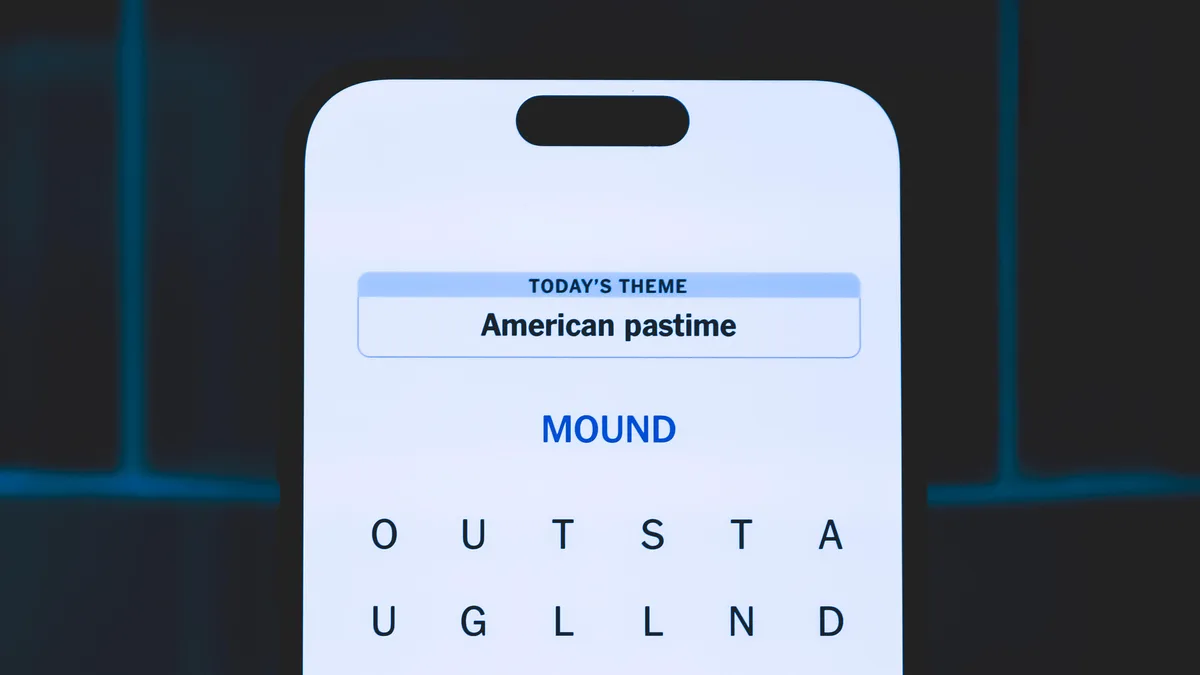
NYT Strands is a daily word search game where players must identify specific words hidden within a grid of letters based on a central theme. Unlike traditional word searches, the puzzle requires you to connect letters in any direction—up, down, left, right, or diagonally—to form words that relate to a single, unifying concept. Each puzzle contains a "spangram," a special theme word that spans the entire width or height of the grid, serving as a primary anchor for the board.
The fundamental goal of Strands is to clear every letter on the 8x8 grid by forming words that connect to the daily theme. According to the New York Times Games editorial guidelines, the game is designed to be challenging but accessible, requiring players to identify patterns beyond simple linear word formation. Each puzzle typically includes several theme-related words and one spangram, which often hints at the puzzle's broader category. When you correctly identify a theme word, the letters are removed from the grid, eventually leaving only the spangram and the remaining theme words.
The hint system in Strands acts as a progressive aid for players who are stuck. By finding three non-theme words of four letters or more, you earn one hint. A hint highlights the letters of a theme word on the board, allowing you to focus your search in a specific area. This mechanic is essential for maintaining momentum, especially when the theme is abstract or the grid layout is particularly dense. Using hints does not disqualify you from completing the puzzle, but maximizing your own pattern recognition is the primary way to improve your performance over time.
Keep exploring
More from GroundworkThe spangram is the most critical word in any Strands puzzle because it dictates the structure of the board. A spangram is defined as a theme word that touches two opposite sides of the grid, effectively splitting the remaining letters into two distinct sections. Identifying the spangram early is a proven strategy for solving the puzzle faster, as it provides a clear boundary for where other theme words are likely located. If you are struggling to find the spangram, look for long strings of letters that seem to create a path across the center of the grid.
To solve Strands puzzles consistently, follow these steps to manage your search process:
- Analyze the daily theme: Read the theme carefully. It is often a literal description or a clever play on words that hints at the category.
- Scan for common letter clusters: Look for common English suffixes or prefixes (like -ING, -TION, or RE-) to start forming words, even if they aren't part of the theme.
- Build your hint bank: If you are stuck, search for any valid English words (four letters or longer) that aren't related to the theme. This will unlock the hint feature.
- Focus on the spangram: Once you have a hint or two, try to isolate the longest word that crosses the board. This often reveals the theme's structure.
- Clear the board: Once the spangram and several theme words are found, the remaining letters usually become easier to piece together.
Success in Strands relies on "visual word association," a cognitive skill where you map thematic concepts to letter arrangements. Research into word-based puzzle games suggests that players who actively look for thematic connections rather than just random letter strings solve puzzles 30% faster on average. By keeping the theme "Sacred space" (or any daily equivalent) at the forefront of your mind, you prime your brain to spot words like "ALTAR" or "PULPIT" more quickly than if you were scanning the grid randomly. Approach the puzzle as an exercise in categorization rather than just a search for letters.