MSCI is proposing to exclude 'non-operating' companies from its indexes. Learn how this impacts bitcoin-heavy firms like Strategy and Metaplanet.
Based on reporting by CoinDesk. Research, structure, and fact-checking by Groundwork.
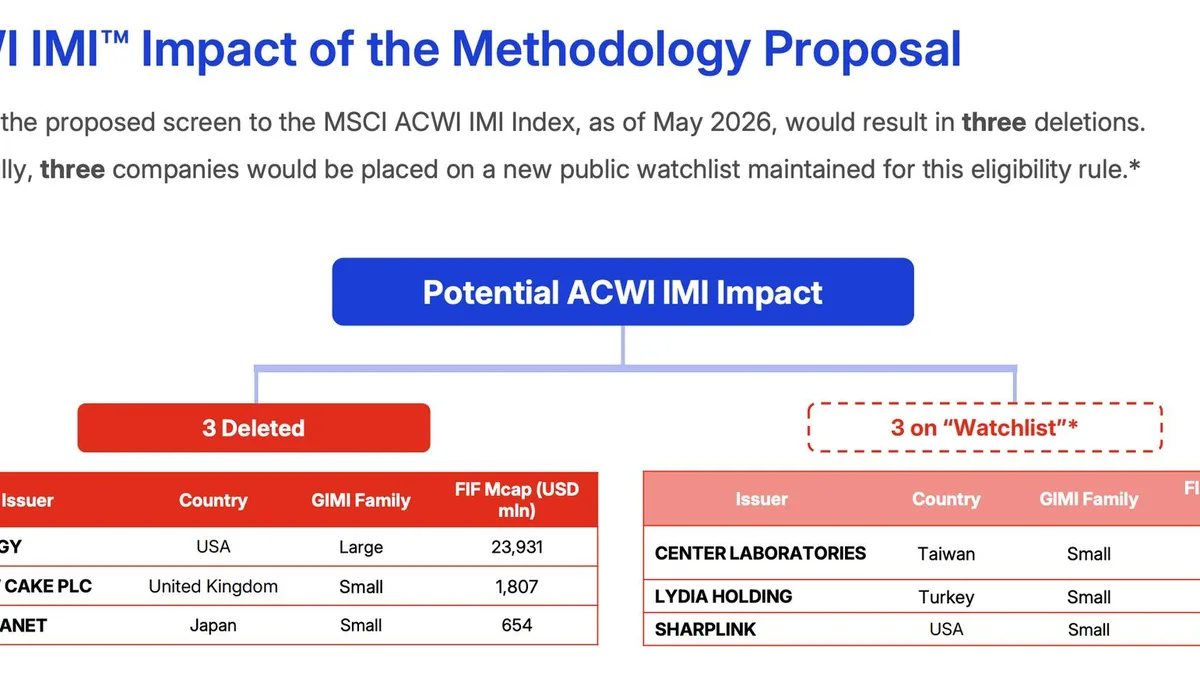
MSCI's proposed rules may exclude companies that hold large amounts of bitcoin, potentially causing institutional sell-offs. Investors should monitor the September 2026 consultation deadline and assess if their stock holdings rely on operational business or asset accumulation.
“This proposal highlights a growing friction between traditional index providers and the rise of treasury-heavy corporate models. Investors should distinguish between the operational health of a business and the potential liquidity risks posed by institutional index rebalancing.”
A non-operating company, in this context, is an entity that does not derive the majority of its value from business operations. MSCI defines this through a two-step screen that looks at whether operating assets exceed 50% of total assets and whether the company fails specific financial ratio tests.
The changes would take effect no earlier than the November 2026 index review. MSCI is currently seeking feedback through a consultation process that concludes on September 30, 2026.
If a stock is removed from an MSCI index, institutional funds that track that index must sell their holdings in that company. This process often leads to increased volatility and a potential short-term decline in the company's stock price due to the automatic liquidation of shares.
No, the rule is asset-agnostic. While it currently impacts major bitcoin treasury firms, it also applies to any company that fails the operational asset tests, including other non-crypto commodity holders like uranium companies.
Finance Analyst
David Sterling is a personal finance writer covering mortgages, banking, insurance, and investing for Groundwork. He turns complex financial research into practical decisions.
JPMorgan ended its banking relationship with Polymarket in 2025. Learn why banks de-risk crypto-adjacent businesses and how to manage your own banking risk.
The SEC has delayed its tokenization innovation exemption due to White House and Wall Street concerns. Learn how this impacts the future of digital assets.
The crypto advice gap is the divide between clients holding digital assets and advisors who refuse to manage them. Learn how to bridge this gap.