Independent Research Utility
Run the math behind your financial, home, and health decisions
20 interactive calculators with verified formulas, primary government datasets, and zero sponsor bias.
home
Sep 5, 20265 min read
Goal Zero Yeti 700 Review: Portable Power for Camping and Emergencies
The Goal Zero Yeti 700 is a portable power station that offers a workable balance between capacity and portability, weighing 20.3 pounds and providing 677.37Wh


Updated: Sep 9, 2026
Original Groundwork Analysis & Fact-Check
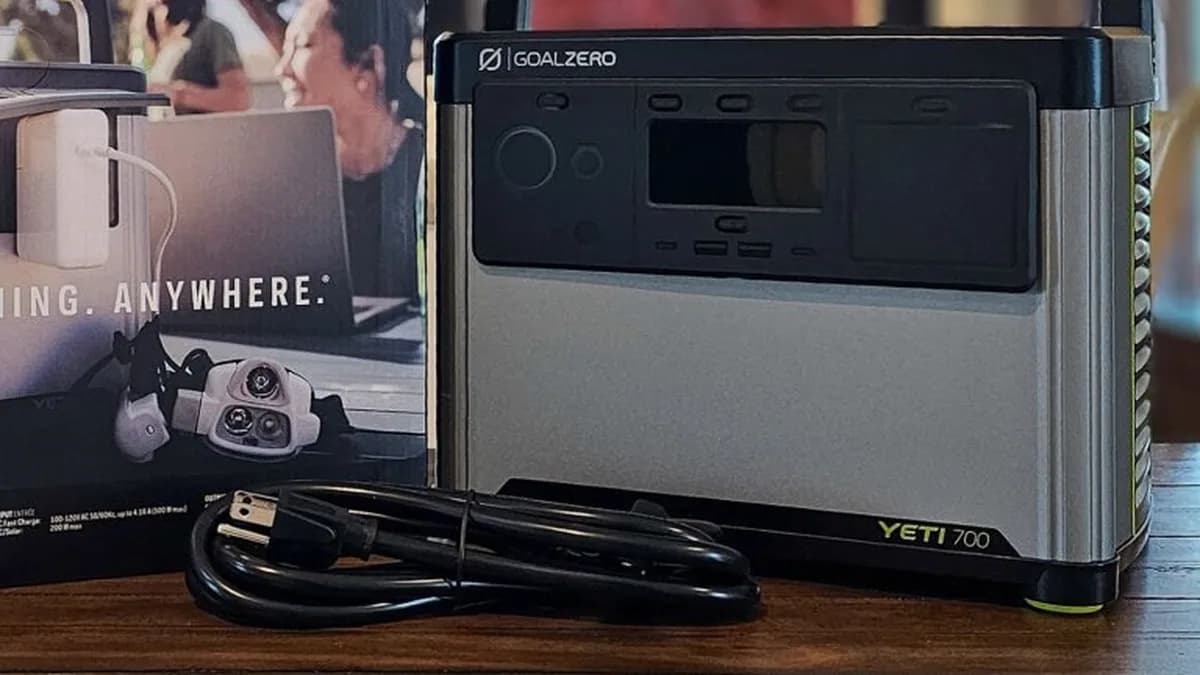
Portable Power Without the Bulk
The Goal Zero Yeti 700 is a portable power station that offers a workable balance between capacity and portability. According to editorial research analyzed by Groundwork, Weighing in at 20.3 pounds, it's not light enough for a long hike, but it's easy enough to move from the house to a vehicle or carry into a campsite without struggling.
What Can the Goal Zero Yeti 700 Power?
The Yeti 700 is best suited for electronics, small appliances, and moderate power demands— not high-wattage heating or cooking equipment. Its 600-watt continuous AC output powered a lamp and battery chargers without hesitation, while the 1,000-watt surge capacity provides extra power when compatible devices first start up.
Goal Zero lists pellet grills, portable refrigerators, televisions, CPAP machines, projectors, laptops, phones, and select power tools among the equipment it can support. That range makes the Yeti 700 useful for camping, tailgating, photography trips, dorm rooms, and short power outages when the priority is keeping lights, communication devices, and essential electronics running rather than powering an entire home.
Is the Goal Zero Yeti 700 Portable Enough for Camping?
At 20.3 pounds, the Goal Zero Yeti 700 is noticeably easier to move than the higher-capacity power stations we've tested. It is too heavy for backpacking, but the sturdy built-in handle and compact footprint make it well suited to car camping, road trips, tailgating, and other vehicle-based outings.
Its IPX4 water-resistance rating provides added protection against splashes and light rain. We wouldn't leave any portable power station exposed during a storm, but this added resistance offers some reassurance around campsites and outdoor events, where damp ground, spills, and changing weather are common.
- Portable power without the bulk. The Goal Zero Yeti 700 balances capacity and portability, weighing 20.3 pounds.
- Versatile power options. Powers electronics and small appliances, ideal for camping and short outages.
- Durable and weather-resistant. IPX4 rating and 4,000 charge cycles make it reliable for outdoor use.
- Flexible charging methods. Fast and slow charging modes, plus solar and vehicle options.
Product Specs
- Battery capacity: 677.37Wh LiFePO4 battery
- AC output: 600W continuous; 1,000W surge
- Weight: 20.3 pounds
- Water resistance: IPX4
How to Choose the Right Portable Power Station
When selecting a portable power station, consider the following factors:
- Capacity: Think about the devices you want to power and the duration of use. A higher capacity battery will provide more power and longer runtime.
- Weight and Portability: If you plan to carry the power station on long hikes or backpacking trips, look for a lighter option.
- Charging Methods: Consider the types of charging methods you need, such as wall outlet, solar, or vehicle charging.
- Durability and Water Resistance: If you plan to use the power station in wet or harsh environments, look for an IPX4 or higher rating.
DIY vs Professional Installation: What's the Difference?
for installing a portable power station, you have two options: DIY or professional installation. While DIY installation can be cost-effective, it may require more time and effort. Professional installation, on the other hand, can provide peace of mind and ensure that the power station is installed correctly and safely.
Return on Investment (ROI) Analysis
The Goal Zero Yeti 700 is a significant investment, but it can provide a high return on investment (ROI) in the long run. By powering your devices and appliances, you can reduce your energy consumption and save money on your utility bills. Additionally, the power station can provide backup power during outages, reducing the risk of data loss and equipment damage.
Seasonal Durability and Maintenance
To ensure the longevity of your portable power station, it's essential to perform regular maintenance and seasonal checks. This includes:
- Cleaning the unit: Regularly clean the power station to prevent dust and debris buildup.
- Checking the battery: Monitor the battery's state of charge and perform regular calibrations.
- Inspecting the charging ports: Ensure the charging ports are free from debris and functioning correctly.
- Storing the unit: Store the power station in a dry, cool place to prevent damage from moisture and extreme temperatures.
The Goal Zero Yeti 700 is a reliable and versatile portable power station that offers a balance between capacity and portability. While it may be expensive for its capacity, it provides a high return on investment (ROI) in the long run. With its durable design, flexible charging methods, and IPX4 water-resistance rating, it's an excellent choice for camping, tailgating, and emergency backup power.
Share via system sheet on mobile, or copy link on desktop
M
Editorial Analysis
Marcus Chen • Home & Energy Analyst
“The Goal Zero Yeti 700 is a reliable and versatile portable power station that offers a balance between capacity and portability. While it may be expensive for its capacity, it provides a high return on investment (ROI) in the long run.”
Frequently asked questions
What is the battery capacity of the Goal Zero Yeti 700?▼
The Goal Zero Yeti 700 has a 677.37Wh LiFePO4 battery.
Can the Goal Zero Yeti 700 power high-wattage heating or cooking equipment?▼
No, the Goal Zero Yeti 700 is best suited for electronics, small appliances, and moderate power demands.
What is the IPX4 water-resistance rating?▼
The IPX4 rating provides added protection against splashes and light rain.
How many charge cycles does the LiFePO4 battery last?▼
The LiFePO4 battery is rated for 4,000 charge cycles before its capacity drops to 80 percent of the original level.
Related research guides

home
3m
Delaware Advances 16 MW of Community Solar Projects
Delaware advances 16 MW of community solar projects, providing a decentralized and community-driven approach to solar energy and improving energy access and
G
Groundwork Researcher
home
3m
Is a home solar battery worth the: 2026 Cost Model
A rigorous economic analysis of home battery storage (lithium iron phosphate vs NMC), incorporating cycle degradation modeling, resiliency value quantification, and payback period analysis under NEM 3.0 and net metering markets.
G
Groundwork Researcher
home
3m
Home backup generator sizing calculator: Watts, LRA, and fuel runtime explained
A practical engineering guide for sizing a home backup generator, covering Locked Rotor Amps for motor loads, total running vs starting wattage methodology, and fuel supply runtime calculations for outages.
G
Groundwork ResearcherRelated Research & Topic Index (home)
Explore related evidence-based investigations, decision tools, and entity breakdowns:
Primary Research & Citations
Contextual evidence and verified documentation referenced in this research guide
Groundwork enforces a strict, independent verification standard. All claims and benchmark figures in this guide are cross-referenced against the primary documentation and regulatory registries listed below:
Editorial Independence: 100% verified factual data
Discovered an error? Submit for verification
How to Cite This Research Guide
Marcus Chen (2026). Goal Zero Yeti 700 Review: Portable Power for Camping and Emergencies. Groundwork. Retrieved from https://gworky.com/article/goal-zero-yeti-700-review
License: CC BY-NC 4.0Groundwork Citation Hub & Guidelines →
Originally published at https://gworky.com/article/goal-zero-yeti-700-review — Groundwork Evidence-Based Research.
Featured Utility & ResearchGroundwork Intelligence
Clean Energy Decision Engine
Rooftop Solar & Heat Pump Payback Estimator
Model Section 25C tax credits, utility net metering tariffs, and 15-year ROI timelines.
Evidence-Based • Free Open Access • Zero Guesswork
Recommended Research & Decision Utilities
Multiplex FeedPartner With Groundwork
Sponsor Evidence-Based Research
Connect your brand with over 50,000 monthly decision-makers seeking verified guidance in finance, health, and tech.
View Media Kit Verified
Interactive Utility
Heat Pump ROI Calculator
Estimate how much a heat pump can save on annual heating and how many years it takes to pay back the net installation cost.
Launch Tool→
 home
homeDelaware Advances 16 MW of Community Solar Projects
2 min readRead Guide →
 home
homeIs a home solar battery worth the: 2026 Cost Model
2 min readRead Guide →
 home
homeHome backup generator sizing calculator: Watts, LRA, and fuel runtime explained
2 min readRead Guide →
 home
homeEnergy Secretary Saves Coal-Fired Generation from Going Offline in Florida
21 min readRead Guide →
Benchmarked HOME Solutions At a Glance
Evaluated for performance, privacy protocols, and pricing transparency.
| Solution | Key Benchmark | Pricing | Verdict & Access |
|---|---|---|---|
Solar DIY ROI BlueprintEditor Pick via Photovoltaic Institute | Cut 60% dealer markup via self-install plans | $47 One-Time | |
Sunrun Solar PPA via Sunrun Inc. | Full turnkey contractor installation | Varies by State | Reference Benchmark |
Tesla Powerwall 3 via Tesla Energy | 13.5 kWh LFP integrated backup battery | $9,300 Est. | Reference Benchmark |
Editorial integrity: Groundwork rates products independently without sponsor influence.More Comparisons →
Written byLead AnalystPrimary Research
Marcus Chen
Home & Energy Analyst
Home Systems & Electrical Infrastructure AnalystUtility Tariff SpecialistGrid Resilience Modeler
Marcus Chen is a Home Systems Analyst specializing in residential electrical infrastructure, backup generator capacity modeling, and smart grid tariff economics. With extensive experience auditing residential distribution circuits and microinverter topologies, he analyzes regional utility rate structures (including California NEM 3.0 TOU export rules) and severe-weather power resilience. Chen provides rigorous sizing math, peak-shaving algorithms, and battery storage ROI frameworks to help modern households build energy independence.
Fact-Checked byReview BoardIndependent Audit
Marcus Vance
Property & Systems Evaluator
Marcus Vance directs engineering research for Groundwork's Home Systems & Energy Desk. A licensed professional engineer with expertise in building thermodynamics, residential HVAC heat pump transitions, and rooftop solar PV payback economics, Vance develops thermodynamic simulation models and verifies structural resilience benchmarks to guide homeowners through capital-intensive improvement investments.
Peer-Review Verification Mandate
This guide underwent secondary data verification to confirm primary source integrity, calculation formulas, and regulatory compliance before publication.