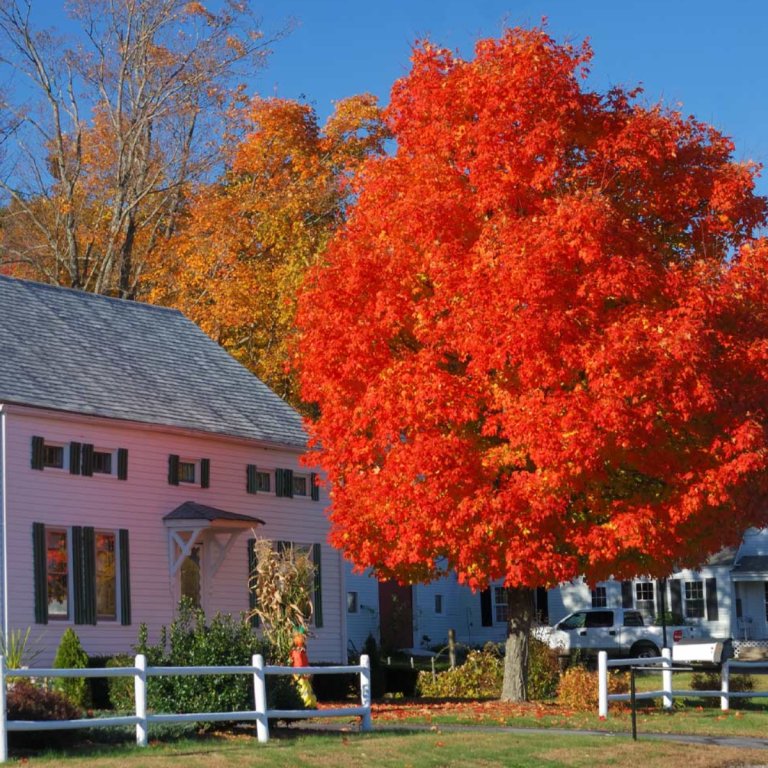
Fall planting is a strategic gardening practice where trees and shrubs are installed in the landscape during the autumn months to take advantage of cooling temperatures and moist soil. Planting in the fall allows root systems to establish themselves before the intense heat of the following summer, often leading to higher survival rates and more robust growth compared to spring-planted specimens.
Data from the University of Maryland Extension indicates that fall provides an ideal balance of soil moisture and moderate air temperatures, which encourages root development while the plant is not under the stress of producing new foliage or flowers (UMD Extension, 2023). Retailers like Fast Growing Trees have leveraged this biological window by offering seasonal buy-one-get-one-free (BOGO) promotions on a variety of species, including maples, hydrangeas, and arborvitae, to encourage homeowners to capitalize on these optimal conditions.
Fall is the best time to plant trees because the combination of warm soil and cooler air temperatures encourages root growth without the stress of heat-induced transpiration. While the tops of the trees are beginning to go dormant, the root systems remain active until the ground freezes, allowing the plant to anchor itself and absorb nutrients more effectively before the next growing season (USDA Forest Service, 2022).
When you plant in the spring, a tree must immediately focus its energy on leaf production and shoot elongation. This places a high demand on the root system, which may not yet be fully established. Conversely, autumn planting allows the tree to prioritize root development, creating a stronger foundation. According to research from Virginia Tech, trees planted in the fall typically require less supplemental water in their first year than those planted in the spring, provided the soil remains adequately moist until the first hard frost (Virginia Tech Cooperative Extension, 2021).
Choosing the right tree involves matching the species to your specific hardiness zone, soil type, and the mature size of the plant. Before purchasing, verify your USDA Plant Hardiness Zone to ensure the species can withstand your region’s minimum winter temperatures. Furthermore, assess your yard for sunlight exposure, drainage, and available space to avoid future structural or maintenance issues.
To successfully select and install your trees, follow these steps:
- Identify your USDA hardiness zone using the official map to filter for cold-hardy varieties.
- Observe your landscape for at least one full day to determine if your planting site receives full sun (6+ hours), partial shade, or full shade.
- Test your soil drainage by digging a hole and filling it with water; if it takes more than 24 hours to drain, you may need to choose moisture-tolerant species like Red Maples or Willows.
- Account for the mature width of the tree to ensure it is not planted too close to foundations, power lines, or property boundaries.
- Select species that offer seasonal interest, such as the vibrant fall foliage of the Autumn Blaze Red Maple or the multi-season blooms of the Endless Summer Hydrangea.
Keep exploring
More from GroundworkBuying trees in pairs, often incentivized by BOGO promotions, is a practical strategy for creating visual symmetry, establishing privacy screens, or filling out garden borders efficiently. When purchasing trees for landscaping, uniformity is key to a professional aesthetic, and buying two specimens from the same nursery batch ensures that they share similar growth rates and characteristics.
For instance, planting Thuja Green Giant arborvitae in rows is a standard technique for creating effective, dense privacy screens. By purchasing them in multiples, you ensure that the plants are of similar height and vigor, which prevents uneven growth patterns that can detract from the screen's effectiveness. Similarly, pairing flowering shrubs like hydrangeas or dogwoods allows for a more cohesive design in foundation plantings, providing balanced color and texture across your landscape.
Proper planting technique is essential for the long-term success of your trees, regardless of when they are installed. The most common mistake homeowners make is planting a tree too deeply, which can lead to root rot and trunk decay. The root flare—the point where the trunk widens at the base—should be visible just above the soil line.
Follow this process to ensure your trees survive their first season:
- Dig a hole that is two to three times wider than the root ball but no deeper than the root ball itself.
- Gently loosen the root ball if the tree is root-bound to encourage outward growth.
- Place the tree in the center of the hole, ensuring the root flare is slightly above the surrounding soil grade.
- Backfill the hole with the original soil, tamping it down gently to remove large air pockets.
- Apply a 2-to-3-inch layer of organic mulch around the base of the tree, keeping the mulch away from the trunk itself to prevent moisture buildup.
- Water the tree thoroughly immediately after planting, and continue to monitor soil moisture weekly until the ground freezes.
Fall-planted trees require minimal maintenance during the winter, but they are vulnerable to desiccation if the ground is dry. Even though the tree is dormant, it still loses moisture through its branches. If your area experiences a dry winter, supplemental watering is necessary during periods where the temperature is above 40 degrees Fahrenheit and the ground is not frozen.
Additionally, protect young trees with thin bark from sunscald by using white tree guards, which reflect sunlight and prevent the bark from overheating on bright winter days. By taking these simple steps, you ensure that your fall investment is protected, allowing your plants to emerge healthy and ready for a vigorous spring growth cycle.