Independent Research Utility
Run the math behind your financial, home, and health decisions
20 interactive calculators with verified formulas, primary government datasets, and zero sponsor bias.
life
Sep 13, 20262 min read
AI Data Centers Are Transforming Rural Land Markets — and Fueling a Backlash
AI data centers are transforming rural land markets across the country, driving up property values and sparking a backlash from local residents.


Updated: Sep 14, 2026
Original Groundwork Analysis & Fact-Check
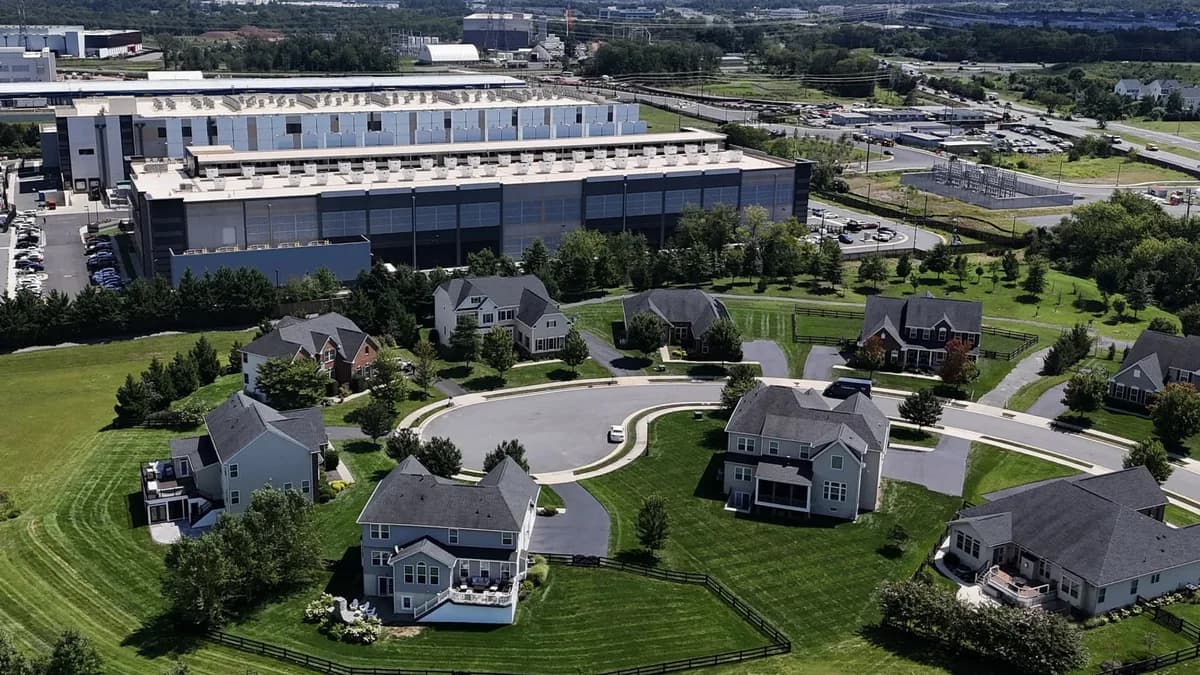
You're likely aware that artificial intelligence (AI) is driving significant investments in computing power. According to editorial research analyzed by Groundwork, This trend has set off a commercial land rush, sending property values soaring in rural areas. As a result, farmers and property owners are facing a difficult decision: sell their land to data center developers or resist the development and potentially miss out on lucrative offers.
Nationwide Land Rush
Investments in computing power sparked by AI have led to a nationwide commercial land rush. Property values are skyrocketing in unlikely and out-of-the-way places as companies rush to build data centers and related facilities. These centers house massive computer servers filled with powerful chips and systems needed to run AI models and workloads. They require vast amounts of electricity and water to power and cool the servers, necessitating large land acquisitions.
Data Center Land Grabs
Companies are racing into rural America to build data centers and facilities for the businesses constructing and servicing them. This has created boom towns and transformed land uses in many locations across the country. In some cases, the transformation is pitting some of the largest corporations in the U.S., along with their backers on Wall Street, against local residents and communities.
Land Purchases Reach $6 Billion
Land purchases in the U.S. for future data centers reached about $6 billion in the first half of 2026, a 79% increase from last year, according to commercial real estate firm Avison Young. Data centers represent 27% of development sites in the U.S. this year, outranking industrial buildings, office buildings, retail spaces, and mixed-use developments.
The Impact on Rural Land Markets
The surge in data center development is driving up the price of rural land as some farmers and property owners buy in and others push back against development. Investors are bracing for concerted political resistance as some residents mobilize to try to prevent data centers from being built in their community.
State Agriculture Commissioner's Concerns
At a July protest against data centers in Lubbock, Texas, state Agriculture Commissioner Sid Miller took the microphone to share his concerns about data center land grabs in his home state. "When [data centers] first started popping up, nobody really knew much about them,
Share via system sheet on mobile, or copy link on desktop
P
Editorial Analysis
Priya Nair • Legal & Career Advisor
“The surge in data center development is a symptom of a broader trend: the increasing demand for computing power driven by AI. As this trend continues, it will be essential to carefully consider the impact of data centers on rural communities and to develop strategies for mitigating their negative effects.”
Frequently asked questions
What is driving the surge in data center development?▼
The surge in data center development is driven by the increasing demand for computing power sparked by AI.
What are the potential consequences of data center development for rural communities?▼
The potential consequences of data center development for rural communities include the loss of farmland, increased traffic, and strain on local resources.
How can residents and property owners in rural areas resist data center development?▼
Residents and property owners in rural areas can resist data center development by mobilizing against the construction of these facilities and advocating for alternative uses for their land.
What are the long-term implications of data center development for rural land markets?▼
The long-term implications of data center development for rural land markets are complex and will depend on a variety of factors, including the impact of data centers on local communities and the demand for computing power driven by AI.
Related research guides

life
3m
This Rare Ford Cortina Wagon Is Infused with Lotus Spirit
A rare 1967 Ford Cortina Estate infused with Lotus parts is up for auction, offering a unique blend of performance and practicality.
G
Groundwork Researcher
life
3m
Buy This NASCAR 1957 Ford Fairlane From When Stock Cars Were Actually Stock
Buy this NASCAR 1957 Ford Fairlane from when stock cars were actually stock, a relic of NASCAR's truly-stock era.
G
Groundwork Researcher
life
3m
Sports Travel is Having its 'Eras Tour' Moment: Airlines Take Notice
Sports travel is experiencing a significant boom, with fans spending $51.1 billion in 2025 alone. Airlines are taking notice and adjusting their schedules to
G
Groundwork ResearcherRelated Research & Topic Index (life)
Explore related evidence-based investigations, decision tools, and entity breakdowns:
Primary Research & Citations
Contextual evidence and verified documentation referenced in this research guide
Groundwork enforces a strict, independent verification standard. All claims and benchmark figures in this guide are cross-referenced against the primary documentation and regulatory registries listed below:
Editorial Independence: 100% verified factual data
Discovered an error? Submit for verification
How to Cite This Research Guide
Priya Nair (2026). AI Data Centers Are Transforming Rural Land Markets — and Fueling a Backlash. Groundwork. Retrieved from https://gworky.com/article/ai-data-centers-transforming-rural-land-markets
License: CC BY-NC 4.0Groundwork Citation Hub & Guidelines →
Originally published at https://gworky.com/article/ai-data-centers-transforming-rural-land-markets — Groundwork Evidence-Based Research.
Featured Utility & ResearchGroundwork Intelligence
Metro Relocation & Tax Index
Cost of Living & Real Purchasing Power Calculator
Compare state income taxes, housing premiums, and net take-home pay between metro areas.
Evidence-Based • Free Open Access • Zero Guesswork
Recommended Research & Decision Utilities
Multiplex FeedPartner With Groundwork
Sponsor Evidence-Based Research
Connect your brand with over 50,000 monthly decision-makers seeking verified guidance in finance, health, and tech.
View Media Kit Verified
Interactive Utility
Total Cost of Ownership Calculator
See the real cost of owning a car per mile, including fuel, depreciation, insurance, and maintenance.
Launch Tool→
 life
lifeThis Rare Ford Cortina Wagon Is Infused with Lotus Spirit
4 min readRead Guide →
 life
lifeBuy This NASCAR 1957 Ford Fairlane From When Stock Cars Were Actually Stock
4 min readRead Guide →
 life
lifeSports Travel is Having its 'Eras Tour' Moment: Airlines Take Notice
4 min readRead Guide →
 life
life2026 Porsche 911 Turbo S Cabrio Review: I Felt My
2 min readRead Guide →
Benchmarked LIFE Solutions At a Glance
Evaluated for performance, privacy protocols, and pricing transparency.
| Solution | Key Benchmark | Pricing | Verdict & Access |
|---|---|---|---|
NordVPNEditor Pick via Nord Security | Post-quantum encrypted tunneling | $3.39/mo | |
SoFi Financial via SoFi Bank | High-yield cash & mortgage refinance | 0.00% Fees | |
TradingView via TradingView Inc. | Financial charts & Pine Script screener | Free / $14.95 |
Editorial integrity: Groundwork rates products independently without sponsor influence.More Comparisons →
Written byLead AnalystPrimary Research
Priya Nair
Legal & Career Advisor
Personal Technology AnalystHardware Interoperability SpecialistConsumer Device Security Auditor
Priya Nair analyzes consumer electronics lifecycles, smart home interoperability standards (Matter and Thread), and personal cybersecurity protocols for Groundwork's Tech Desk. Her investigative testing methodology evaluates battery degradation curves, repairability indices, radiofrequency privacy, and encrypted local firmware security. Nair delivers uncompromised hardware longevity assessments and purchasing models without commercial brand bias, device gifting, or sponsored review arrangements.
Fact-Checked byReview BoardIndependent Audit
James Thorne
Lifestyle & Legal Systems Optimizer
James Thorne leads software and enterprise systems evaluation for Groundwork's Tech Desk. His research focuses on cloud unit economics, AI API token pricing architectures, zero-trust cybersecurity, and data sovereignty. With fifteen years in cloud systems architecture, Thorne benchmarks LLM context caching efficiencies, developer tool subscriptions, and serverless compute costs, providing independent, reproducible technical audits and pricing calculators free from vendor sponsorship or cloud provider affiliate influence.
Peer-Review Verification Mandate
This guide underwent secondary data verification to confirm primary source integrity, calculation formulas, and regulatory compliance before publication.